Work from Home Customer Service Jobs No Experience
Find the best work from home customer service jobs no experience required in 2026. Our guide covers where to apply and how to land your first remote role today.
You're probably doing what most first-time remote job seekers do. You open a listing for a work from home customer service role, read “excellent communication skills required,” see a few software names you haven't used, and decide you're not qualified.
That's usually the wrong conclusion.
When hiring entry-level support agents, I haven't looked for a perfect background. I've looked for signs that someone can stay calm, communicate clearly, learn fast, and handle customers without getting flustered. Those skills show up in retail, restaurants, reception, caregiving, school projects, volunteer work, and plenty of jobs that never had “customer service” in the title.
The bigger issue is expectation setting. A lot of content about work from home customer service jobs no experience makes the path sound easier and more profitable than it often is. A FlexJobs report says average entry-level remote customer service pay is $16.50/hour, but it also notes 62% of no-experience hires face unpaid training and equipment costs of $300 to $800, which can reduce first-year income by 15% to 25%. That doesn't mean these jobs aren't worth pursuing. It means you should approach them with your eyes open.
Your Guide to Landing a Remote CS Job Without Experience
A no-experience background isn't the same as a no-value background.
Most beginners already have part of what employers want. They've dealt with impatient people, explained policies, fixed small problems on the spot, stayed organized during busy shifts, and learned systems while working under pressure. The problem isn't a total lack of experience. The problem is that most applicants describe their history in a way that hides those strengths.
That's why a smart job search starts with translation. “Worked cash register” becomes “handled high-volume customer transactions accurately.” “Helped guests during busy dinner rush” becomes “managed service issues and maintained a calm customer experience in a fast-paced setting.” Small change, big difference.
What realistic beginners focus on
A practical search usually comes down to four things:
- Skill framing: Show communication, problem-solving, and reliability before you worry about sounding corporate.
- Setup readiness: Be ready to explain your home workspace, internet, and device situation clearly.
- Job quality: Check whether training is paid, whether equipment is provided, and whether the schedule fits your life.
- Role durability: Prefer jobs where humans still solve messy, emotional, or unusual customer issues.
If you want a starting point to explore job opportunities, use platforms that let you filter remote roles carefully instead of mass-applying to everything labeled entry level.
Practical rule: Don't apply as “someone with no experience.” Apply as someone with customer-facing experience that needs to be translated for remote work.
What works and what doesn't
What works is targeted effort. Read the posting closely, mirror the language, and make it easy for a recruiter to see how your past experience fits.
What doesn't work is sending the same generic resume to dozens of listings and hoping one company overlooks the gaps. Remote hiring teams get too many applications for that approach to hold up.
The good news is that beginner-friendly remote customer service roles still exist. The candidates who land them usually aren't the ones with the fanciest background. They're the ones who present themselves clearly, prepare well, and understand the trade-offs before they accept an offer.
Uncovering Your Hidden Customer Service Superpowers
The fastest way to feel qualified is to stop asking, “Do I have customer service experience?” and start asking, “Where have I already solved people problems?”
That question changes everything.
Industry analysis from TeamFicient shows the most important soft skills for entry-level remote customer service roles are communication, problem-solving, and active listening, and candidates who emphasize those transferable skills improve interview callback rates. Those aren't niche skills. They show up in everyday jobs all the time.
Do a personal skills audit
Start with your last two or three roles. They don't need to be office jobs. Write down what people asked you for, what went wrong during a normal shift, and how you responded when someone was confused, upset, late, or in a hurry.
Look for moments like these:
- You handled complaints: That's de-escalation and conflict resolution.
- You answered repeat questions: That's product or process communication.
- You kept things moving during busy hours: That's prioritization under pressure.
- You trained someone new: That's coaching and knowledge sharing.
- You fixed small issues without a manager: That's judgment and independent problem-solving.
Don't worry about sounding polished at first. Just collect examples.
From past roles to CS skills
| Your Past Role/Experience | Customer Service Skill You Gained | How to Phrase It on a Resume |
|---|---|---|
| Retail cashier | Customer communication, accuracy, composure | Assisted customers with purchases, answered questions, and handled transactions accurately in a fast-paced setting |
| Restaurant server or host | Active listening, multitasking, de-escalation | Managed guest requests, resolved service concerns, and maintained a positive experience during peak hours |
| Reception or front desk | Professional communication, organization | Served as the first point of contact, scheduled appointments, and handled inquiries with professionalism |
| Call volunteer or community helper | Empathy, patience, problem-solving | Supported individuals with questions and concerns, listened carefully, and connected them with the right next steps |
| School project lead | Team coordination, follow-through | Coordinated group tasks, communicated deadlines, and kept work moving toward completion |
| Warehouse, delivery, or fulfillment | Process discipline, attention to detail | Followed documented procedures, updated records, and maintained accuracy while meeting daily targets |
| Babysitting or caregiving | Patience, communication, calm under stress | Managed competing needs, communicated clearly, and stayed composed in unpredictable situations |
That table matters because it helps you stop underselling routine work.
You do not need a call center title to prove you can help customers. You need evidence that you can listen, respond, and solve problems.
Pull out the strongest stories
Once you've mapped your background, choose three examples that show the kinds of behavior hiring teams trust.
Pick one story where you calmed someone down. Pick one where you learned a system or process quickly. Pick one where you worked independently and still stayed organized. Those three examples can power your resume bullets, your cover letter, and your interview answers.
A weak application says, “Hard worker, fast learner, people person.”
A stronger application says, “Resolved customer concerns during high-traffic shifts, explained store policies clearly, and kept transactions accurate while balancing multiple requests.”
Remote-specific strengths count too
For remote roles, employers also want signs that you can work without someone hovering nearby. If you've ever managed your own schedule, completed tasks without close supervision, or used tools like Zoom, Google Meet, Slack, or shared docs, include that.
Those details tell a hiring manager you won't freeze the minute work happens through a screen instead of across a counter.
Finding Legitimate Remote Jobs and Dodging Scams
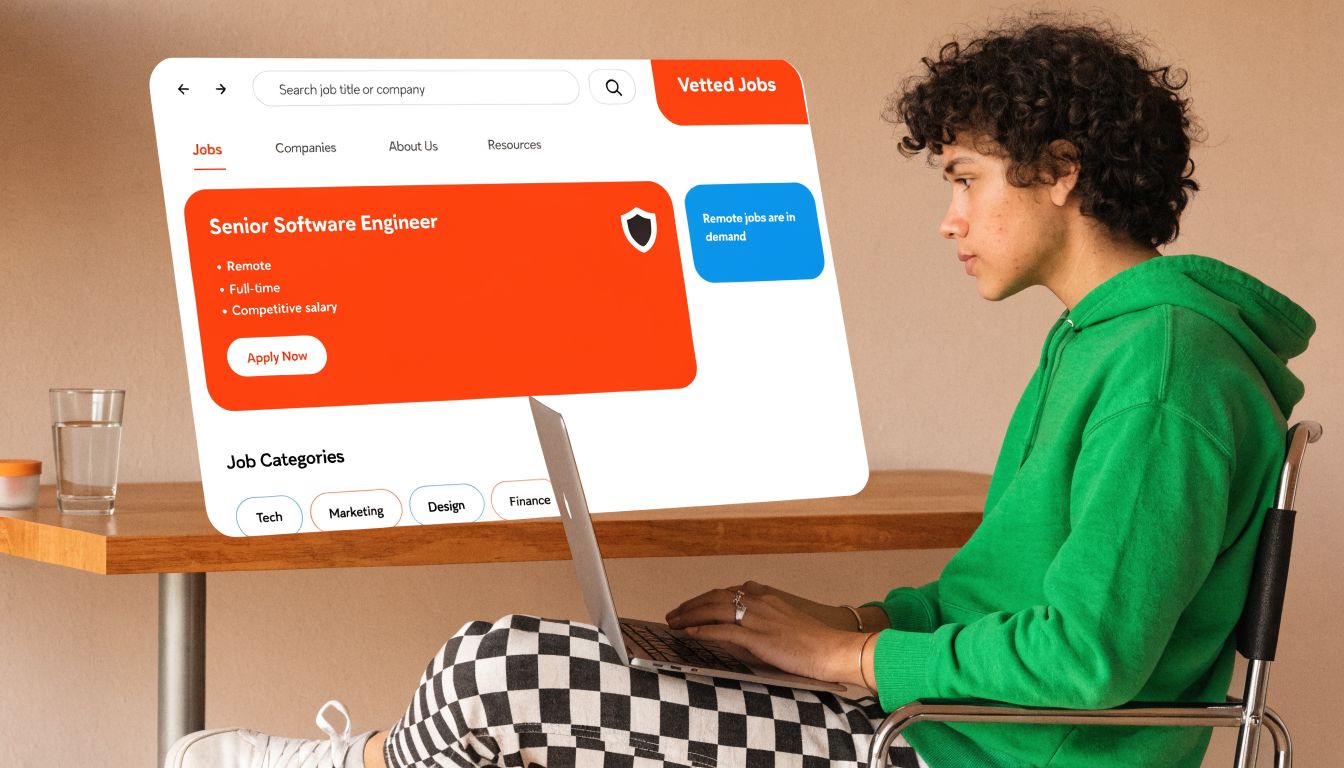
The remote job market has real opportunities, but it also has noise. Some listings are outdated. Some are vague. Some are plain scams. If you search carelessly, you waste time. If you search like a recruiter would, the field gets much easier to manage.
How to read a listing like a hiring lead
A legitimate beginner-friendly customer service posting usually tells you four things clearly: what channels you'll support, what schedule they need, what equipment is required, and how training works.
If the posting is thin on those basics, pause. Good employers know entry-level applicants need specifics.
Check for language around:
- Support channels: Phone, email, live chat, video, or a mix
- Training: Whether it's structured, paid, and how performance is assessed
- Equipment: BYOD expectations, headset requirements, internet stability
- Type of work: Full-time, part-time, contractor, or seasonal
Roles that only promise easy money, flexible hours, and instant hiring without explaining the work deserve extra caution.
Red flags that should stop you
Scam patterns are often easy to spot once you know them.
- They ask for money upfront: Legit employers don't need you to pay to access the job.
- The process skips normal screening: No interview, no skills check, no clear manager contact can be a bad sign.
- The description is strangely vague: If you still don't know what you'd do after reading the listing twice, move on.
- Pressure comes fast: Scammers want urgency because urgency kills judgment.
- Communication feels off: Poorly written outreach, inconsistent company details, and personal email addresses are all warning signs.
For a deeper breakdown of scam patterns, this guide on fraud work from home jobs is worth reviewing before you apply widely.
The AI shift is changing which jobs are worth your time
The entry-level market is changing. A LinkedIn Workforce Report notes that 70% of new remote customer service hires with no experience need 4 to 6 weeks of paid training, and it also warns that AI is pushing employers to value roles built around complex problem-solving more than simple data entry or repetitive response work.
That changes how beginners should search.
Better bets include roles that mention:
- Escalations
- Account issues
- Billing support
- Customer retention
- Technical troubleshooting
- Omnichannel support
- AI-assisted workflows with human review
Weaker bets are jobs that sound like copy-paste queue clearing, basic tagging, or repetitive script reading. Those tasks are easier for companies to automate or shrink.
Here's a useful explainer before you keep searching:
A simple shortlist method
Don't save every possible opening. Build a shortlist with a filter.
Keep the listing if it has a real company, a clear support function, a believable training path, and work that requires judgment. Skip it if it reads like a fantasy or a disappearing task set.
That one habit saves beginners more time than almost anything else.
Building a Resume That Highlights Your Potential
A beginner resume fails when it apologizes. It succeeds when it connects the dots.
If you're applying for work from home customer service jobs no experience, a traditional chronology-first resume can hurt you because it puts all attention on titles that don't look relevant. A skills-based resume works better for many entry-level applicants because it tells the employer what you can do before it tells them where you learned it.
Start with a summary that sounds job-ready
Your summary should do three things in a few lines. Show customer-facing strength, show remote-readiness, and show willingness to learn.
Try a structure like this:
- who you are
- what strengths you bring
- how those strengths fit the role
Example:
Customer-focused professional with experience handling questions, resolving issues, and staying organized in fast-paced environments. Strong communicator with solid problem-solving skills, basic technical comfort, and a dependable approach to independent work. Seeking an entry-level remote customer service role with structured training and room to grow.
That sounds more hireable than “seeking my first remote opportunity.”
Build a skills section around the posting
Read the job description and pull out the repeated requirements. Then match them with honest skills you already have.
A useful skills section might include:
- Customer communication
- Active listening
- Problem-solving
- Conflict de-escalation
- Email and chat etiquette
- Data accuracy
- Time management
- Independent work
- Zoom, Google Meet, Gmail, Google Docs
- Basic troubleshooting
If the company uses an applicant tracking system, wording matters. This guide to resume optimization for ATS is useful for checking whether your phrasing matches how screening software reads applications.
Reframe your experience bullets
Your experience section shouldn't list duties like a schedule board. It should show behaviors relevant to support work.
Weak bullet:
- Helped customers and used cash register
Stronger bullet:
- Assisted customers with questions, processed transactions accurately, and resolved common concerns while maintaining a positive service experience
Weak bullet:
- Worked at busy restaurant
Stronger bullet:
- Managed guest requests, coordinated with team members, and handled service issues calmly during high-volume shifts
If you need more examples of how to frame early experience, this guide on skills for a resume with no experience can help you turn everyday work into stronger resume language.
A cover letter that actually helps
Most entry-level cover letters are too generic. Keep yours short and specific.
Use this structure:
- Name the role.
- Say why it fits your background.
- Mention two transferable strengths.
- Show that you understand the work.
- End with enthusiasm and availability.
Example:
I'm applying for your remote customer service position because my background in customer-facing roles has given me strong communication, problem-solving, and organization skills. In past roles, I've handled questions, resolved concerns, and stayed calm in fast-moving environments. I'm comfortable learning new systems and I understand that strong support work means listening carefully, documenting accurately, and helping customers reach a clear resolution. I'd welcome the opportunity to bring that mindset to your team.
That works because it sounds grounded. No begging. No overexplaining. No apology for being new.
Hiring insight: Confidence on paper doesn't mean pretending you know everything. It means showing that you understand the job and can grow into it quickly.
Acing the Remote Interview from Setup to Sign-Off
Remote interviews are part conversation, part proof test. The employer isn't only deciding whether they like you. They're checking whether you can show up prepared, communicate clearly through a screen, and work from home without chaos.
Job market data from Indeed shows remote customer service roles commonly require reliable internet, a personal computer, and the ability to support multi-channel communication, and being able to confirm your setup during the interview is a key success factor.
Get your setup right before you practice answers
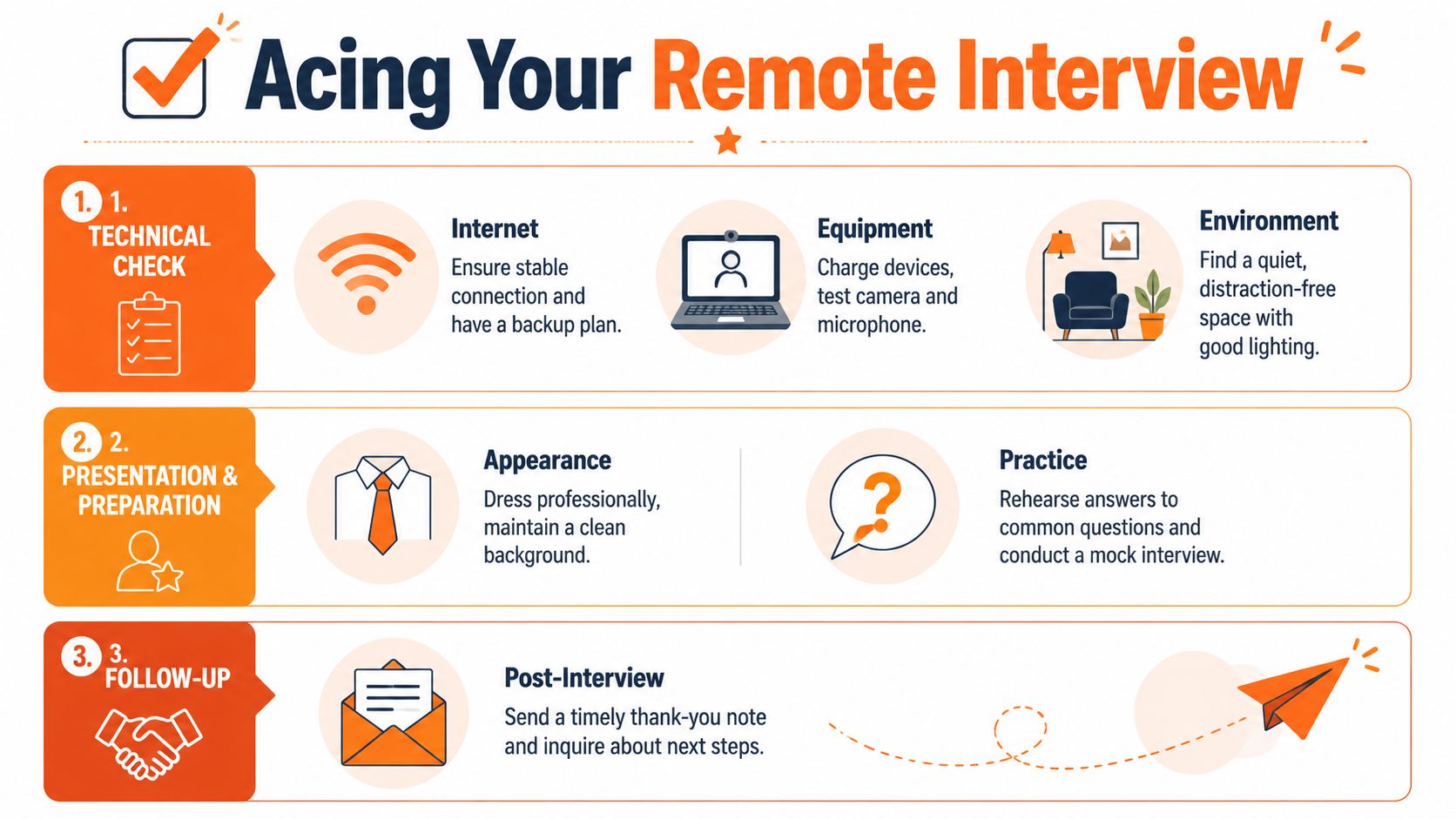
Plenty of good candidates weaken their interview before the first question. Their camera angle is bad, the room is noisy, or they scramble when asked what equipment they have.
Do this the day before:
- Test your internet: Make sure the connection is stable and know your backup plan.
- Check your device: Charge it fully, update it early, and test your microphone and camera.
- Use a clean space: Quiet room, simple background, and front-facing light.
- Prepare basic setup answers: Be ready to explain your workspace and availability without hesitation.
If you want practice prompts suited for remote hiring, these remote job interview questions are a solid starting point.
Use STAR, even if your examples aren't from office jobs
For customer service interviews, employers often ask behavior questions such as:
- Tell me about a time you handled a difficult person.
- Describe a situation where you solved a problem quickly.
- Tell me about a time you had to juggle competing priorities.
- How do you respond when you don't know the answer?
You don't need corporate examples. You need clear examples.
A simple STAR structure works:
- Situation
- Task
- Action
- Result
Example answer:
At my last retail job, a customer was upset because an item they wanted was unavailable. My task was to help without escalating the issue. I listened, acknowledged the frustration, checked alternatives, and explained the options clearly. The customer left with a replacement item and thanked me for taking the time to help.
That answer works because it shows listening, judgment, and emotional control.
Questions you should ask them
A beginner who asks smart questions stands out fast.
Ask things like:
- How is training structured for new hires?
- What channels does this role support most often?
- How do supervisors give feedback during onboarding?
- What does a strong first month look like in this role?
Those questions make you sound serious and coachable.
Don't try to impress interviewers with polished jargon. Clear thinking beats buzzwords in entry-level support hiring.
Finish professionally
At the end, thank them, confirm your interest, and send a short follow-up note later the same day or the next morning. Keep it simple. Mention one part of the conversation you appreciated and restate your interest in the role.
That small step still matters because customer service is detail work. A thoughtful follow-up shows you understand that.
Thriving in Your First 90 Days and Building a Career
Getting hired is the entry point. Your first 90 days decide whether this becomes a short experiment or the foundation of a real remote career.
New agents often assume performance is only about speed. It isn't. Managers look at how you communicate, how you handle mistakes, whether you ask useful questions, and whether your team can rely on you. Early trust matters as much as early output.
What strong beginners do right away
Strong new hires usually make the same choices.
- They over-communicate early: If they're blocked, they say so. If they're unsure, they ask before a small issue becomes a bigger one.
- They document what they learn: They build their own notes on policies, systems, shortcuts, and common customer issues.
- They protect focus: They set a start time, reduce distractions, and treat the job like a job, not a loose at-home task.
- They accept feedback well: They don't get defensive when a manager corrects wording, process steps, or ticket notes.
Those habits matter more than trying to look naturally gifted.
Training is where careers start
Your onboarding period is not something to just get through. It's where you build your reputation.
If your company gives you call reviews, chat audits, or QA notes, use them. Listen for patterns. Are you missing verification steps? Writing notes that are too vague? Rushing to answers before fully understanding the issue? Most beginners improve fast once they spot their own pattern.

The remote habits that keep people employed
Remote work rewards consistency.
Create a routine that helps you stay usable all day. Log in a few minutes early. Keep your workspace clean. Use your calendar. Step away on breaks instead of half-working through them. Set boundaries with family or roommates so your work hours stay protected.
Then do one more thing that many new hires skip. Build relationships. Say hello in team chat. Thank coworkers who help you. Be pleasant in written communication. Remote teams remember the person who is easy to work with.
A first customer service job can lead to QA, training, team lead, operations support, or customer success work. The people who move up usually become dependable before they become impressive.
Think beyond the first role
Your first remote customer service job doesn't need to be your forever role. It needs to teach you tools, process discipline, customer judgment, and remote communication. Those skills transfer well.
That's why the first 90 days matter so much. If you show that you can learn systems, communicate professionally, and handle customers with care, you're building proof that opens better roles later.
If you're ready to turn your background into a stronger remote application, YayRemote is a useful place to start. You can browse hand-picked remote roles, filter by experience level and job type, and use tools like the Skills Analyzer and ATS Resume Checker to sharpen your search before you apply.