Top 7 Resources to Find the Best Remote Companies to Work For in 2026
Discover the 7 definitive resources for finding the best remote companies to work for. Explore top lists, reviews, and job boards to land your dream role.
The remote work landscape has matured. The conversation is no longer just about finding a remote job; it's about finding the right remote company. A great role within a company that struggles with distributed culture can lead to micromanagement, communication breakdowns, and a fundamental lack of trust. In contrast, the best remote companies to work for are intentional about building robust, asynchronous cultures that thrive on autonomy and connection across time zones.
This guide is your roadmap to discovering those exceptional employers. We've moved beyond generic advice to provide a curated roundup of the most reliable platforms and data-driven lists for researching and vetting top-tier remote organizations. You will learn precisely where to find companies that not only offer flexibility but also foster genuine growth, well-being, and a strong sense of community for their distributed teams.
Our analysis dives into specialized job boards, comprehensive employee review sites, and authoritative "best of" lists. Each entry is designed to be a practical tool, helping you build a target list of companies that truly align with your career goals and work-life preferences. We'll show you how to leverage these resources to find detailed information on everything from a company’s remote maturity and cultural signals to their specific benefits and hiring regions. This is your definitive guide to identifying and landing a position at one of the best remote companies to work for today.
1. FlexJobs
FlexJobs isn't a single employer but an essential starting point for any serious remote job search. It serves as a comprehensive, human-vetted job board and resource hub dedicated to flexible and remote work, making it one of the best platforms for discovering top-tier remote companies. Its core strength lies in its annual, data-driven "Top 100 Companies for Remote Jobs" list, which analyzes the remote hiring activity of tens of thousands of companies to identify consistent leaders in the space.
Why It's a Top Resource for Finding Remote Companies
The platform’s standout feature is its rigorous, manual vetting process. Every job listing is hand-screened to filter out scams, ads, and commission-only roles, ensuring a high-quality, professional search experience. This saves job seekers significant time and reduces the risk associated with unverified job boards.
FlexJobs also provides deep insights into companies actively hiring remote talent. Their company pages offer valuable context, including historical hiring data, an overview of their remote work policies, and direct links to current openings. This makes it an invaluable tool for targeting employers with a proven commitment to remote work.
Pro Tip: Use the annual "Top 100" list not just to find current openings but to build a target list of companies. Research these employers, follow them on LinkedIn, and set up alerts for when they post new roles that match your skills.
Key Features and How to Use Them
- Annual Top 100 List: The 2026 list is a data-backed resource showing which companies hired the most remote workers over the past year. Use this to identify employers with established remote infrastructures.
- Vetted Job Listings: Access a curated database of remote, hybrid, and flexible jobs across over 50 career categories, from entry-level to executive.
- Advanced Search Filters: Narrow your search by job type (100% remote, hybrid, optional remote), career level, and location requirements to find the perfect fit.
- Career Resources: Members gain access to skills tests, resume reviews, and coaching services to enhance their applications.
Access and Pricing
FlexJobs operates on a subscription model to maintain its ad-free and scam-free environment. While browsing the site is free, a membership is required to view full job descriptions and apply.
- Pros:
- Fresh, data-driven insights on companies actively hiring for remote roles.
- Human-vetted listings significantly reduce the risk of scams.
- Cons:
- Requires a paid membership to access full features and apply.
- The "Top 100" list includes hybrid companies, so you must filter for fully remote opportunities.
Ultimately, FlexJobs is a powerful research tool for identifying and vetting the best remote companies to work for. By leveraging its data and curated listings, you can focus your search on legitimate, high-quality opportunities. Once you’ve built your target list, you can find specific openings across multiple platforms, including thousands of verified remote jobs available right now.
Website: FlexJobs Top 100 Companies for Remote Jobs 2026
2. Built In
Built In is a powerful platform for tech professionals, but its annual "Best Remote Companies to Work For" awards list makes it a key resource for any remote job seeker. Rather than just a job board, Built In functions as an employer discovery tool, highlighting remote-first and remote-friendly companies with exceptional cultures, perks, and benefits, making it an excellent platform to find the best remote companies to work for.
Why It's a Top Resource for Finding Remote Companies
The platform’s strength lies in its transparent and detailed company profiles. Each company on its awards list features a comprehensive breakdown of its benefits package, from home office stipends and mental health support to professional development budgets. This level of detail allows job seekers to benchmark what top remote employers are offering and identify companies whose values and perks align with their own priorities.
Built In is especially valuable for those targeting the tech industry, providing deep insights into startups and established tech firms that have strong remote foundations. The profiles often include information about a company's mission, tech stack, and DEI initiatives, giving you a holistic view before you even apply.
Pro Tip: Use Built In's company profiles to tailor your cover letter and interview answers. Mentioning specific benefits or cultural elements that attract you (like a 4-day work week or a generous learning stipend) shows you’ve done your research and are genuinely interested in that specific employer.
Key Features and How to Use Them
- 2026 Remote-Company Awards: Browse the curated list of top remote workplaces. You can filter by company size and location to narrow down the best employers for your needs.
- Transparent Perks and Benefits: Each company profile clearly lists its offerings, allowing for easy comparison of things like health insurance, parental leave, and wellness programs.
- Direct "View Jobs" Links: Once you find a company you're interested in, you can click directly through to see their current remote job openings, streamlining your search process.
- Free Browsing and Filtering: The entire awards section and company profiles are free to access, making it a no-cost research tool for your job hunt.
Access and Pricing
Built In is completely free for job seekers to browse, research companies, and view job listings. There is no subscription or membership required to access the "Best Places to Work" lists or the detailed company profiles.
- Pros:
- Free to browse, offering excellent salary and benefit benchmarking data.
- Strong focus on US-based tech and startup companies popular with remote talent.
- Cons:
- Heavily skews toward the tech industry; fewer opportunities in non-tech sectors.
- The "Best" list is based on algorithmic and self-reported data, which should be verified with external reviews.
Ultimately, Built In serves as an indispensable research platform for identifying top-tier tech employers with a proven commitment to remote work. Use it to build your target list, understand the benefits landscape, and discover companies that truly invest in their distributed teams.
Website: Built In Best Remote Places to Work 2026
3. We Work Remotely
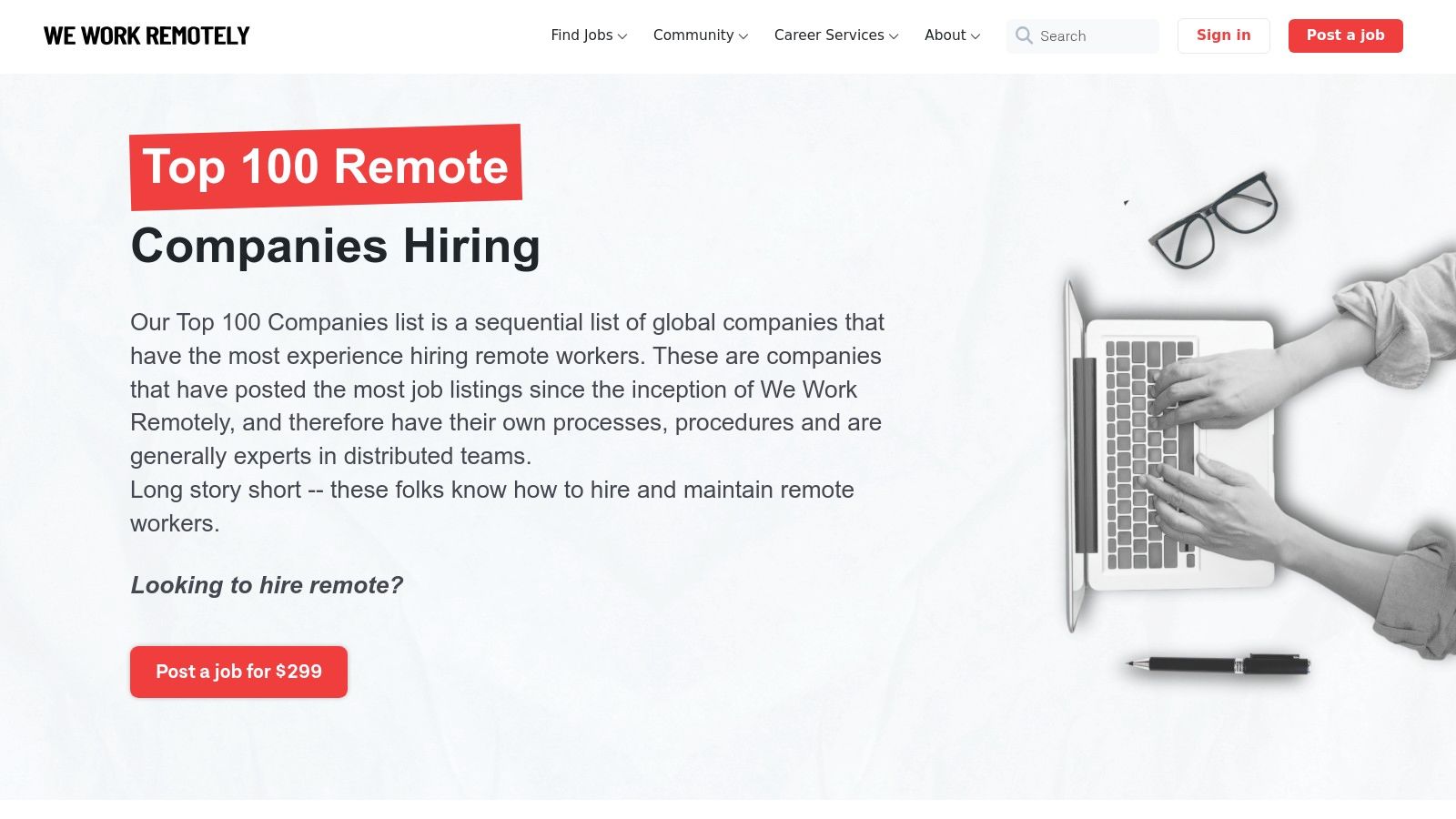
We Work Remotely (WWR) is one of the largest and longest-running remote job boards, making it a foundational resource for anyone searching for the best remote companies to work for. While not an employer itself, its value lies in its massive, constantly updated feed of remote opportunities and its public "Top Remote Companies" directory. This directory showcases organizations that consistently post jobs on the platform, offering a clear view of which companies are actively hiring remote talent.
Why It's a Top Resource for Finding Remote Companies
The platform’s strength is its sheer volume and breadth. Unlike highly curated niche boards, WWR provides a vast stream of listings across diverse categories like engineering, product, design, support, and marketing. This makes it an excellent place to gauge the overall remote job market and discover companies you might not find elsewhere.
Its "Top Remote Companies" page is particularly useful for targeted job searching. By browsing this directory, candidates can quickly identify employers with a history of remote hiring on the platform. The company profiles provide context, including past job postings and a direct link to their company website, allowing you to vet potential employers and understand their remote work posture before you apply.
Pro Tip: Use the "Follow" feature on the Top Remote Companies page for your target employers. This allows you to create a personalized job feed and receive email alerts, ensuring you never miss a new opening from a company you’re interested in.
Key Features and How to Use Them
- Top Remote Companies: This directory lists companies based on their historical posting volume on WWR. Use it to build a list of active remote employers and explore their company profiles for more insight.
- Broad Job Categories: The site covers a wide range of roles, from technical to creative and operational, making it suitable for professionals in many different fields.
- Follow Companies & Job Alerts: Create a free account to follow specific companies and set up alerts for new roles that match your criteria, streamlining your job search.
- Large Stream of Listings: The job board is updated frequently with new postings from around the world, providing a constant flow of fresh opportunities.
Access and Pricing
Browsing and applying to most jobs on We Work Remotely is free. However, the platform offers a "Job Seeker Pro" subscription that provides early access to some listings and additional features.
- Pros:
- Massive, high-volume stream of remote job listings.
- The Top Companies directory makes it easy to identify frequent remote employers.
- Cons:
- As an open board, listing quality can vary; always cross-check roles on the company's official career page.
- Some features and early access to listings are locked behind the paid "Job Seeker Pro" tier.
We Work Remotely serves as a powerful discovery engine for finding best remote companies to work for by providing unparalleled access to a huge volume of listings. Its straightforward interface and company-following features help you stay on top of the market and connect with legitimate remote-first employers.
Website: We Work Remotely Top Remote Companies
4. Glassdoor
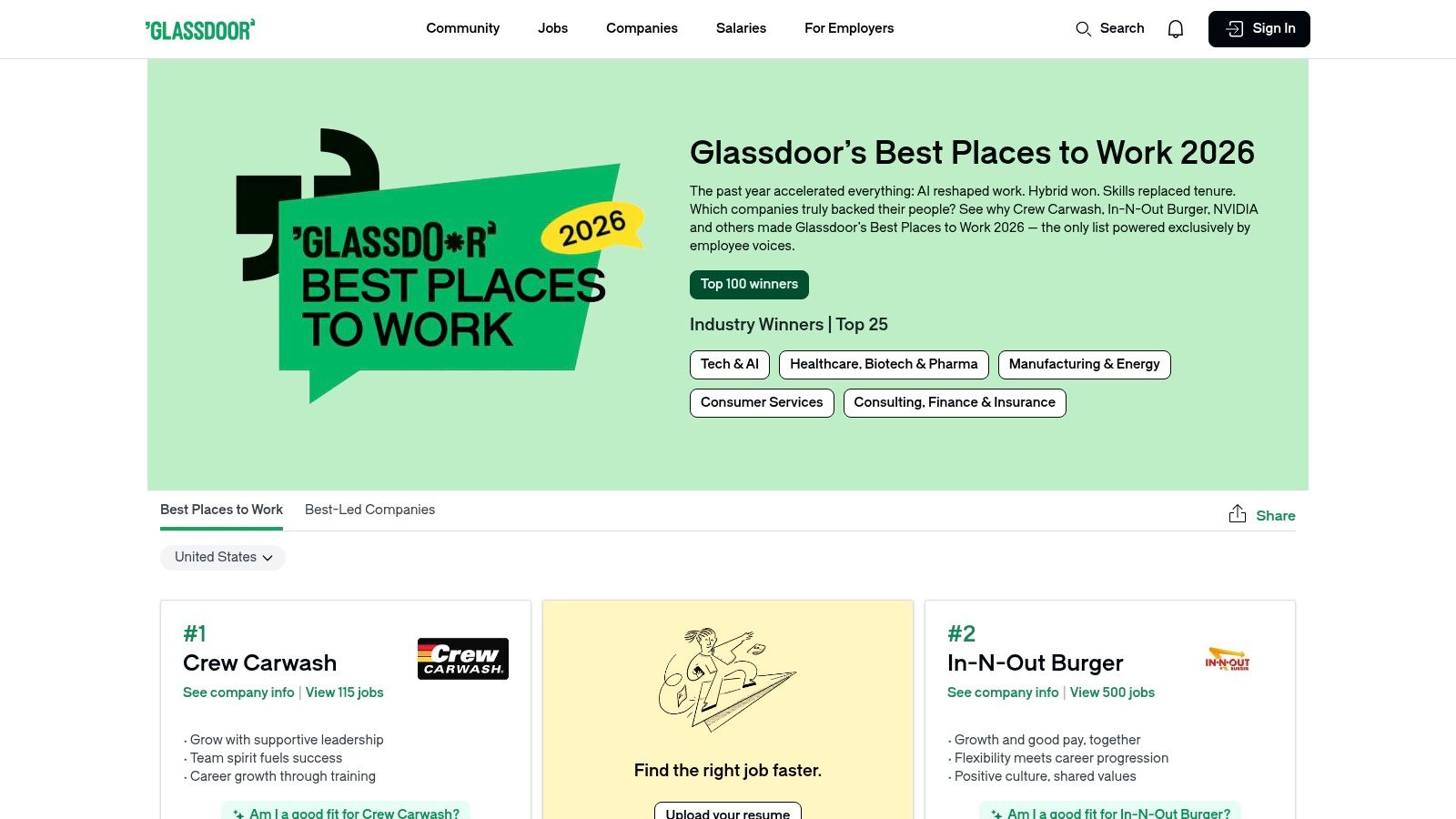
Glassdoor provides the crucial "behind-the-scenes" perspective needed when evaluating the best remote companies to work for. While not a remote-specific job board, it's an indispensable research tool for validating a company's culture, leadership, and work-life balance through anonymous employee reviews. Its annual "Best Places to Work" awards offer a powerful starting point for identifying employers with high employee satisfaction, which you can then vet for their remote work policies.
Why It's a Top Resource for Finding Remote Companies
Glassdoor’s core value lies in its massive repository of unfiltered employee feedback. Before you invest time in an application, you can search for a company and read detailed reviews about its management style, benefits, and stance on remote work. This direct insight helps you spot potential red flags, such as a culture of micromanagement or a disconnect between stated policies and actual practice, which are critical factors for remote success.
By cross-referencing top-rated companies with their remote job openings, you can identify employers that not only offer flexibility but also foster a genuinely positive and supportive work environment. The platform's salary data and interview questions further equip you to navigate the hiring process with confidence.
Pro Tip: Use the search filters within reviews to look for keywords like "remote," "hybrid," "wfh," or "work from home." This will quickly surface comments directly related to a company's remote culture and policies, giving you a more accurate picture than the official company line.
Key Features and How to Use Them
- Best Places to Work Awards: Use the 2026 list to build a list of highly-rated employers, then investigate their remote hiring practices individually.
- Anonymous Employee Reviews: Read firsthand accounts of company culture, work-life balance, and senior leadership to gauge whether the environment aligns with your needs.
- Company Profiles and Ratings: Access detailed ratings on a 5-star scale for key categories like Culture & Values, Diversity & Inclusion, and Career Opportunities.
- Salary and Interview Data: Research typical salary ranges for your role and find real interview questions shared by previous candidates to better prepare.
Access and Pricing
Glassdoor operates on a "give-to-get" model. To access unlimited reviews, salaries, and interview insights, you are typically required to create a free account and contribute an anonymous review or salary data of your own.
- Pros:
- Robust, recent employee feedback offers an authentic look at company culture.
- Strong coverage across a wide range of US employers and industries.
- Cons:
- Award lists are not remote-specific, so you must cross-reference for remote policies.
- Some content is gated, and the quality of individual reviews can vary.
Ultimately, Glassdoor is an essential validation tool for any remote job seeker. It helps you look past the marketing and understand the reality of working at a company, ensuring you find an employer that truly supports its remote team. A strong company culture often relies on employees having the right foundational remote work skills for their resume, which Glassdoor reviews can help you identify.
Website: Glassdoor Best Places to Work 2026
5. Great Place to Work (and Fortune lists)
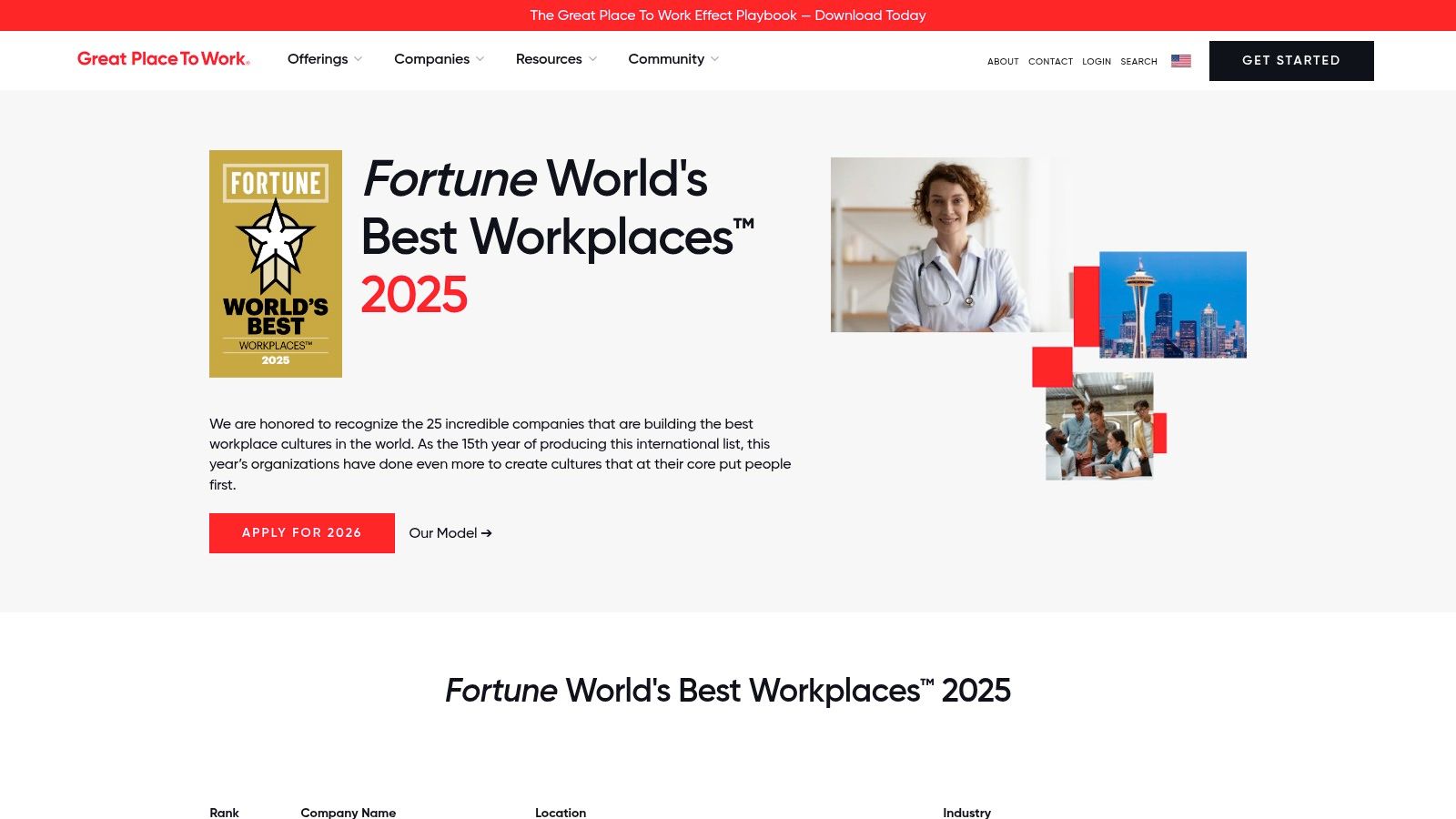
Great Place to Work is not a job board but a vital research platform for identifying companies with high-trust, employee-validated cultures. Its methodology-based awards and rankings, which famously power the Fortune "100 Best Companies to Work For®" lists, are derived from extensive employee surveys and culture analytics. For remote job seekers, these lists serve as a high-signal starting point to find employers who genuinely invest in their people, a crucial trait for a healthy remote environment.
Why It's a Top Resource for Finding Remote Companies
The platform’s core value lies in its data-driven, employee-centric approach. Unlike platforms that just list jobs, Great Place to Work certifies companies based on what their employees actually say about their workplace experience, covering aspects like trust, respect, fairness, and camaraderie. A strong culture is the bedrock of successful remote work, making these lists an excellent filter for identifying organizations that are likely to support and engage a distributed workforce effectively.
While not exclusively focused on remote work, a positive culture rating is often a leading indicator of a company that trusts its employees, a prerequisite for offering remote flexibility. Companies on these lists frequently have robust programs that translate well to a remote setting, such as strong communication channels and a focus on employee well-being. This makes it an ideal tool for finding potential employers to add to your target list.
Pro Tip: Use the lists to create a "dream company" watchlist. After identifying a company with a stellar culture score, visit its career page to check for remote policies. Even if no suitable remote roles are open, follow them on LinkedIn and set up alerts for future openings.
Key Features and How to Use Them
- Methodology-Driven Lists: Explore lists like the "World's Best Workplaces" and various US-based lists categorized by company size or industry. Use these to find top-rated employers in your specific field.
- Employer Profiles: Each certified company has a profile summarizing its culture metrics, employee demographics, and specific accolades. This provides deep insight into what makes its culture stand out.
- List Calendar: Keep track of upcoming list publications to get the freshest data on top-performing companies throughout the year.
- Direct Career Page Links: From an employer's profile, you can often link directly to their careers site to investigate their remote work policies and search for current vacancies.
Access and Pricing
Access to all lists, rankings, and company profiles on the Great Place to Work website is completely free for job seekers. The platform generates revenue by offering certification and analytics services to employers, so it remains an open resource for public use.
- Pros:
- Provides high-signal, survey-driven data on company culture and employee trust.
- Year-round lists surface top employers in specific sectors and regions.
- Cons:
- Lists are not explicitly remote-focused; you must verify remote eligibility for each company.
- It's designed for culture benchmarking, not as a direct remote job search engine.
Ultimately, Great Place to Work helps you start your search with a pre-vetted list of culturally excellent organizations, increasing your chances of finding one of the best remote companies to work for. A strong culture is essential for successful remote teams, often supported by engaging online events; you can find some great virtual team building activities to get a sense of what top companies do.
Website: Great Place to Work: World's Best Workplaces
6. Remotive
Remotive is a highly respected, community-driven job board and resource center dedicated exclusively to remote work. More than just a list of openings, it serves as a discovery platform for identifying genuinely remote-friendly companies. Its strength lies in its curated approach and strong community focus, offering a transparent view into the remote work landscape, particularly within the tech industry.
Why It's a Top Resource for Finding Remote Companies
The platform’s standout feature is its dedication to 100% remote roles, which filters out the noise of hybrid or location-specific "flexible" jobs. This focus makes it an efficient tool for job seekers committed to a fully distributed work model. Remotive maintains a comprehensive directory of remote-first companies, allowing users to research employers based on their commitment to remote work before even looking at specific job openings.
Remotive also cultivates a sense of community through its popular newsletter and Slack channel, providing not just job alerts but also tips, insights, and networking opportunities. This community-first approach helps job seekers connect with companies that truly understand and embrace remote culture, making it a valuable resource for finding the best remote companies to work for.
Pro Tip: Use the "Remote Companies" directory to build a watchlist. Many companies on this list may not be actively hiring for your role right now, but following them allows you to be one of the first to know when a relevant position opens up.
Key Features and How to Use Them
- Remote Company Directory: A searchable list of thousands of remote-first and remote-friendly tech companies. Use this to conduct due diligence on potential employers and discover new companies that align with your values.
- Curated Job Listings: Access a constantly updated feed of remote jobs across engineering, product, marketing, design, and customer support. The listings are clearly tagged, making it easy to filter by role and specialty.
- Email Digests: Subscribe to the newsletter for a handpicked list of the latest remote job openings delivered directly to your inbox, saving you time on daily searches.
- Community Access: Join the Remotive Slack community to network with other remote professionals, ask for advice, and get insider information on companies.
Access and Pricing
Browsing the Remotive job board and company directory is free. The platform offers a premium "Remotive Accelerator" membership for job seekers, which includes exclusive content, an expanded job list, and community features, though pricing details are provided upon inquiry.
- Pros:
- Strict focus on fully remote jobs eliminates ambiguity.
- Excellent for discovering companies with a strong, established remote culture.
- Cons:
- Strongly skewed towards tech roles, which may limit options for non-tech professionals.
- Full feature access for job seekers is behind a membership with less transparent upfront pricing.
Ultimately, Remotive excels as a discovery tool for targeting authentic remote-first employers. Its curated lists and active community provide a layer of trust and insight that is hard to find elsewhere. After identifying your target companies on Remotive, you can broaden your search by checking for thousands of verified remote jobs to ensure you don’t miss any opportunities.
Website: Remotive Remote Companies
7. Wellfound (formerly AngelList Talent)
Wellfound, which rebranded from AngelList Talent, is not a single employer but a crucial platform for discovering innovative and high-growth remote companies, particularly within the startup and tech ecosystem. It functions as a specialized job marketplace that connects talent with startups, many of which are building distributed teams from the ground up. Its value lies in its transparency and focus on tech-forward roles, making it an essential resource for finding the next wave of top remote-first employers.
Why It's a Top Resource for Finding Remote Companies
The platform’s greatest strength is its laser focus on the startup world and the transparency it provides. Unlike generalist job boards, Wellfound offers clear salary and equity information upfront for most listings, allowing candidates to quickly assess if an opportunity aligns with their financial goals. This transparency is a hallmark of modern, remote-first companies that prioritize open communication.
Wellfound also curates collections of companies, such as "Top Remote-Friendly Companies," which helps job seekers identify employers with a proven commitment to distributed work. Its detailed company profiles often include information about funding rounds, team size, and the tech stack, giving candidates a comprehensive view of a potential employer before they even apply.
Pro Tip: Use the "Distributed teams only" filter to exclusively see companies that operate without a physical headquarters. These organizations often have the most mature remote policies, asynchronous communication practices, and inclusive global cultures.
Key Features and How to Use Them
- Dedicated Remote Jobs Hub: Wellfound features a specific hub for remote work with thousands of active listings. Its filters are designed to help you pinpoint the exact type of remote arrangement you're looking for.
- Advanced Remote Filters: Go beyond a simple "remote" tag. Filter by "Only remote" to see all remote-friendly roles or use the powerful "Distributed teams only" toggle for fully asynchronous, location-agnostic companies.
- Curated Company Collections: Discover vetted lists of companies based on criteria like "High-Paying Remote Jobs" or "Top Remote-Friendly Companies" to fast-track your search for quality employers.
- Upfront Compensation: Most listings display clear salary and equity ranges, removing the guesswork and saving time during the application process.
Access and Pricing
Wellfound is completely free for job seekers. You must create a profile to apply for roles, but this profile then allows for direct applications, streamlining the process and connecting you straight with the hiring teams.
- Pros:
- Excellent for finding roles at high-growth startups and tech companies.
- Transparent salary and equity data is provided for most roles.
- Free for candidates with a direct and simple application process.
- Cons:
- Primarily focused on the tech and startup industry; fewer roles at large, non-tech corporations.
- Requires creating a profile to view full details and apply.
Ultimately, Wellfound is an indispensable tool for discovering emerging and established best remote companies to work for in the tech sector. Its robust filtering and transparent data empower you to find opportunities that truly fit your career and lifestyle goals.
Website: Wellfound Remote Jobs
Top 7 Remote Employer Platforms Comparison
| Platform | 🔄 Complexity (process) | ⚡ Resource requirements / Access | 📊 Expected outcomes (results) | 💡 Ideal use cases (tips) | ⭐ Key advantages |
|---|---|---|---|---|---|
| FlexJobs | Moderate — curated, human-vetted workflow | Paid membership for full features; job alerts | High-quality, targeted remote leads; lower volume | Discover employers that consistently hire remote; scam-safe searches | Data-driven Top 100 + manual vetting |
| Built In | Low — browseable award lists & profiles | Free to browse and filter | Good benchmarking on perks/salary for tech employers | Research benefits and salaries; find US tech remote roles | Transparent perks & company profiles |
| We Work Remotely | Low — conventional job board with follow features | Mostly free; Job Seeker Pro adds features | Large volume of remote listings; quality varies | Broad role searches; identify frequent remote employers | High posting velocity and company posting history |
| Glassdoor | Low–Moderate — review-driven research | Mostly free; some content requires account | Robust employee sentiment and salary data; not remote-specific | Validate remote culture, leadership approval, interview prep | Anonymous reviews, salary ranges, interview insights |
| Great Place to Work (Fortune) | Low — survey‑based lists and reports | Free access to lists; employer profiles link to careers | High-signal culture metrics; remote policy must be confirmed | Culture benchmarking across sectors; long‑list vetting | Methodology-driven, survey-based reputation data |
| Remotive | Low — remote-only board and directory | Free browsing; membership gated features for some tools | Focused remote listings (tech-heavy); less noise | Target always-remote companies; subscribe to digests | Remote-only scope and company directory |
| Wellfound (AngelList) | Moderate — profile + filters for startups | Free for candidates but profile required to apply | Startup/scaleup remote roles with comp transparency | Apply directly to startups; filter “distributed” or “only remote” | Compensation visibility, direct applications, strong remote filters |
Turning Research into Your Next Remote Opportunity
Finding the right remote opportunity is more than just scrolling through job boards; it's a strategic process of matching your skills, career goals, and work-life preferences with a company that truly supports a distributed workforce. Throughout this guide, we've explored a powerful arsenal of platforms, from the curated listings on FlexJobs and Remotive to the rich cultural insights found on Glassdoor and Great Place to Work. Each resource offers a unique lens through which to view the landscape of remote work, helping you identify not just a job, but a career home.
The key takeaway is that the best remote companies to work for are not a one-size-fits-all solution. A fast-paced, VC-backed startup from Wellfound might be the perfect fit for one professional, while another might thrive in the established, asynchronous culture of a company frequently featured on We Work Remotely. Your task now is to transform this broad research into a targeted, actionable job search strategy.
From Shortlist to Interview: Your Action Plan
Moving from passive research to active application requires a deliberate approach. Don't just mass-apply to every company on this list. Instead, build a focused strategy that showcases your genuine interest and qualifications, significantly increasing your chances of landing an interview.
1. Create Your Targeted Shortlist:
- Filter by Non-Negotiables: Start by narrowing down the list based on your core requirements. Consider factors like time zone overlap, company size, industry, and the specific roles they hire for. Are you looking for a fully asynchronous company, or do you prefer some real-time collaboration?
- Assess Remote Maturity: Use the insights gathered to evaluate how deeply remote work is embedded in the company's DNA. Look for signs like comprehensive remote work policies, stipends for home office setups, and a leadership team that operates remotely. A "remote-first" company often provides a more seamless experience than one that is merely "remote-friendly."
- Validate Cultural Fit: Dive deep into company reviews on Glassdoor and employee sentiment on LinkedIn. Read their company blog, watch interviews with their CEO, and study their mission and values statements. This due diligence ensures you're targeting organizations where you can genuinely thrive.
2. Develop a Strategic Application for Each Role: Once you have your shortlist of 5-10 target companies, it's time to craft a standout application for each relevant opening. Generic applications are easily dismissed, especially in a competitive remote job market.
- Become a Follower: Engage with your target companies on social media, particularly LinkedIn. Follow key decision-makers or team leads in your department of interest. This not only keeps you informed of new openings but also helps you understand their priorities and communication style.
- Analyze the Job Description: Go beyond a surface-level read. Use a tool like YayRemote's Skills Analyzer to identify the precise keywords and core competencies the hiring manager is looking for. This allows you to tailor your resume and cover letter with laser-like focus.
- Optimize for Automated Systems: Many of the best remote companies to work for use Applicant Tracking Systems (ATS) to manage high volumes of applications. Ensure your resume is formatted correctly and contains the right keywords by running it through an ATS Resume Checker. A perfectly qualified candidate can be rejected before a human ever sees their application if it isn't optimized.
By combining meticulous research with a polished, data-driven application strategy, you elevate yourself from just another applicant to a top contender. This proactive approach demonstrates your commitment and professionalism, qualities that are highly valued in any remote setting. Your dream remote role is out there, and with these steps, you are now fully equipped to find it and make it your own.
Ready to take the next step and ensure your application stands out? Use the free tools from YayRemote to optimize your resume and align your skills with the exact needs of top employers. Visit YayRemote to access our ATS Resume Checker and Skills Analyzer, giving you the competitive edge you need to land your ideal role at one of the best remote companies to work for.