Find HR Jobs Internationally: Your 2026 Global Career Guide
Find HR jobs internationally with our 2026 guide. Master global resumes, remote roles & visas. Land your dream HR job abroad. Your global career awaits!
You're probably in one of two places right now. You've built solid HR experience in one country and feel boxed in by local roles, or you keep seeing international openings and can't tell which ones are truly global, which ones are remote in name only, and which ones implicitly require country-specific labor law expertise you don't yet have.
That confusion is normal. “International HR” sounds like a single career lane, but in practice it's a mix of recruiting, people operations, mobility, payroll coordination, compliance, employee relations, and workforce planning spread across very different legal systems. The people who break into hr jobs internationally usually don't find a secret job board. They learn how to read the market, position themselves correctly, and screen employers just as hard as employers screen them.
The Global HR Opportunity and Its Challenges
The opportunity is real. The global HR and recruitment services market is projected to reach $739.4 billion in 2026, with 914,000 businesses worldwide, and 5.5% CAGR from 2021 to 2026 according to IBISWorld's global HR and recruitment services industry outlook. That matters because international HR work isn't sitting on the fringe of the labor market. It sits inside a large, established system that already spans recruitment, payroll, benefits administration, staffing, and employment placement.
That said, scale doesn't remove ambiguity. It creates more of it.
What international HR usually means in practice
Many candidates search for “global HR” as if it's one job title. It rarely is. Most roles fall into one of these buckets:
- Country-anchored HR roles that support one labor market but sit inside a multinational company.
- Regional roles covering a cluster of countries with similar operating models, often with strong partnership with local counsel or in-country teams.
- Cross-border operational roles in recruiting ops, HR systems, payroll coordination, mobility, or people analytics.
- Strategic global roles tied to workforce planning, policy design, organizational development, or employee relations frameworks.
The mistake I see most often is candidates treating these as interchangeable. They aren't. A recruiter hiring for EMEA mobility support may love your employee experience background, but still reject you if you can't show comfort with documentation, policy interpretation, and cross-border process work. A people partner hiring manager may value your ability to advise leaders more than your administrative range.
Practical rule: Stop asking, “How do I get an international HR job?” Start asking, “Which international HR track fits the way I already create value?”
Why broad interest isn't enough
International employers usually don't hire for wanderlust. They hire for risk reduction and execution. They need someone who can operate across time zones, communicate clearly when policy changes, and know when to escalate legal or payroll issues rather than improvising.
A better starting position is this:
| What candidates often say | What stronger candidates show |
|---|---|
| “I want to work abroad.” | “I've supported distributed teams and can standardize process across jurisdictions.” |
| “I'm passionate about people.” | “I can balance candidate experience with compliance, hiring speed, and manager alignment.” |
| “I can do all HR tasks.” | “My strongest lane is employee relations, recruiting operations, or workforce planning.” |
If you're serious about hr jobs internationally, think less like a general applicant and more like a specialist choosing the right international lane.
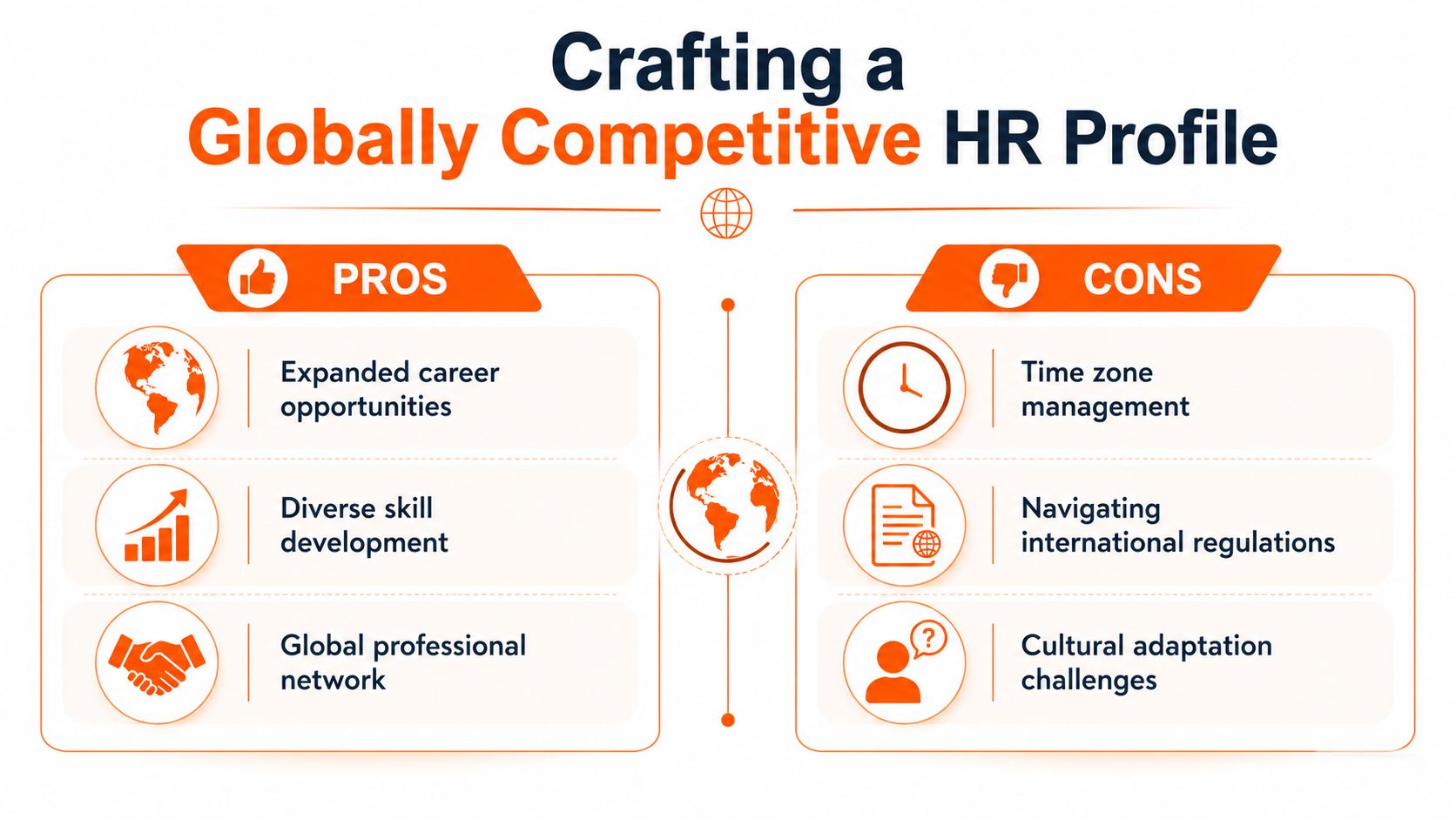
Crafting a Globally Competitive HR Profile
A domestic HR resume often undersells you internationally because it's written in local shorthand. It may make perfect sense to employers in your country and still fail with a cross-border hiring team that doesn't know your systems, labor frameworks, or organizational context.
Your job is to de-localize your experience without stripping out the substance.
Rewrite your experience for transferability
If your resume says you managed onboarding, benefits questions, grievances, and policy updates, that's too generic. International employers need to see what kind of environment you handled and how you worked across functions.
Try reframing your bullets around business contribution:
- Replace local jargon: Name the function in broadly understood language. “Works council support,” “payroll coordination,” “employee relations case handling,” and “ATS administration” travel better than company-specific wording.
- Show scale qualitatively: If you can't cite a verified number, describe complexity. Say you supported multi-site hiring, cross-functional stakeholders, or fast-changing policy environments.
- Surface cross-border adjacent skills: Vendor coordination, documentation discipline, process mapping, manager advising, and policy rollouts all matter internationally.
A strong profile also makes your systems literacy obvious. ATS platforms, HRIS tools, interview workflows, and documentation standards are easier to transfer across borders than local legal details. Employers know they can teach country specifics faster than they can teach judgment.
Position yourself on the strategic side of the market
The market is splitting. The World Economic Forum's 2025 outlook, as summarized in the verified data above, shows that AI and automation are reshaping tasks while people management, workforce planning, and employee relations are gaining value. For candidates pursuing hr jobs internationally, that means administrative breadth alone won't carry your profile.
If your resume reads like a task list, it's vulnerable. If it reads like business support, it's stronger.
Use language that signals judgment:
- Manager advisory work
- Policy interpretation
- Workforce planning support
- Cross-functional stakeholder alignment
- Employee relations risk handling
- Recruiting process design
- People analytics input
For practical help tightening your application narrative, this roundup of strategies to land HR jobs is useful because it focuses on how to present HR value rather than just listing duties.
Don't market yourself as “willing to learn international HR.” Market yourself as someone who already solves the kinds of people problems global employers have.
Resume, CV, and ATS reality
Use the document format the employer asks for. If a role says resume, send a resume. If the employer is in a market where CVs are standard, adapt accordingly. Don't force a single format into every application.
Then make sure the file survives screening. One verified research summary notes that 70% of applications are completed on mobile, 75% of resumes are rejected by applicant tracking systems, and 83% of job seekers want a clear hiring timeline, based on the research article and statistics roundup cited in the verified hiring workflow source. If your resume is hard to parse, you may never reach a human.
A clean layout matters more than a clever one. These ATS-friendly resume tips are the kind of checklist worth using before you apply internationally.
Sourcing Opportunities Remote vs Relocation
Most international HR searches break down into two paths. You either want a remote role with international scope, or you want a relocation role tied to a specific country. Mixing those searches too early wastes time because the employer logic is different.
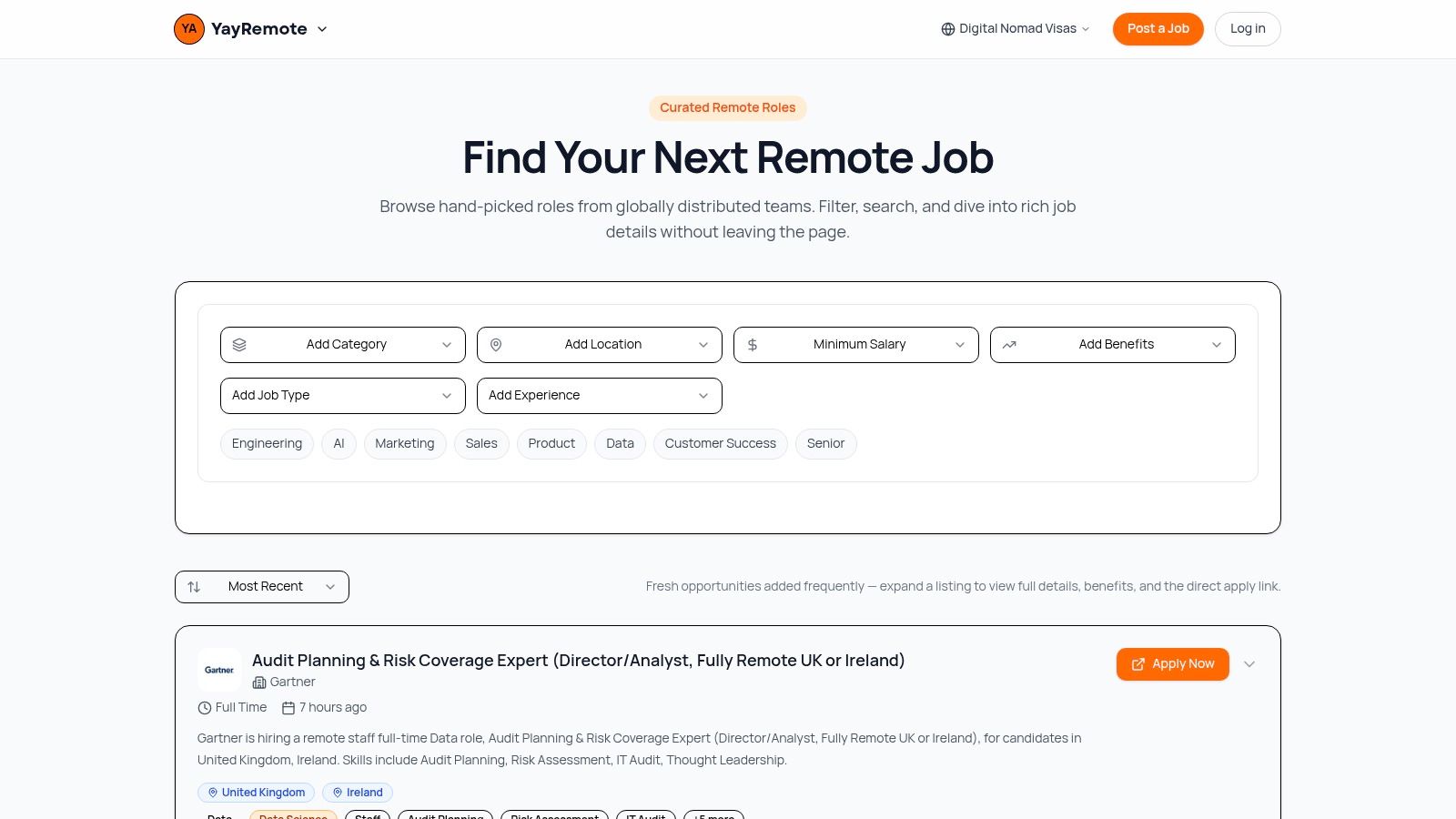
Remote international roles
These roles usually reward process strength, async communication, systems comfort, and the ability to support distributed managers and candidates. They're common in recruiting operations, talent acquisition, HR operations, people analytics support, and global people team coordination.
When sourcing them, filter for things that affect day-to-day viability:
- Employment type: Employee, contractor, or employer-of-record arrangement.
- Timezone overlap: A fully remote role can still be unrealistic if working hours are heavily skewed.
- Benefits clarity: International roles vary wildly in leave, equipment, and country coverage.
- Application flow: If the funnel is clunky on mobile or demands repeated data entry, that's often a sign of weak hiring operations.
The mobile and ATS data cited earlier matters here. If most applicants are applying on phones and many resumes fail ATS screening, the strongest candidates optimize not just content but also the way they apply. A lot of international recruiting happens fast, often outside your local working hours. Your materials should be ready to submit cleanly from any device.
Relocation roles
Relocation roles are different. They often expect local labor knowledge, language comfort, or a clear legal path to work authorization. You'll usually see more emphasis on country fit, office presence, and whether the employer will sponsor or support a move.
Use this quick comparison:
| Path | Best fit for | Main challenge |
|---|---|---|
| Remote international | HR ops, recruiting, systems, coordination, distributed people support | Time zone fit and legal employment structure |
| Relocation-based | Country HR, employee relations, mobility, local compliance-heavy roles | Work authorization and local law depth |
Don't search both tracks with the same message. For remote roles, lead with distributed work capability. For relocation roles, lead with market commitment, legal clarity, and your plan to become effective quickly in-country.
A short explainer on remote job search habits can help sharpen that filter mindset:
What works and what doesn't
What works is a focused search where each saved role fits your actual path.
What doesn't work is applying broadly to anything with “global,” “international,” or “remote” in the title. That usually creates a pile of mismatched applications across employment models, visa requirements, and seniority levels. A narrower funnel produces better interviews.
How to Vet International Employers for Global Maturity
A company can hire across borders and still be poor at global hiring. That distinction matters more than most candidates realize.
A polished careers page doesn't tell you whether payroll is set up cleanly, whether managers know how to interview across countries, or whether the company has thought through work authorization, local compliance, and employee support. You need signals.

Use the hiring process as evidence
One of the best signals is how the company runs hiring itself. Verified talent market data shows that companies in India and China shortened average time-to-hire by 20 to 30% in 2024 compared with 2019 by using digital hiring platforms, according to Compono's talent statistics review. The same source notes that streamlining the application process remained a top employer response.
That doesn't mean every fast process is good. It means mature employers usually remove friction on purpose.
Look for these green lights:
- Clear process stages: You know what comes next and who you'll meet.
- Coordinated scheduling: Time zones are handled thoughtfully, not sloppily.
- Consistent communication: Recruiters and hiring managers seem aligned.
- Role clarity: The company can explain whether the job is global, regional, or country-specific.
Red flags show up just as clearly:
- Vague legal answers when you ask how they employ staff in your location.
- Role drift where the title sounds strategic but the scope is mostly admin support.
- Country confusion where interviewers disagree about where the role can be based.
- Process chaos with duplicate interviews, repeated questions, or disappearing stakeholders.
Questions worth asking directly
Candidates often avoid hard questions because they don't want to seem difficult. Ask them anyway. A serious employer expects it.
Use questions like these:
- How is this role employed in my country? Direct entity, EOR, contractor, or relocation sponsorship.
- Which parts of the role are global and which are country-specific?
- Who owns labor-law interpretation when country issues arise?
- What support exists for payroll, mobility, and documentation?
- How do managers work across time zones and local holidays?
For a broader framework on what strong distributed hiring looks like, this piece on global talent acquisition gives useful context.
A company's hiring process is often the first live demo of how it runs globally. Treat it that way.
Read for operating maturity, not just brand prestige
Big brand doesn't always equal global maturity. Some smaller distributed companies are more disciplined because they had to build cross-border systems from the start. Some larger companies still operate internationally through patchwork exceptions and local improvisation.
If an employer can explain employment structure, reporting lines, interview stages, and country constraints clearly, that's a stronger sign than a glamorous logo.
Strategic Networking and Cross-Cultural Outreach
Applications alone rarely carry an international HR move. Networking does, but not the kind typically practiced. Sending generic connection requests to recruiters in ten countries won't help much. Building a small network of relevant people will.
Start by choosing a target pattern, not just a target country. Maybe you want remote talent acquisition in distributed tech companies. Maybe you want mobility or HR operations in multinational firms with regional hubs. That pattern shapes who you contact and what you say.
Build a shortlist of people, not a giant list
The most effective networking for hr jobs internationally is narrow and deliberate. Find people in roles adjacent to the one you want:
- Internal recruiters hiring across borders
- Global HR business partners
- People operations managers in distributed teams
- Mobility specialists
- HR systems and operations leads
Don't open with “Can you refer me?” Open with informed curiosity.
A message that works sounds like this:
I'm building toward an international HR path and noticed you've worked across distributed teams. My background is in HR operations and manager support, and I'm trying to understand how your company separates country-specific work from global process ownership. If you're open, I'd value a short conversation.
That message works because it signals respect, specificity, and peer-level interest.
Show cultural intelligence before the interview
Cross-cultural outreach isn't about memorizing etiquette rules. It's about showing that you can read context.
Do a few basic things well:
- Use the person's actual scope: Don't ask a mobility lead about employer branding unless that's really their lane.
- Keep messages compact: Long introductory essays create work for the reader.
- Acknowledge geography naturally: If you're reaching across time zones, propose flexible windows.
- Ask operational questions: These create better conversations than broad career questions.
Good informational interview prompts include:
| Better question | Why it works |
|---|---|
| “What part of your role is truly global versus locally owned?” | Reveals operating model |
| “What skills transfer best into your team?” | Helps with positioning |
| “Where do candidates usually underestimate the work?” | Surfaces hidden realities |
| “What makes someone effective quickly in your environment?” | Gives practical direction |
Follow up like a colleague, not a seeker
After a conversation, don't vanish until you need help. Send a short thank-you note that reflects something specific you learned. If you later apply to a relevant role, mention that your application was informed by the earlier conversation.
That shifts the relationship. You're no longer another name in the inbox. You're someone who listens, synthesizes, and acts professionally.
This matters in HR more than in many functions. People leaders often judge future colleagues by how they communicate before formal assessment begins.
Nailing the International Interview and Negotiation
International HR interviews test more than your skills. They test whether you can operate with ambiguity, adapt your communication style, and discuss risk without sounding rigid.
One question comes up constantly in different forms: why international, and why now? Weak answers focus on travel, exposure, or personal interest. Better answers focus on operating value. You want to show that cross-border work fits the kind of HR problems you solve.
Strong interview themes to prepare
Your examples should show three things.
First, judgment. Talk about a time you handled sensitive employee issues, policy interpretation, manager friction, or process inconsistency without escalating drama.
Second, structure. International teams care about process. Show that you can document, coordinate, and keep stakeholders aligned.
Third, cultural range. That doesn't require overseas experience in every case. It can come from supporting distributed colleagues, working across functions, or adapting your communication to different audiences.
If you can explain how you reduce confusion, protect compliance, and improve the employee or candidate experience, you'll sound more international than someone who has simply traveled more.
Negotiate the whole package
A lot of candidates fixate on base salary too early. For international HR roles, the structure of the offer can matter just as much.
Use the offer discussion to clarify:
- Employment model: Local employee, contractor, EOR, or relocation sponsorship.
- Relocation support: Flights, temporary housing, settling-in help, or none.
- Tax handling: Whether the company offers support, guidance, or leaves it to you.
- Benefits parity: What changes based on location.
- Visa costs and administration: Who pays, who prepares documents, and what happens if timelines slip.
For a compensation anchor, the U.S. Bureau of Labor Statistics reports a median annual wage of $72,910 in May 2024 for HR specialists in the United States, as shown in the BLS occupational outlook for human resources specialists. It's not a global salary standard, but it is a useful benchmark when you need a reference point for evaluating offers.
A practical negotiation stance
Don't argue from personal need alone. Argue from role effectiveness.
For example: if the role requires relocation, frame housing support or transition assistance as something that helps you ramp up faster. If the company wants a contractor arrangement, ask how they've structured compliance and payment reliability in your country. If they expect overlap across distant time zones, ask how that expectation is reflected in the package and work setup.
That's the posture of someone who understands how international work functions.
Navigating Visas, Compliance, and Relocation Logistics
Many otherwise strong searches stall, not because the candidate isn't qualified, but because the legal path is murky.
Verified data referencing the ILO notes that digital labour platforms are making transnational work more common while governance remains fragmented across countries, creating uncertainty around compliance and jurisdiction for international job seekers, as reflected in the cited ILO-related reference. That's exactly why hr jobs internationally can feel harder to decode than roles in other fields. The work may be global, but the employment rules aren't.
Know which legal path you're actually pursuing
Candidates often lump everything into “visa sponsorship,” but there are different paths:
- Employer-sponsored work authorization for relocation into a country where the company employs you.
- Remote employment through an EOR where the company hires internationally without opening a local entity.
- Independent contractor arrangements that place more compliance responsibility on you.
- Digital nomad or remote work visas that may allow residence but don't necessarily solve employment-law questions on their own.
Precision matters. A company saying “remote worldwide” doesn't automatically mean it can legally employ you where you live. A digital nomad visa doesn't automatically mean your employer is comfortable with tax, payroll, data handling, or permanent establishment risk. Terms get blurred all the time.
A useful companion read for policy and documentation complexity is this guide for HR directors on multilingual compliance. It's particularly relevant if you expect to work in environments where handbooks, notices, and employee communications cross languages.
Questions that save time early
Before you invest heavily in a process, get clarity on:
| Question | Why it matters |
|---|---|
| Can the company legally employ me in my current country? | Determines whether “remote” is actually available |
| If relocation is required, who owns the visa process? | Tells you how prepared the employer is |
| Is the role tied to one jurisdiction's labor law? | Helps you judge fit and ramp-up risk |
| Will I be an employee or contractor? | Changes taxes, benefits, and protections |
If the answer to these questions is hand-wavy, assume the company is still figuring it out.
Don't become your own immigration lawyer by accident
You need enough knowledge to ask good questions, not enough to self-certify a legal pathway. That's a different thing. Candidates get into trouble when they read a few blog posts and assume that residence rights, work rights, payroll treatment, and tax residency all line up neatly. They often don't.
If you're trying to understand cross-border hiring structures, a practical starting point is this explainer on what an employer of record is. It helps separate true employment options from vague “work from anywhere” messaging.
The logistics side also deserves a checklist: document timelines, lease constraints, banking, local registration, health coverage, and whether the employer's onboarding sequence works for someone joining from another country. That's boring work. It's also the work that prevents bad surprises.
If you're serious about building a career without location barriers, YayRemote is worth using as your operational base. You can search curated remote roles, compare job details in one place, and use tools for resumes, time zone planning, and visa research that make international moves more manageable.