The 10 Best Countries for Remote Workers in 2026: A Definitive Guide
Discover the 10 best countries for remote workers in 2026. This guide covers visas, cost of living, taxes, and more to help you choose your next destination.
The world has become a global office, but choosing your home base involves more than just picking a spot on the map. Making the right decision requires a careful balance of legal logistics, financial planning, and lifestyle preferences. This is especially true for professionals who need to align their work with specific time zones or require robust infrastructure to stay productive. Finding the best countries for remote workers means looking past the pretty pictures and digging into the practical details that truly matter.
This guide moves beyond surface-level recommendations to provide a definitive breakdown of top destinations for 2026. For each country, we offer actionable data on crucial factors like digital nomad visas, residency paths, and actual cost-of-living expenses. You'll find specific tax considerations, connectivity benchmarks, and an honest look at the pros and cons of each location.
Whether you're a software developer needing a few hours of overlap with a U.S. West Coast team or a marketing consultant seeking a low-cost, high-energy environment, this roundup delivers the clarity needed to make a confident choice. We will also demonstrate how YayRemote’s specialized tools, such as the Digital Nomad Visa Hub and the Time Zone Overlap calculator, can simplify your research and help turn your plan into a reality. Let’s explore where your next office could be.
1. Portugal - Europe's Digital Nomad Gateway
Portugal consistently ranks among the best countries for remote workers, blending a low cost of living with high quality of life. Its appeal lies in its sunny climate, vibrant culture, and a well-established infrastructure that supports a thriving expatriate and digital nomad community. Major cities like Lisbon and Porto are packed with co-working spaces and cafes, creating a social and professional network that is easy to tap into.
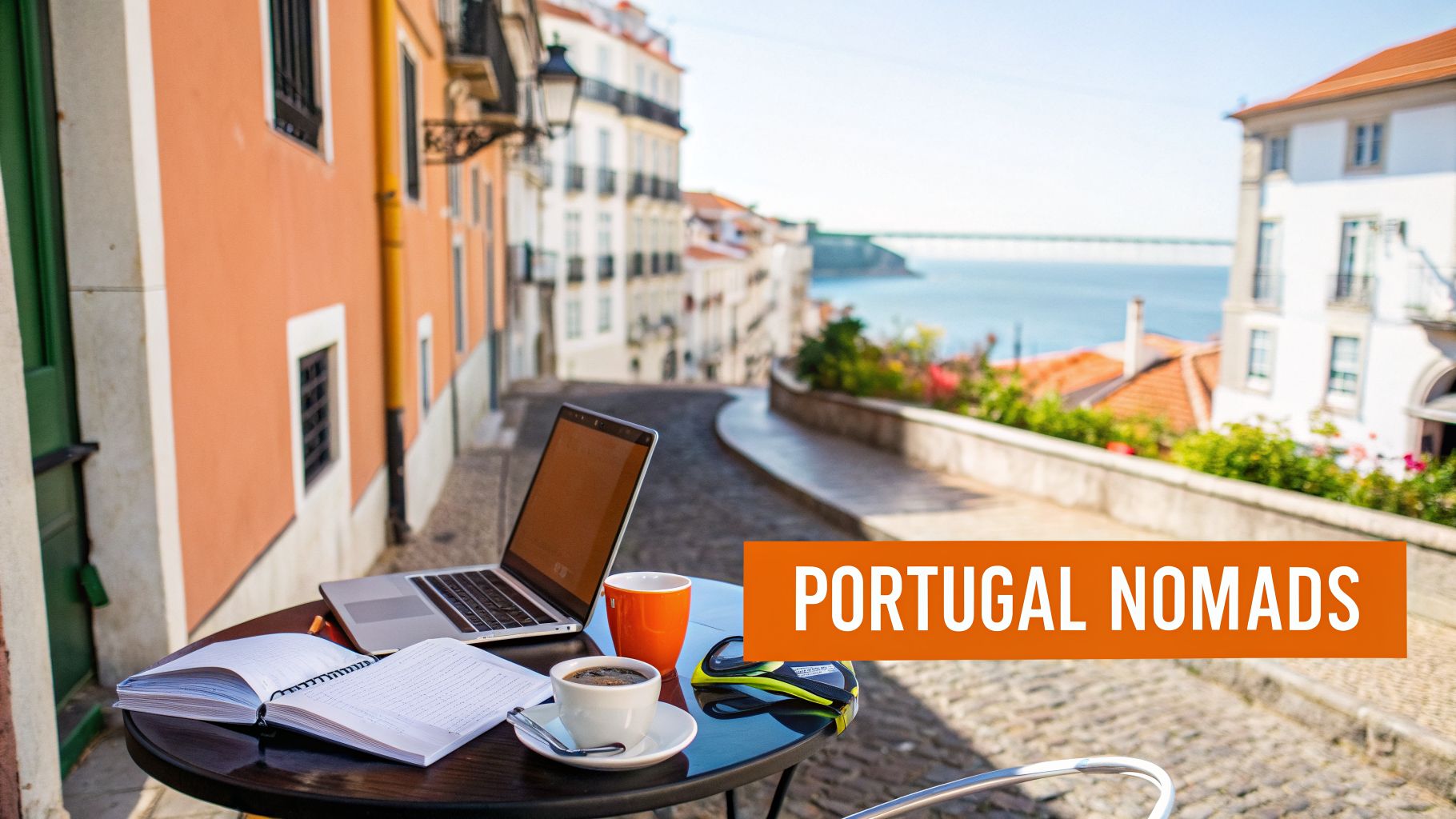
The country has actively courted remote talent, most notably with its Digital Nomad Visa launched in 2022. This visa, along with the popular D7 Passive Income Visa, provides clear pathways for non-EU citizens to live and work legally. This official support has solidified Portugal's reputation, attracting events like the Digital Nomad Conference Lisbon and major co-working brands like Selina, further boosting its community-centric atmosphere.
### Key Information & Actionable Tips
- Visa Options: The Digital Nomad Visa requires a minimum monthly income of around €3,280. For those with investment or retirement income, the D7 Visa is a great alternative, requiring only a minimum passive income of approximately €820 per month.
- Best Cities: Lisbon is the energetic heart, with hubs like LX Factory, while Porto offers a more relaxed, historic vibe. For a quieter coastal experience with easy city access, consider basing yourself in Cascais or Almada.
- Community & Networking: Immediately join Facebook groups like 'Lisbon Digital Nomads' to connect with others. Co-working memberships, often costing €100-200 per month, are a worthwhile investment for building a professional network.
- Essential First Step: Obtain your NIF (Número de Identificação Fiscal) as soon as you arrive. This tax identification number is critical for opening a bank account, signing a lease, and setting up utilities.
Portugal's location also makes it an excellent base for exploring Europe, with efficient train connections to Spain. This combination of affordability, robust visa options, and a welcoming community makes it an ideal choice for anyone exploring remote jobs abroad.
2. Spain - Mediterranean Lifestyle with Digital Nomad Infrastructure
Spain offers a compelling mix of vibrant Mediterranean culture, modern infrastructure, and official pathways for remote work. The country’s appeal lies in its diverse cities, renowned cuisine, and a sun-drenched lifestyle that promotes a healthy work-life balance. Major hubs like Barcelona and Madrid have extensive co-working networks, while cities like Valencia and Seville provide lower-cost alternatives with excellent amenities, making Spain one of the best countries for remote workers.
The introduction of its Digital Nomad Visa in 2023 solidified Spain's position as a top destination. This official recognition has attracted major co-working brands like Selina and Spaces and fuels major tech events such as Barcelona’s Mobile World Congress and Madrid’s South Summit. This established infrastructure provides an instant professional community for newcomers to plug into, from Barcelona's 22@ innovation district to Madrid's thriving Malasaña neighborhood.
### Key Information & Actionable Tips
- Visa Options: The Digital Nomad Visa requires a minimum monthly income of around €2,646. Applications must be submitted through a Spanish consulate in your home country before you travel.
- Best Cities: Barcelona offers a fast-paced, international networking environment. Valencia provides a more relaxed, beach-oriented lifestyle with living costs up to 40% lower. Madrid is the bustling capital, ideal for those seeking a central cultural and business hub. Check out our deep dive into the best cities for digital nomads for more options.
- Community & Networking: Join Madrid's Tech Hub or search for events hosted by Xarxa de Coworkings in Barcelona. Popular neighborhoods for remote workers include Gràcia (Barcelona), Chueca (Madrid), and Ruzafa (Valencia).
- Essential First Step: Upon arrival, you must register with the local police (Policía Nacional) within 30 days to obtain your Foreigner's Identity Number (NIE) and residency card (TIE). These are essential for renting an apartment (using sites like Idealista) and daily life.
3. Mexico - Low Cost with High Digital Nomad Density
Mexico has long been a top destination for North American travelers, but its appeal for remote workers has grown substantially due to its exceptional value, large expatriate communities, and accessible residency options. The country's strong time-zone alignment with the U.S. and Canada makes it one of the best countries for remote workers employed by North American companies. Major hubs like Mexico City and Playa del Carmen boast mature digital nomad scenes with extensive infrastructure, from co-working spaces to reliable fiber-optic internet.
While Mexico doesn't have a specific "digital nomad visa," its Temporary Resident Visa serves a similar purpose and is a popular route for long-term stays. This visa requires proof of economic solvency, making it accessible for many professionals. This clear legal pathway, combined with a vibrant culture and low cost of living, has been heavily promoted by travel bloggers and co-working giants like Selina, who have established over 20 properties across the country.
### Key Information & Actionable Tips
- Visa Options: The Temporary Resident Visa is the primary choice. Financial requirements vary by consulate but typically require a monthly income of around $3,275 USD or a bank balance of approximately $54,600 USD.
- Best Cities: Playa del Carmen is ideal for community and beach life, hosting over 10,000 nomads. Mexico City offers a bustling urban experience with a top-tier startup scene, while Puerto Vallarta provides a growing Pacific coast alternative.
- Community & Networking: Join Facebook groups like 'Digital Nomads Mexico' and city-specific ones for housing leads and social events. Co-working spaces (€150-300/month) like Selina or The Spot are essential for reliable internet and making connections.
- Essential First Step: Secure your Temporary Resident Visa from a Mexican consulate in your home country before you travel. Upon arrival, you will complete the process to get your residency card. Also, get a Mexican phone number with a provider like Telcel or AT&T immediately.
4. Thailand - Southeast Asian Hub for Budget-Conscious Remote Workers
Thailand has long been a cornerstone of the digital nomad movement, offering an almost unbeatable combination of extremely low living costs, modern infrastructure in its cities, and a deeply ingrained expatriate culture. Its global appeal, popularized by pioneers like Tim Ferriss, has created massive, self-sustaining remote work communities in hubs like Chiang Mai and Bangkok. These cities are filled with co-working spaces, high-speed internet cafes, and an international crowd that makes networking effortless.
While Thailand doesn't yet have a straightforward digital nomad visa like some European countries, its established pathways and welcoming environment more than compensate. For years, remote workers have utilized long-stay tourist visas, education visas (often for learning the Thai language), or the premium Thailand Elite Visa to establish a base. This vibrant ecosystem is supported by major co-working brands like Punspace and HUBBA, and a thriving startup scene in Bangkok with a presence from Google and 500 Startups.
### Key Information & Actionable Tips
- Visa Options: The most common route is starting with a 60-day Tourist Visa, which can be extended for another 30 days in-country. For longer stays, many opt for an Education Visa by enrolling in a language school. The Thailand Elite Visa offers long-term residency for a significant fee.
- Best Cities: Chiang Mai is the global epicenter for budget-conscious nomads, where you can live comfortably for €400-500 per month. Bangkok offers a more cosmopolitan, big-city experience with superior infrastructure, particularly in districts like Ari and Thonglor.
- Community & Networking: Join Facebook groups like 'Digital Nomads Chiang Mai' or 'Bangkok Remote Workers' before you arrive. They are essential resources for finding apartments, getting local tips, and attending meetups.
- Essential First Step: Get a local SIM card (Dtac or True Move) at the airport for around €5-10. A local phone number is necessary for everything from signing up for apps like Grab (for transport) to opening a bank account. Plan for "visa runs" to neighboring countries if you are on a tourist visa.
5. Colombia - Emerging South American Remote Work Destination
Colombia has rapidly emerged as a top contender for remote workers, offering a remarkable blend of affordability, vibrant culture, and a growing infrastructure. The country’s transformation has put cities like Medellín and Bogotá on the global map, attracting a lively community of digital nomads and tech entrepreneurs. These hubs feature a growing network of co-working spaces and a startup scene that includes regional successes like Rappi, making it a dynamic environment for professionals.
The country has officially embraced this trend by introducing a Digital Nomad Visa in 2022, creating a clear legal path for foreigners to live and work there. This governmental support, combined with an extremely low cost of living and a welcoming local culture, solidifies its position. Events like the Colombia Tech Summit and Startup Weekend further highlight the nation's commitment to innovation and its appeal as a South American base for remote talent.
### Key Information & Actionable Tips
- Visa Options: The Digital Nomad Visa is designed for remote workers, freelancers, and entrepreneurs. Many nationalities can also enter on a 90-day tourist visa, which can often be extended for another 90 days, providing a simple way to test the waters before committing.
- Best Cities: Medellín offers a spring-like climate and innovative public services, with safe, expat-friendly neighborhoods like Laureles and Parque Bolívar. Bogotá is the larger, high-altitude capital with the most job opportunities and a bustling tech scene in areas like Chapinero and Usaquén. For a Caribbean lifestyle, Cartagena provides a historic coastal setting.
- Community & Networking: Join Facebook groups like 'Digital Nomads Colombia' and 'Nomads Medellín' to connect with the community. Co-working spaces, costing around €80-150 per month, are excellent for reliable internet and building professional contacts.
- Essential First Step: For longer stays, obtaining a Cédula de Extranjería (foreigner ID card) is crucial. This ID is necessary for opening bank accounts, signing leases, and other official transactions. Learning basic Spanish is also vital for daily life and deeper cultural integration.
Colombia's strategic location provides a gateway to exploring the rest of South America. This combination of an inviting visa policy, affordability, and a thriving community makes it one of the best countries for remote workers seeking adventure and opportunity.
6. Costa Rica - Political Stability with Caribbean and Pacific Access
Costa Rica has long been a magnet for expatriates and is now one of the best countries for remote workers seeking a blend of political stability and astounding natural beauty. Known for its "Pura Vida" (pure life) philosophy, the country offers a high quality of life, access to both Caribbean and Pacific coastlines, and a strong commitment to environmental preservation. Its established infrastructure for tourism and expats makes transitioning to a remote work lifestyle relatively smooth.
The country's government has embraced the global work-from-anywhere trend, introducing a Digital Nomad Visa to complement its popular Pensionado Visa program. This official support, combined with a welcoming local culture and strong expat organizations like the Association of Residents of Costa Rica (ARCR), provides a solid foundation for building a new life. Cities like San José offer urban amenities and growing tech hubs, while locations like Monteverde and Uvita cater to those prioritizing nature.
### Key Information & Actionable Tips
- Visa Options: The Digital Nomad Visa requires a minimum monthly income of $3,000 for an individual. The long-standing Pensionado Visa, ideal for those with stable passive income like a pension or investment returns, requires a monthly income of at least $1,000.
- Best Cities: San José is the capital, offering the best infrastructure and a growing co-working scene. For a unique lifestyle, Monteverde provides a cloud-forest community, while coastal towns like Uvita and Puerto Viejo are perfect for beach-based remote work.
- Community & Networking: Join Facebook groups like 'Expats in Costa Rica' and 'Remote Workers Costa Rica' for immediate connections. The established expat community means plenty of local meetups and social events.
- Essential First Step: Upon visa approval and arrival, secure your Cédula (residency ID card) from Migración. This document is essential for nearly all official transactions, from opening a bank account to signing contracts. It's also vital to open an account with a local bank like BAC or Banco Nacional to meet visa renewal requirements.
7. Georgia - Affordable Gateway Bridging Europe and Asia
Georgia has rapidly emerged as a top destination for remote workers, prized for its exceptionally liberal visa policy and extremely low cost of living. This transcontinental country offers a unique blend of European and Asian cultures, stunning natural landscapes, and a welcoming atmosphere for foreigners. The burgeoning tech scene in Tbilisi, combined with its ancient history, creates an inspiring backdrop for digital nomads.
The country's main draw is its visa-free regime, which allows citizens of many countries to stay for up to 365 days without any paperwork. This policy effectively acts as a year-long digital nomad visa, removing the bureaucratic hurdles found elsewhere. For those wishing to stay longer, the government introduced the "Remotely from Georgia" program, formalizing the nation's appeal and making it one of the most accessible countries for remote professionals. This official support has fostered a vibrant and growing community, especially in cities like Tbilisi.
### Key Information & Actionable Tips
- Visa Options: Citizens of over 95 countries can enter visa-free for up to one year. For longer stays, the Remotely from Georgia program allows high-income remote workers to apply for residency, requiring a minimum monthly income of $2,000.
- Best Cities: Tbilisi is the main hub, with the Vake and Saburtalo districts being popular among expats for their modern infrastructure. Batumi offers a Black Sea coastal vibe, while Gori provides an even lower cost of living and a more traditional experience.
- Community & Networking: Join Facebook groups like 'Tbilisi Nomads' and 'Remote Workers Georgia' to connect with the local community. Co-working spaces like Growing Spaces in Tbilisi are excellent for building a professional network.
- Essential First Step: Visit a Public Service Hall to obtain a Georgian personal identification number. This is crucial for opening a local bank account, signing a lease, and setting up utilities like internet with providers such as Silknet or Caucasus Online.
Georgia's strategic location and time zone (GMT+4) offer a distinct advantage, overlapping with the morning in Eastern North America and the entire business day in Europe. This combination of visa simplicity, affordability, and a welcoming community makes Georgia a standout choice for anyone seeking remote jobs abroad.
8. Vietnam - Southeast Asian Rising Star with Emerging Infrastructure
Vietnam offers an unbeatable combination of extremely low living costs and a dynamic, rapidly developing tech scene. This makes it a compelling choice for remote workers, especially those on a tighter budget or looking to bootstrap a business. Cities like Ho Chi Minh City and Hanoi are buzzing with energy, driven by local startups like Tiki and a growing international presence, creating an environment ripe with opportunity and cultural immersion.
While the country does not yet have a formal digital nomad visa, accessible e-visa and business visa pathways make entry straightforward. The legal status for long-term remote work exists in a gray area, but the government's focus on technological growth has fostered a welcoming atmosphere for foreign talent. This emerging infrastructure, from countless co-working spaces to a burgeoning cafe culture, supports a lifestyle that is both productive and incredibly affordable.
### Key Information & Actionable Tips
- Visa Options: The simplest entry is the 90-day e-visa, which can be applied for online for around €25. Many remote workers extend their stay through "visa runs" to neighboring countries like Cambodia or Thailand, though this requires careful planning.
- Best Cities: Ho Chi Minh City (Districts 1, 3, Binh Thanh) is the commercial hub with the best infrastructure and job opportunities. Hanoi (Ba Dinh, Hoan Kiem districts) offers a more traditional, cultural experience with a strong tech community. For a relaxed beach lifestyle, Da Nang is a rapidly growing nomad hotspot.
- Community & Networking: The startup scene is active, with local competitions and regional tech events. Joining city-specific expat and digital nomad Facebook groups is the fastest way to connect and get on-the-ground advice.
- Essential First Step: Get a Vietnamese SIM card from providers like Viettel or MobiFone immediately upon arrival. A monthly plan with ample data often costs less than €5, ensuring you're connected from day one. Also, install a reliable VPN for privacy and to access certain international sites.
Vietnam's appeal lies in its raw energy and affordability, making it one of the best countries for remote workers looking for adventure on a budget. The time zone is also well-suited for collaborating with teams in Australia and other parts of Asia.
9. Digital Nomad Visa & Residency Overview
The rise of remote work has prompted dozens of nations to create legal pathways specifically for location-independent professionals. Instead of relying on risky tourist visa runs or complex business setups, workers can now secure long-term stays through programs designed for them. These visas legitimize a remote worker's status, providing stability and access to local services like banking and healthcare, which is a major reason why the best countries for remote workers often have these programs.
These programs range from dedicated Digital Nomad Visas, like those offered by Spain and Portugal, to versatile Temporary Resident Visas, such as Mexico's popular option. Other creative solutions include Thailand's long-term Elite Visa or Georgia's "Remotely from Georgia" program. Each has unique requirements, typically centered on proving a stable foreign income that meets a certain monthly threshold, but they all serve the same core purpose: attracting global talent.
### Key Information & Actionable Tips
- Visa Examples: Portugal's Digital Nomad Visa requires a monthly income of around €3,280, while its D7 Visa needs just €820 in passive income. Mexico's Temporary Resident Visa demands proof of approximately $3,275 in monthly income or a significant bank balance.
- Application Strategy: Always verify the latest rules on official consulate websites before applying. Requirements change frequently. For complex applications, especially those involving dependents or nuanced financial situations, hiring a local immigration lawyer is a sound investment.
- Documentation Prep: Prepare key documents in advance, as they are almost universally required. This includes recent bank statements to prove income, a clean criminal background check from your home country, and proof of international health insurance.
- Essential First Step: Before committing to a country, thoroughly research the tax implications. A digital nomad visa does not automatically exempt you from local taxes. Understanding your potential tax residency status is crucial for financial planning.
Grasping the different legal routes is the first step toward living and working abroad legally. For a detailed comparison, you can explore the various digital nomad visa requirements to find the best fit for your financial situation and lifestyle goals.
10. Cost & Internet Snapshot for Remote Workers
Understanding your potential budget and digital infrastructure is fundamental when choosing where to work remotely. While individual spending habits vary, destinations generally fall into distinct cost-of-living tiers, each offering a different balance between affordability and amenities. Similarly, internet reliability can make or break your productivity, with significant differences between capital cities and rural retreats.
This snapshot aggregates data from across the globe to help you quickly compare potential destinations. For instance, Southeast Asian hubs and secondary cities in Latin America often provide exceptional value, while major European capitals require a more substantial budget. Stable, high-speed internet is now common in most urban centers, but having a reliable backup plan remains a non-negotiable for anyone whose income depends on connectivity. This comparison is a crucial starting point in finding the best countries for remote workers that align with your financial goals.
### Key Information & Actionable Tips
- Cost Tiers (Monthly):
- Low-Cost (€300-600): Vietnam, Thailand, and secondary cities in Mexico. Ideal for stretching your savings.
- Mid-Range (€400-800): Colombia, Georgia, and Portugal (outside major cities). A great balance of affordability and comfort.
- Higher-Range (€700-1,400): Spain, Lisbon, and Costa Rica. These offer more amenities but come with a higher price tag.
- Internet Strategy: Never rely on a single connection. Always budget for a mobile hotspot with a generous data plan as your primary backup. In areas known for intermittent service, a co-working space membership provides a guaranteed professional environment.
- Budgeting Realities: Your total monthly cost isn't just rent and food. Factor in essential but often-overlooked expenses like international health insurance, visa application fees, and potential visa-run travel.
- Location-Specific Research: National internet speed averages can be misleading. Before committing to a lease, investigate neighborhood-level connectivity. A beach town might have drastically different service reliability compared to the capital city just an hour away.
Top 10 Remote-Work Destinations Comparison
| Destination | 🔄 Implementation complexity | ⚡ Resources & infrastructure | 📊 Expected outcomes (remote-work quality) | 💡 Ideal use cases | ⭐ Key advantages |
|---|---|---|---|---|---|
| Portugal - Europe's Digital Nomad Gateway | Moderate — D7 and nomad visas available; some bureaucracy | Moderate cost (€800–1,200 outside Lisbon); widespread 100+ Mbps fiber | High — stable healthcare, strong nomad community, good infrastructure | EU/Schengen base, co-working hubs (Lisbon/Porto), cultural exploration | Affordable Western Europe, clear visa paths, strong coworking network |
| Spain - Mediterranean Lifestyle with Digital Nomad Infrastructure | Moderate–High — digital nomad visa launched; tax/administration can be complex | Higher cost (€900–1,400 in major cities); 300+ Mbps in cities | High — vibrant tech/startup scene, excellent transport and services | Tech networking, city life, long-term European residency | Strong startups, transport, culture and nightlife |
| Mexico - Low Cost with High Digital Nomad Density | Low–Moderate — Temporary Resident Visa straightforward; renewals require procedures | Low cost (€400–700); internet 30–100 Mbps in cities, variable on coast | Good — large nomad communities, US time-zone alignment, varied infrastructure | North America-aligned remote work; beach or city options | Very affordable, massive nomad community, easy residency pathways |
| Thailand - Southeast Asian Hub for Budget-Conscious Remote Workers | Moderate — multiple visa routes; rules change often; no official nomad visa | Very low cost (€400–600); 20–100 Mbps in Bangkok/Chiang Mai | Good for budget nomads; infrastructure variable outside hubs | Budget lifestyle, SE Asia hub, language-study visa routes | Extremely low cost, strong expat networks, quality private healthcare |
| Colombia - Emerging South American Remote Work Destination | Low–Moderate — Visitor (90 days) easy; extensions require navigation | Low–moderate cost (€450–750); internet 30–100 Mbps in cities | Improving — growing startup scenes, affordable urban living | Spanish immersion, startups in Medellín/Bogotá, affordable living | Low cost, pleasant climate, rapidly growing tech ecosystem |
| Costa Rica - Political Stability with Caribbean and Pacific Access | Moderate — Pensionado/Rentista visas accessible but paperwork needed | Higher cost (€700–1,100); 20–100 Mbps (fiber expanding) | High quality of life — stable institutions, strong nature access | Nature-focused long-term stays, retirees, quality-of-life seekers | Political stability, easy residency options, robust public services |
| Georgia - Affordable Gateway Bridging Europe and Asia | Low — visa-free 365 days for many; "Remotely from Georgia" available | Low cost (€400–700); 30–100 Mbps in Tbilisi | Good — affordable base, growing startup scene, strategic location | Budget Europe/Asia bridge, long-stay flexibility via visa-free entry | Extremely accessible visa policy, low living costs, welcoming policy |
| Vietnam - Southeast Asian Rising Star with Emerging Infrastructure | Low–Moderate — e-visa easy; legal status for full-time remote work is gray | Very low cost (€300–500); internet 10–50 Mbps, improving but inconsistent | High value but infrastructural and legal caveats exist | Ultra-low-cost living, emerging startup hubs (HCMC, Hanoi, Da Nang) | Exceptional affordability, growing tech ecosystem, easy e-visa |
| Digital Nomad Visa & Residency Overview | Variable — clear thresholds in many programs; rules change frequently | Variable by country — typically requires proof of income and insurance | Helpful — simplifies long-term remote work where available | Comparing visa options, planning residency and tax implications | Consolidates pathways, clarifies renewal and documentation needs |
| Cost & Internet Snapshot for Remote Workers | N/A — summary snapshot for planning | Aggregated ranges: accommodation €150–900; food €80–300; coworking €50–300; internet 10–300+ Mbps | Practical — quick budget and connectivity comparison across destinations | Initial shortlisting, budgeting, selecting stability vs cost trade-offs | Concise cross-country cost and connectivity reference for nomads |
From Research to Relocation: Your Next Steps
You've explored the sunny coastlines of Portugal, the vibrant cities of Colombia, and the affordable landscapes of Vietnam. This journey through the best countries for remote workers is more than just a travelogue; it's a blueprint for a new way of living and working. The core takeaway isn't simply that these destinations are appealing, but that a globally mobile career is more accessible than ever before, provided you approach it with a clear, strategic plan.
The common thread connecting successful remote work transitions is diligent preparation. From understanding the nuances of Spain's digital nomad visa to calculating the real cost of living in Thailand, the details matter immensely. Our deep dive into these countries reveals that the "best" place is entirely subjective. It's a personal calculation based on your career, financial situation, lifestyle preferences, and tolerance for bureaucracy. Your ideal destination is the one where these factors align most favorably.
Creating Your Personal Relocation Blueprint
Moving from aspiration to action requires breaking down the process into manageable steps. This is where you transform abstract ideas into a concrete project plan. The goal is to eliminate uncertainty and build a clear path forward, ensuring you don't overlook critical legal, financial, or logistical details.
Start by creating a shortlist. Instead of getting overwhelmed by a dozen options, select your top two or three contenders from our list.
- Financial Reality Check: Use our cost-of-living data as a starting point. Create a detailed personal budget for each shortlisted country. Account for rent, utilities, food, healthcare, transportation, and discretionary spending. Does your current income comfortably support your desired lifestyle there?
- Legal and Visa Deep Dive: This is non-negotiable. An expired tourist visa can create serious complications. Research the specific requirements for your nationality. Does the country offer a dedicated digital nomad visa, or will you need to explore other long-stay options? What are the income thresholds, health insurance mandates, and document requirements?
- Professional Logistics: Your job is the engine of this lifestyle. Confirm your employer's policies on international remote work. Critically, analyze the time zone difference. How much overlap do you have with your core team or key clients? A four-hour difference might be manageable, but an eight-hour gap could strain collaboration and lead to burnout.
Tools for a Seamless Transition
Making an informed decision is about having the right data at your fingertips. Abstract research can only take you so far. You need practical tools that apply directly to your unique situation. For instance, knowing that Costa Rica is in the Central Time Zone is one thing; seeing exactly how your 9 AM meeting in San José overlaps with your team's end-of-day in London is another.
Similarly, tax obligations can be a major source of stress. The "Days in Country" you spend in a location can trigger tax residency, a complex issue with significant financial consequences. Proactively tracking your physical presence in different jurisdictions is essential for compliance and financial planning. Don't leave this to guesswork; a simple miscalculation can lead to unexpected tax bills and legal headaches.
This preparation phase is where your dream of working from a new country becomes a tangible reality. By methodically addressing these key areas, you build a solid foundation for a successful and sustainable life as a global remote worker. Your new office, whether it's a beachfront cafe in Mexico or a coworking space in Georgia, is waiting.
Ready to turn your research into reality? The YayRemote platform is built to guide you through every step. Use our Digital Nomad Visa Hub to check your eligibility, our Time Zone Overlap tool to sync with your team, and our job filters to find location-independent roles that match your dream destination.