Your Guide to High-Paying Remote Jobs Abroad
Land high-paying remote jobs abroad with our complete guide. We cover visas, taxes, top industries, and negotiation tips for your international career.
Picture this: you're logging into your work computer, but instead of your usual home office, you're sitting in a sun-drenched cafe in Lisbon. Or maybe it's a vibrant co-working space in Bali. This isn't some far-fetched fantasy anymore. For millions of professionals, this is the new reality of remote jobs abroad.
The whole idea of a "workplace" has been turned on its head. The global career game has changed, opening up incredible opportunities for skilled people to build a career on their own terms, from literally anywhere with a decent internet connection.
The Global Shift to Working Remotely Abroad
The traditional office is no longer the default. What was once a niche lifestyle for a handful of adventurous freelancers has now hit the mainstream, becoming a viable career path for people in dozens of industries. Companies are realizing they don't need to be limited by geography, and this has created a worldwide talent pool where what you can do matters far more than where you are. This guide is your map for navigating this exciting new world.
The appeal is pretty clear, right? It's the chance to blend a stable, fulfilling career with the kind of personal growth that only comes from travel and immersing yourself in new cultures. We're talking about more than just a cool Zoom background; it’s about designing a life where your professional drive and your personal freedom aren't at odds. We'll break down the big challenges—like visas, taxes, and finding real opportunities—into simple, manageable steps.
Why the Sudden Surge in Global Remote Work?
While this shift didn't happen overnight, it has certainly hit the accelerator in recent years. The global remote workforce has seen explosive growth, fundamentally changing how companies operate. By 2025, remote work became the norm for 48% of the global workforce—a massive leap from just 20% back in 2020. That kind of change has huge implications for both job seekers and companies, with flexibility now seen as a major competitive edge. You can dig into more data on the rise of remote work on Archie.
So, what's behind this massive change? It boils down to a few key things:
- Technology Finally Caught Up: Blazing-fast internet, powerful collaboration software like Slack and Asana, and cloud computing have made it possible to work together seamlessly from opposite sides of the planet.
- A Mindset Shift: Companies finally get it. Talent is everywhere, not just within a 30-mile radius of their headquarters. Offering remote work is one of the best ways to attract top performers who crave autonomy.
- People Are Demanding It: The modern workforce is driven by the desire for a better work-life balance, the chance to save money, and the simple freedom to choose where they want to live.
Think of this guide as your personal playbook for taking your career international. Our goal is to give you the practical knowledge and tools to turn that dream of working abroad into a real, achievable plan.
This isn't just a temporary fad. It's a fundamental change in how we think about work and life. In the sections that follow, we'll walk you through everything from untangling legal red tape to negotiating a benefits package that works anywhere in the world, making sure you're ready for the adventure ahead.
Navigating Visas and Taxes for Remote Work
So you've decided to take your job on the road. Fantastic. But before you start scouting beachside cafes in Bali, we need to talk about the not-so-glamorous side of things: visas and taxes. Getting this stuff right isn't just a suggestion; it’s the foundation of a sustainable, stress-free life abroad. The two biggest hurdles you'll face are your legal right to be in a country and your financial obligations once you're there.
It's tempting to think you can just show up on a tourist visa and quietly work from your laptop. Don't do it. A tourist visa is exactly what it sounds like—it’s for being a tourist. Think of it as a library card; it lets you browse, but it doesn't give you permission to set up an office in the history section. Working on one is a gamble that can end with fines, deportation, or a ban on re-entry. It's just not worth the risk.
This decision tree gives you a bird's-eye view of the journey, from that first spark of an idea to dealing with the real-world logistics.
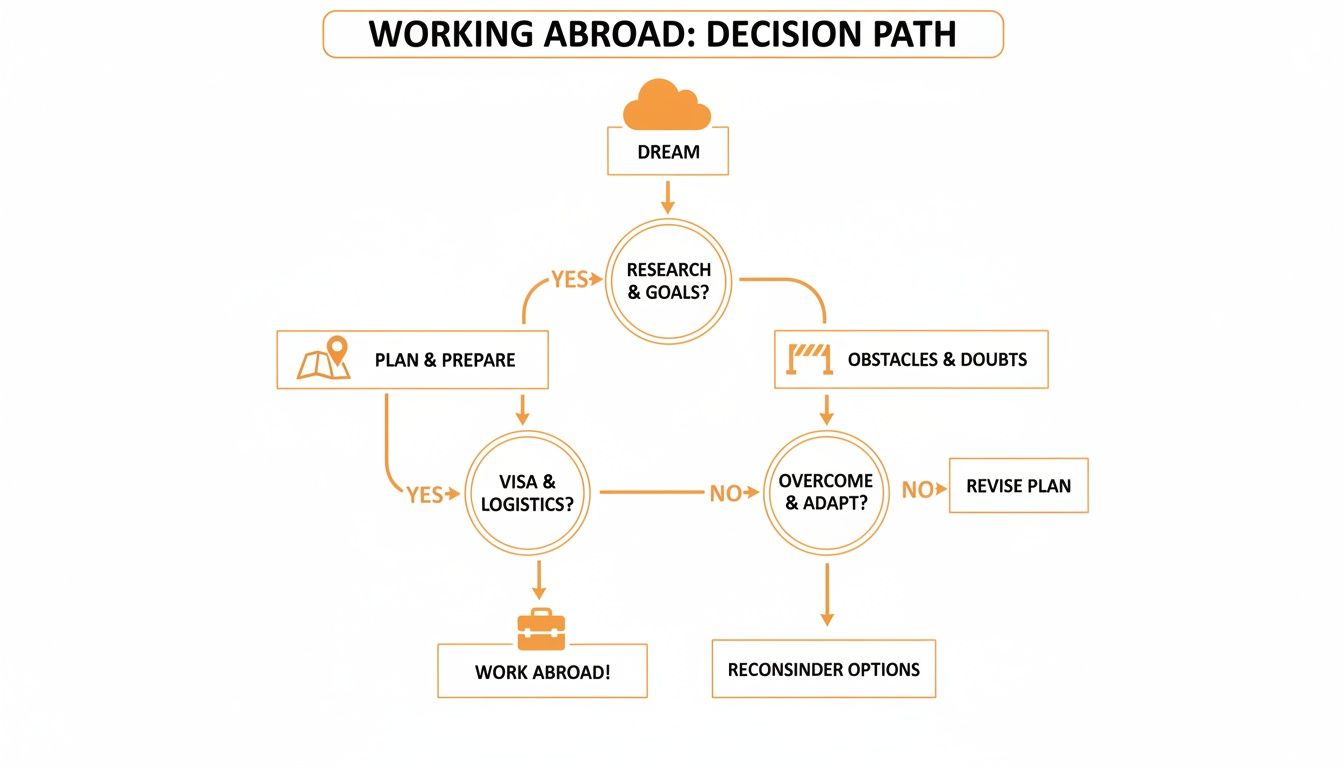
As you can see, turning the dream into a reality means having a solid plan to tackle the inevitable legal and practical challenges head-on.
Understanding Digital Nomad Visas
Thankfully, governments are catching on. The explosion of remote work has led to the creation of the Digital Nomad Visa, a game-changer for people like us. This visa is your official hall pass, specifically designed for professionals who live in one country while earning an income from another. It's the legitimate, above-board solution.
More than 50 countries now offer a digital nomad visa or a similar long-stay permit for remote workers. While the fine print varies from place to place, they all tend to look for a few common things:
- Proof of Remote Work: You’ll need to prove you have a remote job or freelance clients based outside the country you’re moving to.
- Minimum Income Threshold: Countries want to see that you can support yourself. You'll have to show bank statements or contracts proving you meet their monthly income requirement.
- Health Insurance: Comprehensive international health coverage is pretty much always non-negotiable.
A Digital Nomad Visa isn't just a stamp in your passport. It's your key to settling in properly. It provides the legal standing you need to open a local bank account, sign a lease, and truly build a life, not just a long vacation.
For a deep dive into which countries offer what, check out our guide to Digital Nomad Visa requirements and use our tools to find your perfect match.
Demystifying Your Tax Obligations
Alright, visa sorted. Now for everyone's favorite topic: taxes. International tax law can feel like a labyrinth, but the core idea you need to grasp is tax residency. This simply means the country that has the legal right to tax your income, and it's not always your country of citizenship.
The most common rule of thumb is the 183-day rule. If you spend more than 183 days (about six months) in a country within a year, you'll likely be considered a tax resident there. Once you cross that line, your financial world shifts, and you're generally on the hook for taxes in your new host country.
But wait—what if your home country also considers you a tax resident? That's where you can run into "double taxation," and it's as bad as it sounds. Luckily, most countries have signed Double Taxation Treaties (DTTs) to prevent this. These are agreements that clearly spell out which country gets priority to tax your income, so you don't pay twice. It’s absolutely essential to get professional advice from a tax expert who specializes in expat situations. They can help you navigate the treaties and stay compliant, saving you a world of headaches and money down the road.
The Best Industries for Finding a Remote Job Abroad
Once you've wrapped your head around the visas and taxes, the fun part begins: finding the actual job. Let's be real, not every career translates well to a laptop lifestyle. The secret to landing remote jobs abroad is knowing where to look and targeting industries that have truly embraced a "work from anywhere" culture.
The great news? That list of industries is getting longer every day, and it’s not just for coders anymore. You want to focus on roles where your work is digital and where teams can collaborate effectively across multiple time zones.
Tech and AI: The Original Remote Pioneers
It should come as no shock that the tech industry is leading the pack. Software development was practically built for this model. A developer in Lisbon can push code to a repository that's immediately picked up by a teammate in Taipei. The entire system, from platforms like GitHub to project management tools like Jira, is designed for distributed work.
The world of Artificial Intelligence is another hotbed of global opportunity. Companies are desperately seeking talent for roles like Machine Learning Engineer and AI Research Scientist, and they're willing to look far beyond their own borders to find it. Because this work is so specialized, your physical location often becomes secondary to your skills.
Most of these roles share a few key traits:
- Asynchronous workflows, giving you the freedom to work when you're most effective, not just during a standard 9-to-5.
- Clear project goals and performance metrics based on what you deliver.
- A heavy emphasis on documentation, which is the lifeblood of any successful remote team.
Marketing and Sales: The Global Connectors
You might assume sales is all about handshakes and in-person meetings, but that's an outdated view. Today's Global Account Executives and Business Development Representatives build relationships through video calls and sophisticated CRM software. Having international experience isn't just a bonus—it's a major advantage for companies trying to tap into new markets.
Marketing has gone almost completely digital, too. Think about it: Content Strategists, SEO Specialists, and Performance Marketing Managers live in a world of data, analytics, and creative campaigns. All you really need is a laptop and a solid internet connection to do your job effectively from anywhere.
Imagine a marketer living in Spain. They can provide instant, authentic insights into European consumer behavior that a team stuck in a San Francisco office could only guess at. That kind of on-the-ground knowledge is pure gold for a global brand.
Product, Design, and Data: The Strategic Thinkers
Fields like product management and design are also perfectly suited for remote work. A Lead Product Designer can use collaborative tools like Figma to design and workshop ideas in real-time with colleagues scattered across the globe. Great user experience is a universal language.
Data-driven roles are just as location-independent. A Data Scientist or Business Analyst is focused on turning raw information into actionable insights. Their work results in reports, dashboards, and models—all digital products that can be created and shared from anywhere.
To get a better sense of specific job titles and what they entail, our guide on the best digital nomad jobs available right now is a great place to start.
In-Demand Remote Roles and Their Salary Ranges
To give you a clearer picture of the financial landscape, here’s a look at some of the most common remote-friendly job categories and what you can expect to earn. Keep in mind that these are global averages and can vary based on your experience, the company's location, and your negotiation skills.
| Job Category | Example Roles | Average International Salary (USD) |
|---|---|---|
| Engineering & AI | Software Engineer, AI Specialist, DevOps Engineer | $85,000 - $160,000+ |
| Marketing | Digital Marketing Manager, SEO Specialist, Content Strategist | $60,000 - $110,000 |
| Sales | Account Executive, Business Development Manager | $70,000 - $140,000 (plus commission) |
| Product & Design | Product Manager, UX/UI Designer, Product Designer | $80,000 - $150,000 |
| Data & Analytics | Data Scientist, Data Analyst, Business Intelligence Analyst | $75,000 - $135,000 |
| Operations | Project Manager, Operations Manager, Virtual Assistant | $55,000 - $95,000 |
This table should serve as a helpful benchmark as you begin your search. The key takeaway is that high-paying, fulfilling remote careers are available across many different fields.
No matter which industry you target, remember that companies hiring for global roles are looking for more than just technical ability. They need people with proactive communication skills, a high level of self-motivation, and an appreciation for cross-cultural collaboration. Highlighting these soft skills is just as critical as showing off your professional expertise.
How to Secure Your Dream International Remote Job
Landing the job offer is the final, thrilling step that turns the dream of working abroad into your new reality. But in a global talent pool, just sending in a standard application won't cut it. You have to be strategic.
Think of your application less as a career history and more as a targeted marketing campaign for you. Every piece of it, from your resume to your interview, needs to be fine-tuned to grab the attention of international recruiters and prove you're ready for a remote, cross-cultural role.
Optimize Your Resume for Global Applicant Tracking Systems
Before a human ever lays eyes on your resume, it’s almost guaranteed to be scanned by an Applicant Tracking System (ATS). Picture the ATS as a digital bouncer at the front door of the company. Its only job is to check your resume against a list of keywords and qualifications from the job description.
If your resume isn't formatted right or is missing those key terms, you're not getting in. It gets filtered out before a real person even knows you applied.
To get past the bouncer, you need to customize your resume for every single job. Start by digging into the job description like a detective.
- Hunt for Core Keywords: Look for words that pop up again and again related to skills (like "asynchronous communication," "project management," or "SEO strategy"), tools ("Figma," "Salesforce," "Python"), and key duties ("cross-functional collaboration," "market analysis").
- Weave Keywords in Naturally: Sprinkle these exact phrases throughout your resume, especially in the bullet points describing your work experience. Don't just stuff them in a list; use them in sentences that show what you accomplished.
- Keep the Format Clean and Simple: Stick to a standard, easy-to-read font. Avoid fancy columns, tables, or graphics that can confuse the ATS and make your resume a jumbled mess on the other end.
A great way to see if you'll pass the test is with YayRemote’s free ATS Resume Checker. It mimics how a real system scans your resume, showing you exactly what needs fixing so you don’t get automatically rejected.
Craft a Compelling Cover Letter for Remote Roles
Your resume lays out the facts, but your cover letter is where your personality shines through. This is your chance to tell a story and connect your skills directly to the company's global mission. Don't just repeat your resume—use this space to explain why you're so excited about a remote role with this specific international company.
A standout cover letter for remote jobs abroad needs to do three things well:
- Show Genuine Enthusiasm: Clearly state your passion for remote work. If the location is a factor, mention it! This shows you’ve thought about the unique dynamics of working on a distributed team.
- Highlight Remote-Ready Skills: Focus on the soft skills that are non-negotiable for remote success: self-motivation, proactive communication, and cultural awareness. Give a quick example of when you've put these skills to work.
- Demonstrate You're Prepared: Show them you've already thought through the practical side. Mentioning you’re comfortable with different time zones or have experience with certain remote collaboration tools proves you’re ready to hit the ground running.
This personal touch shows you’re not just spamming applications. It tells recruiters you've deliberately chosen their company and its way of working. For more tips and examples, check out our in-depth guide on how to find remote jobs online.
Ace the International Video Interview
If your application materials did their job, the final hurdle is the video interview. This is your moment to make a real human connection, but it comes with its own set of challenges—especially when you're dealing with different cultures and tricky time zones.
Preparation is everything. First, triple-check the interview time zone. A simple mistake here can be a major red flag. Test all your tech ahead of time—camera, microphone, and internet connection—to make sure everything is working perfectly. No one wants to deal with technical glitches mid-interview.
During the call, be ready with specific stories that show how you work independently and collaborate with a team you can't see. They want proof of your reliability and communication skills. And don't forget the basics: smile, look into the camera to create eye contact, and speak clearly.
Once it's over, send a short, personalized thank-you email. It’s a simple gesture, but it reinforces your interest and professionalism, leaving a great final impression on the hiring team.
Negotiating Your Global Offer and Benefits
Getting that offer for a remote job abroad feels like crossing the finish line, but hold on—there’s one more critical step. Now’s the time to negotiate a package that truly supports a global lifestyle, turning a good offer into a great one. This isn't just about the salary; it's about building a solid foundation so you can thrive personally and professionally, no matter which country you’re logging in from.
Think of this as a collaborative conversation, not a battle. They’ve already decided they want you. Your job is to work with them to make sure the role is sustainable for the long haul. The goal is to get crystal clear on everything, from how currency fluctuations are handled to the small perks that make a remote job genuinely amazing.
It's Not Just About the Base Salary
When you're talking salary for a global role, the conversation gets a lot more interesting than it is for a local job. You need to factor in the cost of living where you plan to be, potential currency conversion fees, and how your salary compares to global benchmarks, not just local ones.
Don't be shy about bringing data to the table. In fact, you have a unique advantage. Recent research shows that by 2022, the productivity gap between remote and in-office employees grew to about 9%, with remote teams coming out on top. You can point to stats like this to show that hiring you isn't a compromise—it's a smart business move that justifies a strong offer. For a deeper dive, you can explore the remote work productivity findings.
A successful negotiation ensures your compensation isn't just a number, but a strategic tool that accounts for your global lifestyle. It should provide financial stability whether you’re in a high-cost city like Zurich or a more affordable hub like Mexico City.
Key Benefits to Look For
A truly great remote package is built for people who aren't tied to one place. These are the perks that genuinely make a difference when you're living and working abroad.
Here are a few essentials to look for and, if needed, negotiate for:
- International Health Insurance: This one is a deal-breaker. A top-tier employer will either offer a robust global health plan or give you a generous stipend to buy your own. You need to be covered, period.
- Home Office or Co-working Stipend: Companies that "get" remote work know you need a decent place to be productive. This allowance can help you set up a proper home office or cover a membership at a local co-working spot.
- Professional Development Fund: A budget for courses, conferences, or certifications shows the company is invested in your growth, which is especially important when you can't just pop into an in-person training session.
- Asynchronous Work Culture: This isn't a line item on your paycheck, but it’s priceless. You need to know the real expectations around time-zone overlap. A company that truly embraces asynchronous communication gives you the freedom to actually live your life.
Getting the Full Picture
Finally, use this negotiation period to ask the nitty-gritty questions that reveal what the company culture is really like. Understanding the day-to-day reality is just as important as the numbers on the offer sheet.
Don't be afraid to ask directly to avoid nasty surprises down the road:
- How does your team actually collaborate across multiple time zones?
- What's the policy on "core hours" for meetings? Are there any?
- Does the company ever organize in-person meetups or retreats?
The end goal is to land a role that fits both your wallet and your lifestyle. A thoughtful negotiation makes sure your new remote job is more than just a paycheck—it’s the start of a sustainable, exciting chapter in your global career.
Your Pre-Departure Checklist for Moving Abroad

Congratulations—you got the offer! This is when the dream of working abroad shifts from a "what if" into a real, tangible plan. Now, the real work begins. The focus moves from interviews and negotiations to the nitty-gritty logistics of actually making the move.
A smooth transition isn't about luck; it's about smart planning. We've broken down the process into three key phases to take the guesswork out of your relocation: everything you need to lock down before you leave, the must-do tasks for your first week on the ground, and how to build a life during your first three months. By tackling these steps one by one, you’ll sidestep the common headaches and hit the ground running.
The Pre-Departure Phase
This is all about laying a solid foundation. Getting these things sorted before you even pack your bags will save you a massive amount of stress later on.
- Visa Application: This is your top priority, period. The second you have that job offer, get your application in for the right Digital Nomad Visa or long-stay permit. These things can take weeks, sometimes months, so don’t delay.
- Book Your Flight: Once that visa is approved, book your one-way ticket. This is the moment it all starts to feel incredibly real!
- Secure International Health Insurance: Don't even think about leaving home without this. Get a comprehensive global health plan that covers you from day one in your new country.
- Set Up International Banking: Look into services like Revolut or Wise that are built for multi-currency life. Using them can save you a small fortune in conversion fees and terrible exchange rates.
- Give Your Home Bank a Heads-Up: Let your current bank know you're moving abroad. It's a quick phone call that prevents them from freezing your cards for "suspicious activity" right when you need them most.
The First Week: Settling In
Your first few days will be a whirlwind of excitement and errands. The key is to focus on getting these essentials handled quickly so you can start feeling settled.
Your main goal upon arrival is to get connected and legally registered. This foundation lets you start building your new routine without getting bogged down by administrative roadblocks.
First things first: grab a local SIM card or eSIM the moment you land. Having a reliable local number and data is non-negotiable. Next, get settled into your temporary accommodation if you haven't already locked down a long-term place.
Then, within that first week, make sure you register with the local authorities if your visa requires it—this is a critical step for legal residency. Finally, open a local bank account. This is usually much easier once you have a local address and those registration papers in hand.
Your First 90 Days Abroad
With the initial logistics out of the way, the first three months are all about finding your groove. This is where you make the leap from feeling like a tourist to feeling like you actually live here.
- Find Your Work-Life Rhythm: Figure out when you're most productive and try to stick to a schedule. Just as important, make a real effort to close the laptop and go explore your new city.
- Build Your Local Community: Connection is the fastest way to feel at home. Jump into expat groups on social media, check out local meetups, find a co-working space, or sign up for a class that interests you.
- Explore Like a Local: Go beyond the big tourist sites. Discover the neighborhood markets, the best little coffee shops, and the quiet parks. Getting to know your own neighborhood is what makes a place truly feel like home.
- Stay Connected with Your People: Schedule regular video calls with friends and family back home. Keeping those relationships strong is a huge part of staying grounded, especially as you navigate the ups and downs of a new chapter.
Frequently Asked Questions About Remote Jobs Abroad
It’s completely normal to have a few questions buzzing around your head, even with all the excitement about working remotely from another country. This is a huge life decision, after all, and you want to be sure you’ve got all your bases covered.
Let's clear up some of the most common questions we hear from people just like you. Think of this as your final Q&A before you take the leap.
Can I Get a Remote Job Abroad Without Prior Remote Experience?
Yes, absolutely. While having "remote" on your resume is a nice bonus, it's not a deal-breaker. Most companies are far more interested in whether you have the right mindset and skills that translate well to a remote environment.
You just need to know how to frame your existing experience. Focus on highlighting these key traits:
- Self-Discipline and Time Management: Talk about times you managed your own projects and hit deadlines without a manager hovering over your shoulder.
- Strong Written Communication: Point to your knack for writing clear emails, project updates, or reports. This is the lifeblood of most remote teams.
- A Proactive Mindset: Share examples of when you took the initiative to solve a problem or improve a process without waiting for instructions.
Your cover letter is the perfect place to directly mention your enthusiasm for remote work and your understanding of things like asynchronous communication. It shows you’ve done your research and you're ready to hit the ground running.
How Do Companies Handle International Health Insurance?
This is a big one, and the honest answer is: it depends. There's no single, universal approach, which is why you absolutely must get clarity on this before you accept an offer.
You'll typically run into one of these three scenarios:
- A Global Health Plan: Larger companies with a distributed workforce often provide a proper international health plan through providers like Cigna Global or SafetyWing.
- A Healthcare Stipend: Other employers will give you a set amount of money each month to buy your own insurance. This offers flexibility but means the research and responsibility fall on you.
- No Direct Coverage: It's also common, especially with smaller companies or startups, for them to offer no specific health benefits for international workers. In this case, you’re on your own.
Never assume you’re covered. Always ask for the specific details of their global healthcare policy. Getting proper health insurance is a non-negotiable step before you pack your bags.
Will I Have to Work My Company’s Time Zone?
This comes down to company culture and the needs of your specific role. Some jobs absolutely require you to have significant overlap with the team's core hours for meetings and quick collaboration.
On the other hand, many modern companies operate asynchronously. This means they care more about the quality of your work than the specific hours you keep. If you want true location freedom, look for job descriptions that mention terms like "asynchronous," "flexible hours," or "timezone-agnostic." And always, always ask about their expectations for "core hours" during the interview process.
Ready to turn these answers into action? YayRemote is more than just a job board; it’s your complete toolkit for launching a global career. Use our Digital Nomad Visa Hub to find the perfect country, optimize your application with the ATS Resume Checker, and land your dream job today. Start exploring your future at YayRemote.