International HR Jobs: Your Global Career Guide
Unlock international HR jobs! Get essential skills, resume tips, interview tactics, and visa navigation for global HR careers.
HR is one of the few functions with both scale and momentum right now. The U.S. Bureau of Labor Statistics projects about 6 percent growth in employment for human resources specialists from 2024 to 2034, with roughly 81,800 openings each year over that period, according to the BLS occupational outlook for HR specialists. That matters if you're targeting international HR jobs, because global employers don't hire HR talent only to process paperwork. They hire people who can keep cross-border teams compliant, staffed, paid, and functioning.
The bigger shift is this: international HR no longer means only expat assignments, relocation packages, and a regional office in Singapore or London. It also means supporting a workforce that's remote by default, spread across countries, and often employed through structures that didn't exist in older HR playbooks. If you're a mid-career HR professional, that split is where your opportunity sits.
Some roles still revolve around classic global mobility. Others sit inside People Ops, talent acquisition, compensation, HRBP, and compliance teams for distributed companies. The work overlaps, but the operating model doesn't. If you understand that difference early, you'll search smarter, tailor your resume better, and interview with more credibility.
Understanding the New World of International HR
The cleanest way to think about international HR jobs is to split them into two tracks.
One is traditional expat management. The other is modern remote people operations.
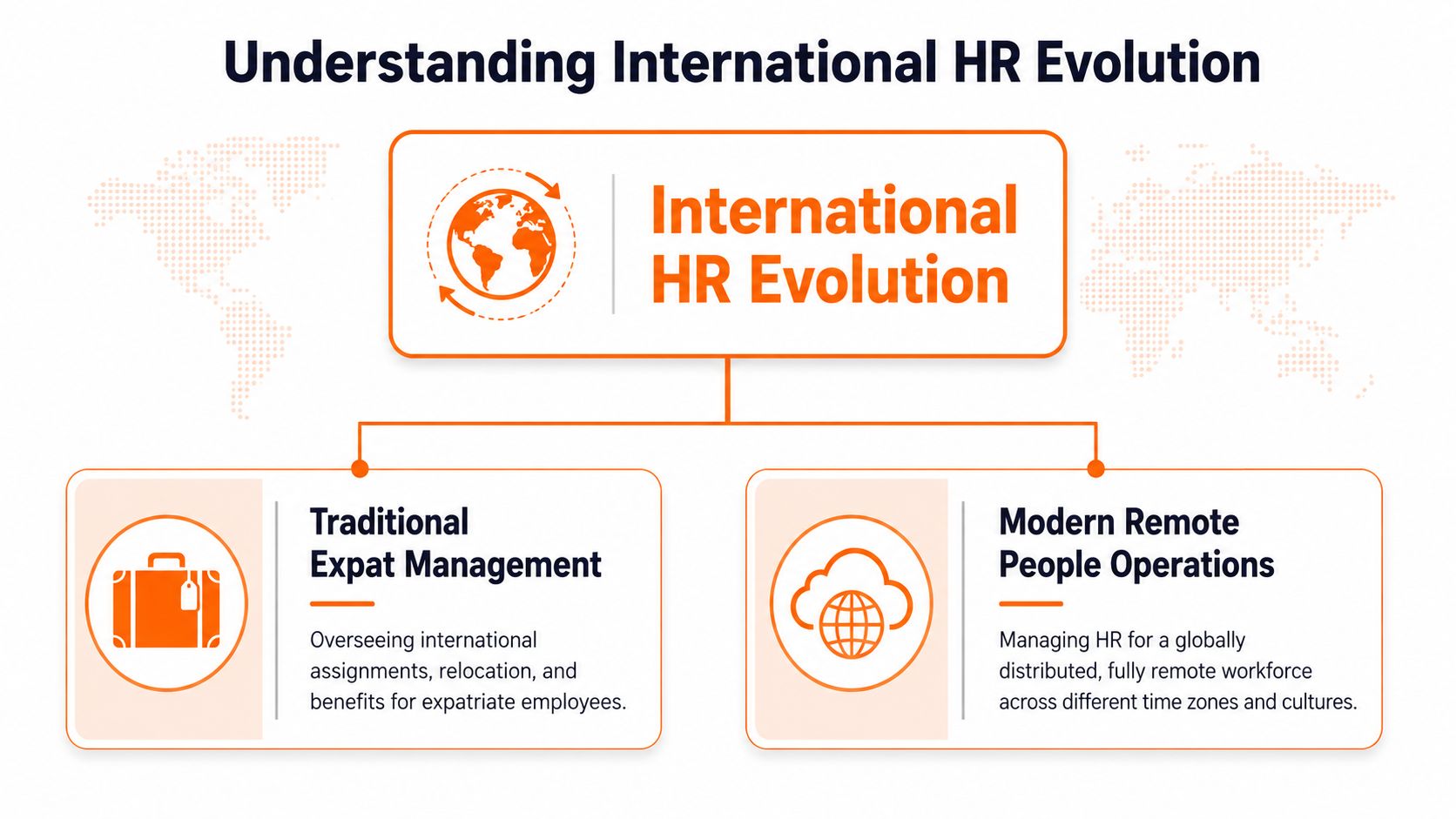
Traditional expat management
This path grew out of multinational expansion. A company opens or scales in a new country, then sends leaders or technical specialists across borders. HR supports the move.
Typical roles include:
- Global Mobility Specialist who manages relocation, assignment letters, immigration coordination, tax vendor handoffs, and repatriation planning
- International Compensation and Benefits Manager who aligns allowances, hardship policies, housing support, and local benefits
- Regional HR Manager who supports local entities, in-country employee relations, and country-specific labor practices
The day-to-day work is structured, policy-heavy, and tied closely to legal entities. A lot of your credibility comes from process discipline. Miss a visa timing issue, mishandle payroll setup, or overlook assignment terms, and the mistake becomes expensive fast.
This track tends to fit HR professionals who like operational rigor, vendor management, and country-specific compliance work.
Modern remote people operations
The newer path looks different. The company may have no major office footprint in the employee's country at all. Teams work across time zones. Employees may be hired through local entities, partners, or employer-of-record structures. Your job is less about moving people physically and more about supporting people who are already globally distributed.
These roles include:
- Remote HR Business Partner
- Global People Operations Manager
- International Talent Acquisition Partner
- People Analytics or Workforce Planning roles with cross-border scope
- Global Payroll or Benefits Operations specialists
The responsibilities are broader and often messier. You might help a manager in Germany hire a designer in Brazil, support onboarding for a new employee in Spain, review leave-policy edge cases for someone working remotely from another country, and coach leaders on how to run a fair performance cycle across several time zones.
Practical rule: If the company talks about "distributed teams," "location strategy," "async culture," or "global hiring infrastructure," you're probably looking at remote-first international HR, not classic mobility.
A lot of candidates confuse these two paths because both sound global. They aren't interchangeable in practice. Someone strong in relocations and assignment policy may struggle in a fully remote company that needs judgment on asynchronous communication, distributed performance management, and cross-border employment models. The reverse is also true.
Which path fits you better
A quick comparison helps.
| Focus area | Traditional expat HR | Remote global HR |
|---|---|---|
| Core unit of work | Assignment or relocation | Distributed employee lifecycle |
| Main risk | Immigration, tax, assignment terms | Cross-border compliance, fragmented workflows, inconsistent employee experience |
| Typical partners | Immigration counsel, relocation vendors, local HR | EOR partners, payroll ops, recruiting, managers across time zones |
| Best fit for | Policy-driven operators | Adaptive generalists with systems thinking |
If your background is heavy in employee relations, recruiting operations, payroll coordination, HRIS, or multi-state compliance, you're often closer to remote global HR than you think. Domestic complexity translates well when you frame it properly.
A strong way to sharpen your target is to study how distributed companies describe hiring practices and org design. A guide on global talent acquisition is useful for seeing how cross-border hiring language shows up in real-world hiring teams.
Building Your Global HR Skillset and Credentials
Those seeking international HR jobs don't need to start over. They need to repackage existing strengths, fill a few real gaps, and stop presenting themselves as purely domestic operators.
Skills that transfer well
The best transferable skills usually come from complexity you've already handled.
- Compliance judgment matters because international HR isn't about memorizing every country's law. It's about spotting risk early, asking the right follow-up questions, and pulling in legal or local experts before a process goes off track.
- Process design matters because global work breaks when onboarding, approvals, and documentation rely on office-based assumptions.
- Stakeholder management matters because managers in different countries often want speed, while HR needs consistency and defensibility.
- Written communication matters more than many candidates realize. Remote global teams live in documentation, policy notes, Slack threads, and handoff messages.
Cross-cultural communication is usually presented too vaguely. Employers want evidence. Don't just say you're culturally aware. Show it through examples like mediating a conflict between teams with different meeting norms, adapting onboarding for employees who weren't native English speakers, or coaching leaders to give clearer written feedback across regions.
Skills you may need to build from scratch
Some capabilities are specific enough that you should learn the language before you interview.
Here are the areas hiring managers listen for:
- Global employment models such as direct employment, contractor engagement, and employer-of-record arrangements
- Payroll and benefits coordination across countries, especially where local rules affect enrollment timing, statutory leave, or tax treatment
- Workforce analytics that can compare funnel health or attrition patterns across regions without making bad apples-to-oranges comparisons
- HR systems taxonomy so roles, levels, and locations are standardized cleanly inside an HRIS or recruiting stack
A candidate becomes more credible the moment they stop saying "international exposure" and start saying "cross-border onboarding, location-based policy interpretation, and manager support across time zones."
Credentials that actually help
Credentials are useful when they clarify your lane. They don't substitute for judgment.
A practical way to think about them:
- GPHR fits people targeting global mobility, international policy, and cross-border HR leadership.
- SHRM-SCP helps if you're positioning yourself as a strategic HRBP or People leader with broad operational range.
- Global mobility or compensation-specific training helps if you want to move into relocation, assignment policy, or international rewards.
- HRIS and analytics certifications help remote-first candidates because distributed companies often need HR professionals who can work inside systems, not just design policies in theory.
If you can't justify a formal credential yet, build proof another way. Volunteer for the messy projects others avoid. Lead a handbook rewrite for remote employees. Partner with payroll on multi-jurisdiction issues. Document an onboarding workflow that works across time zones. Those stories land well in interviews because they show operating maturity, not just ambition.
Where to Find and How to Target International HR Jobs
The search for international HR jobs gets easier when you stop treating it like a normal HR search with a wider map. You need a tighter target.
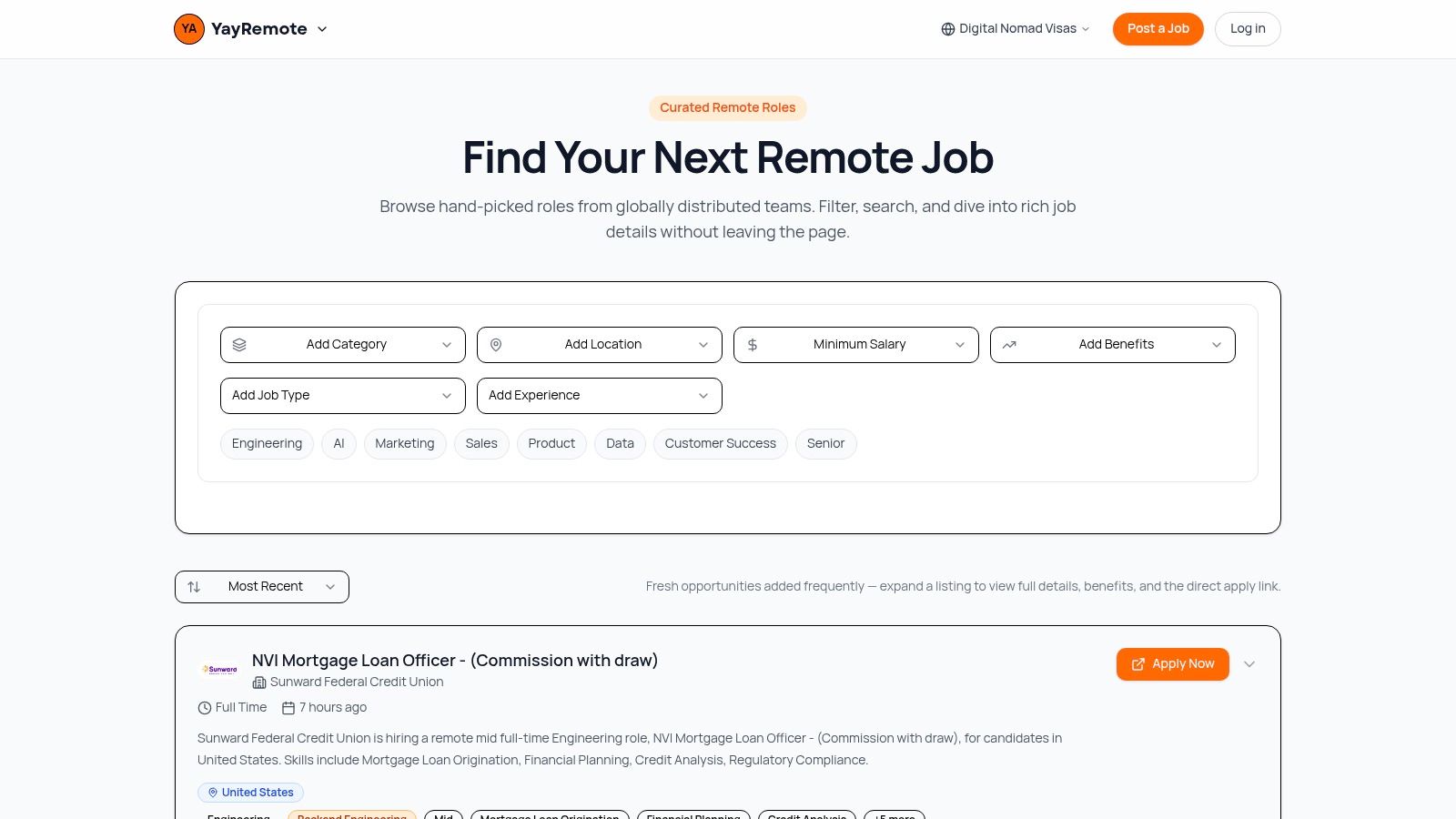
A lot of strong candidates waste months applying to anything with "global" in the title. That doesn't work. Some jobs use "global" to mean a centralized HR team serving local offices. Others mean a distributed workforce. Read the operating model before you apply.
Read the job architecture, not just the title
One technical clue matters more than it looks. Multinational employers often organize roles using ISO 3166-1 country codes with standardized occupational classifications mapped to internal job taxonomies, which helps them compare jobs across markets while preserving local legal and compensation context, as described in this overview of HR metrics and analytics practices.
That affects your search in practical ways. If a company has mature job architecture, its postings usually reveal it. You may see location eligibility, level bands, remote-work categories, or structured language around the primary country of employment. That's a sign the company likely has a real cross-border hiring framework. It doesn't guarantee a good HR role, but it usually means the company has moved beyond improvisation.
A targeting method that works
Use a layered approach instead of one platform and blind applications.
Start with role families, not keywords alone
Search for Global Mobility, People Operations, International Talent Acquisition, HRBP, Total Rewards, HRIS, Payroll, and Employee Experience. "International HR" by itself is too broad.Screen for operating model
Look for clues such as remote-first language, distributed team references, country hiring restrictions, benefits by region, or mention of local employment partners.Follow companies that already hire globally
Your best odds often come from firms that have already solved some hiring infrastructure. Their HR roles are more likely to be strategic instead of reactive.Build a short-list spreadsheet
Track company, role type, hiring model, required time-zone overlap, and whether the role leans toward mobility or remote people ops.
Here, job-seeker discipline beats volume.
Use content and communities as signal
LinkedIn matters, but not for spraying résumés. Use it to identify the HR leaders, talent ops managers, and People team members who talk publicly about distributed hiring, compensation philosophy, mobility, or compliance operations. The language they use becomes your interview vocabulary.
After you've reviewed a few openings, it's worth watching how remote hiring teams think about candidate assessment and process design. This video gives useful context for how distributed companies often approach hiring operations:
Also spend time in niche spaces, not just giant job boards. Professional associations, remote work communities, global payroll forums, immigration and mobility groups, and People Ops networks often surface better roles earlier. The quality is usually higher because those employers know what kind of HR complexity they're hiring for.
Optimizing Your Resume for a Global Audience and ATS
A domestic HR resume often undersells someone who could do well in international HR jobs. The issue usually isn't weak experience. It's weak translation.
Rewrite your experience in cross-border language
Most resumes describe tasks. Global hiring teams want to see systems, scope, judgment, and adaptability.
Here are stronger rewrites:
Before: Managed payroll and benefits administration
After: Supported payroll and benefits processes across multiple employee groups with different compliance requirements, partnering with finance and vendors to resolve exceptions quickly.Before: Led recruiting for corporate roles
After: Coordinated end-to-end hiring across multiple locations, aligning interview scheduling, candidate communication, and offer workflows with local constraints.Before: Updated employee handbook
After: Revised policy documentation for a distributed workforce, clarifying leave, working hours, and manager responsibilities across locations.
You don't need to invent international experience. You need to highlight complexity that resembles it.
Put the right keywords in the right places
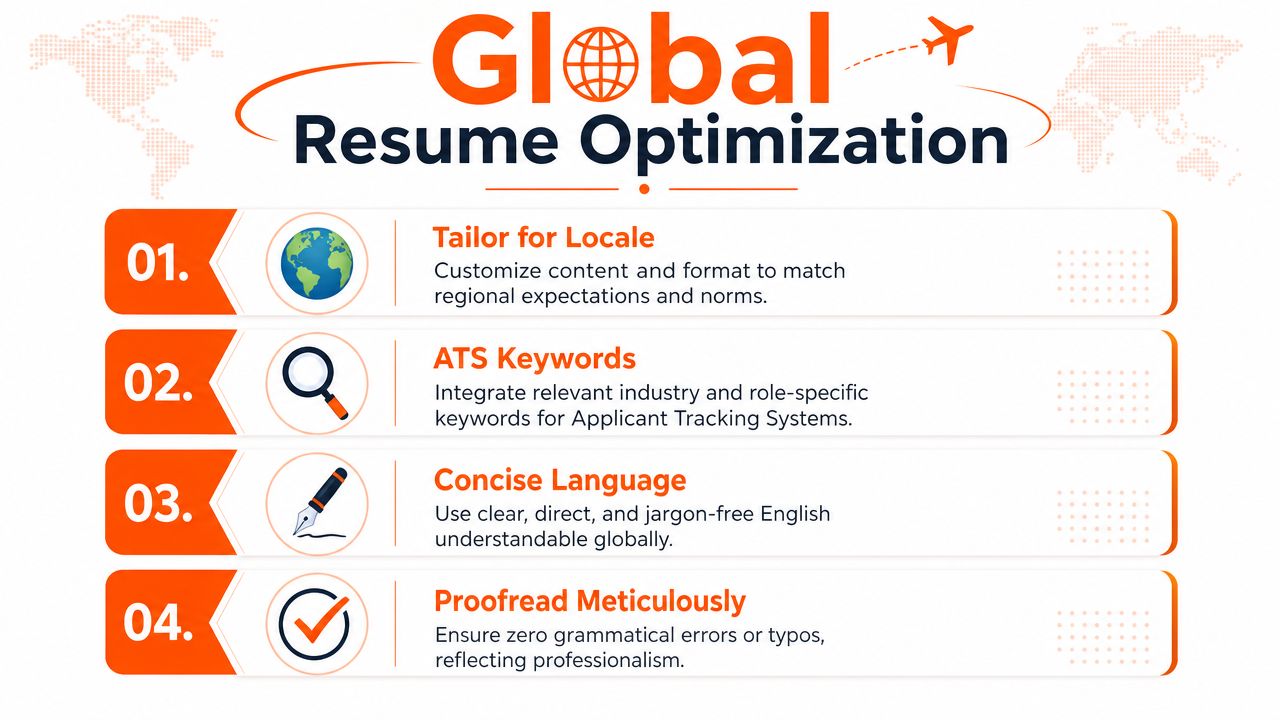
Applicant tracking systems don't reward keyword stuffing. They reward alignment. Use the exact terms that fit your real work, especially in your summary, skills section, and most relevant bullets.
Useful terms include:
- Global mobility
- Cross-border compliance
- Distributed teams
- People operations
- International payroll
- HRIS
- Employer of Record
- Remote onboarding
- Regional recruitment
- Workforce planning
If you want a practical checklist for this step, this guide on how to beat ATS is worth reviewing before you send applications.
Show that you understand hiring metrics
For remote-first companies, recruiting fluency can strengthen your profile even if you aren't a recruiter. One useful framework tracks time-to-hire by region, offer acceptance rate, and early turnover within 12 months. A 2025 analysis of global HR practices found that organizations using region-adjusted recruitment analytics reduced average time-to-hire by 18 to 28 percent, according to this review of HR and talent statistics.
That doesn't mean you should stuff metrics into your resume if you don't own them. It means you should speak the language. If you improved interview scheduling, reduced process friction, or tightened onboarding handoffs, frame that work in terms of recruitment efficiency and employee retention logic.
Resume test: Could a hiring manager reading your résumé tell whether you've supported complexity across locations, managers, or employment rules? If not, the document still reads as local-only.
Mastering the Cross-Cultural Interview and Negotiation
International HR interviews are often revealing in ways domestic interviews aren't. The company is testing whether you can operate calmly when information is incomplete, stakeholders are spread out, and there isn't one obvious policy answer.
The interview usually starts before the first question
A remote global interview process often exposes your working style quickly. Did you confirm the time zone correctly? Did you notice whether the invitation used local time or a platform default? Did you join with a stable setup and clear audio? Small misses make hiring managers wonder how you'll handle onboarding across countries or manager support across regions.
Some teams also use structured screening tools before live interviews. If you haven't encountered asynchronous interview technology, it's worth understanding how it works, because globally distributed employers may use it to evaluate candidates across time zones without forcing everyone into one live schedule.
Questions you should expect
Here are the kinds of questions that come up often, with what the interviewer is really probing:
"Tell me about a time you handled a policy issue across different locations."
They want to hear judgment, not bravado. A strong answer shows that you identified where local variation mattered, documented assumptions, and escalated appropriately."How would you support a manager hiring in a country where the company hasn't hired before?"
Good answers mention stakeholder discovery, legal review, employment model options, timeline risks, and clear candidate communication."How do you keep employee experience consistent when local rules differ?"
They're listening for your ability to separate core principles from local implementation."Describe a conflict that may have had a cultural component."
Don't stereotype. Focus on mismatched expectations, communication norms, or decision-making styles, then explain how you clarified and reset the working agreement.
Keep your examples grounded. International credibility comes from disciplined thinking, not from sounding worldly.
Negotiation gets more nuanced
Compensation discussions in international HR jobs can be tricky because title, location, benefits, and employment structure all affect the package. A role may look generous in salary but weaker in pension, healthcare, paid leave, or tax support. Another may come with a lower base but stronger stability and cleaner employment terms.
For reference, data cited by Zippia using U.S. Bureau of Labor Statistics benchmarks puts the median annual wage for HR specialists at $72,910 as of May 2024, while HR managers are around $126,000 annually, which is useful context because multinational employers often benchmark against U.S. market expectations for some roles in global HR hiring, as summarized in this review of human resources salary statistics.
In negotiation, ask practical questions:
- Which country is the employment contract tied to
- Is compensation localized or pegged to a broader band
- Who handles payroll and statutory benefits
- What working hours are expected across time zones
- Is there visa sponsorship, an EOR arrangement, or independent local employment
Those questions make you sound like someone who understands the essence of the job.
Navigating Visas Compliance and Remote Work Logistics
The final filter on international HR jobs isn't enthusiasm. It's structure.
A lot of candidates still assume "international" means the company will relocate them. Sometimes it does. Often it doesn't. Many modern roles are remote, but that doesn't mean you can work from anywhere without checking how the company employs people, what country your contract sits in, and whether your physical location creates tax, payroll, or legal issues.
Visa sponsorship and remote legality aren't the same
Classic relocation roles usually involve company-sponsored work authorization. Remote roles may involve no relocation at all, but they still require legal clarity. That's where candidates get tripped up.
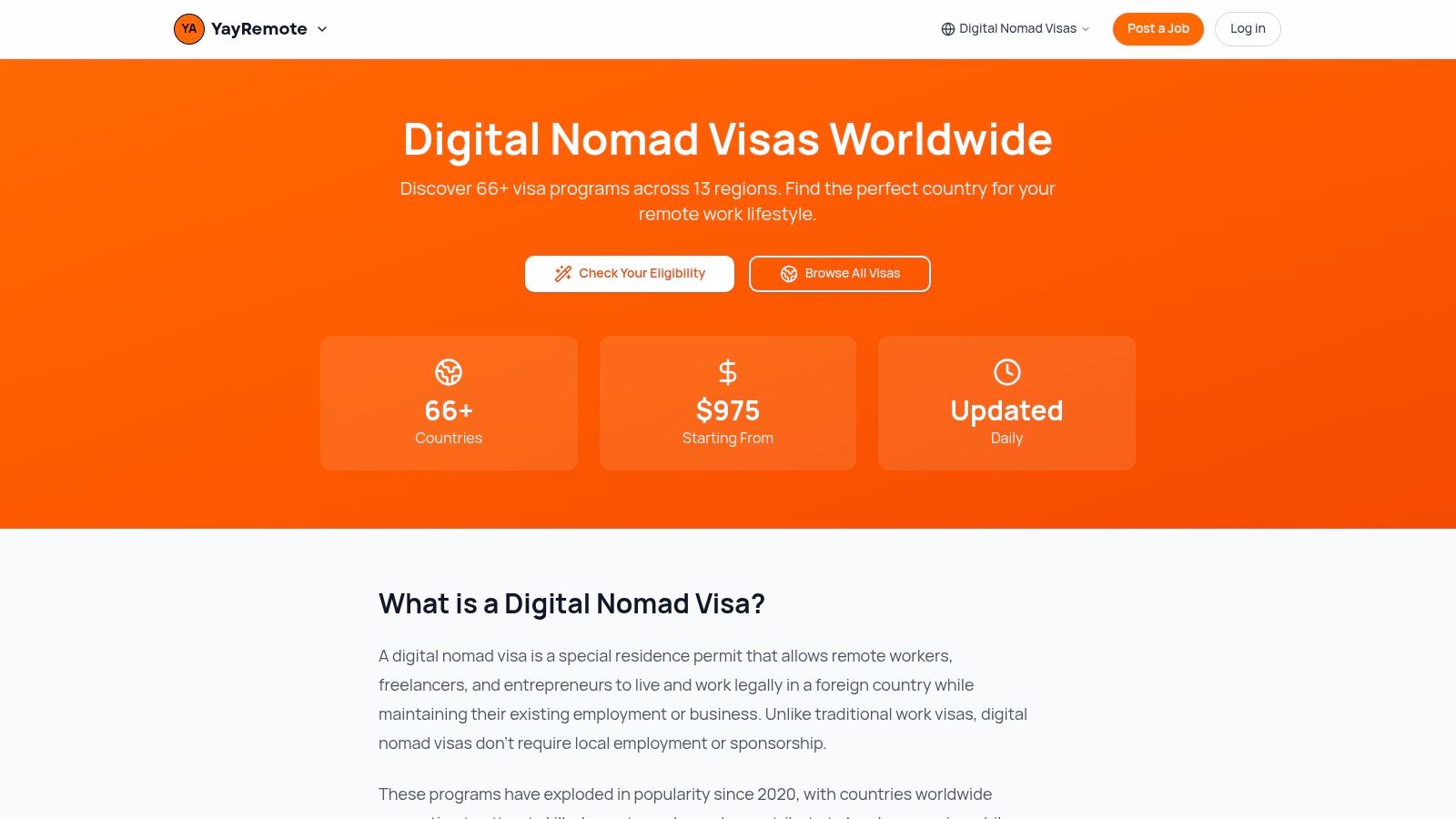
Existing guidance on international HR jobs often misses how distributed work and digital nomad arrangements have changed how global teams operate. Many guides still treat international HR as expat or multi-office staffing, overlooking remote workers who may be employed in one country while living in another, as noted in this discussion of international human resource job realities.
Questions to ask before you accept
Ask these directly:
How is employment set up in my country
If the answer involves a partner structure, learn the basics of what an Employer of Record is so you understand who employs you and who owns compliance obligations.Can I work from a country other than my contract country
Some companies allow it with limits. Others don't, even if the role is fully remote.Who handles visa support if relocation is required later
If you're considering a move to a country with formal sponsorship processes, practical guides on topics like navigating UAE work visa requirements can help you understand what documents and employer steps may be involved.What time-zone overlap is expected
"Flexible" can still mean late-night calls every week if the company hasn't designed asynchronous workflows well.
The strongest candidates don't just ask whether a job is remote. They ask how the company has operationalized remote work legally and day to day.
The opportunity in international HR is real. So is the friction. If you're willing to learn the split between mobility and distributed operations, translate your experience into cross-border value, and ask sharper questions than most applicants, you can move into this field without needing a perfect global résumé on day one.
If you're ready to search for international HR jobs with a clearer eye for distributed employers, salary transparency, time-zone fit, and practical remote work resources, explore YayRemote. It's a useful starting point for finding global remote roles and researching the realities behind them before you apply.