Remote Work in Mexico: Your 2026 Authoritative Guide
Thinking about remote work in Mexico? Our 2026 guide covers visas, taxes, cost of living, top cities, job searching, and employer considerations. Start here.
You're probably in one of two places right now. You either have a laptop job and want to live in Mexico without breaking your workflow, or you're hiring remote talent and want to know what's real versus what's just digital nomad marketing.
Both situations sound simpler online than they are in practice.
Remote work in Mexico can be excellent. The time zones work well for North American teams, major cities have strong professional infrastructure, and daily life can feel lighter than it does in many higher-cost markets. But the smooth version only happens when you treat Mexico like a real place with laws, uneven infrastructure, and local systems you need to respect. If you don't, the same move that looked easy on social media can turn into a visa problem, a tax headache, or a work setup that falls apart during your first week of calls.
The Rise of Remote Work South of the Border
The old stereotype was simple. Mexico was where people went for a holiday, a surf break, or a short escape from winter. That picture is outdated.
Remote work in Mexico is now tied to a much bigger shift in how work is organized. Before the pandemic, less than 5% of Mexican workers worked remotely in 2019, but by 2021 that share had risen to nearly 23%, according to INEGI-based reporting covered by Mexico Business News. That matters because it shows remote work didn't just arrive as a foreign import. It became part of mainstream operating reality inside Mexico itself.
That change affects both sides of the market. Workers can now build a Mexico-based life around roles that were once tied to a single office. Employers can hire in Mexico without treating it as an edge case. The practical questions have changed too. It's no longer just “Can I work from Mexico for a while?” It's “How do I stay legal, keep my finances clean, choose the right city, and make the setup sustainable?”
What the dream gets right
A lot of the appeal is real. A better climate, easier access to outdoor life, proximity to the US and Canada, and a daily routine that doesn't feel built around commuting all make a difference. If you need a reset from office politics, long drives, or expensive urban life, Mexico can give you that.
Some of the classic benefits of remote working show up especially clearly here. People tend to value schedule control, reduced commuting friction, and more freedom over where they live. Employers benefit too when they hire beyond a single city and build around output instead of desk time.
What the dream gets wrong
The problem starts when people confuse “possible” with “frictionless.”
Practical rule: If your plan depends on vague assumptions about visas, taxes, internet, or banking, the plan isn't ready.
Mexico rewards people who plan ahead. You need to know what status lets you stay, whether your employer relationship creates local obligations, what kind of housing supports remote work, and how long you can rely on tourist-style logistics before they stop being enough.
For employers, the mistake is different but just as common. Many teams assume they can “just hire someone in Mexico” and figure out compliance later. That usually means they haven't mapped employment status, payroll exposure, or local labor-law risk.
Handled well, remote work in Mexico is one of the strongest setups available in the region. Handled casually, it creates the kind of avoidable mess that takes months to unwind.
Navigating Your Legal Stay in Mexico
A lot of confusion comes from mixing up immigration permission with tax status and employment compliance. They overlap, but they are not the same thing.
Your first job is to decide how you'll legally remain in the country. For most remote workers, the fork in the road is short stay versus long stay. If you're testing Mexico for a season, one path may be enough. If you want a stable base, you'll usually need something more durable.
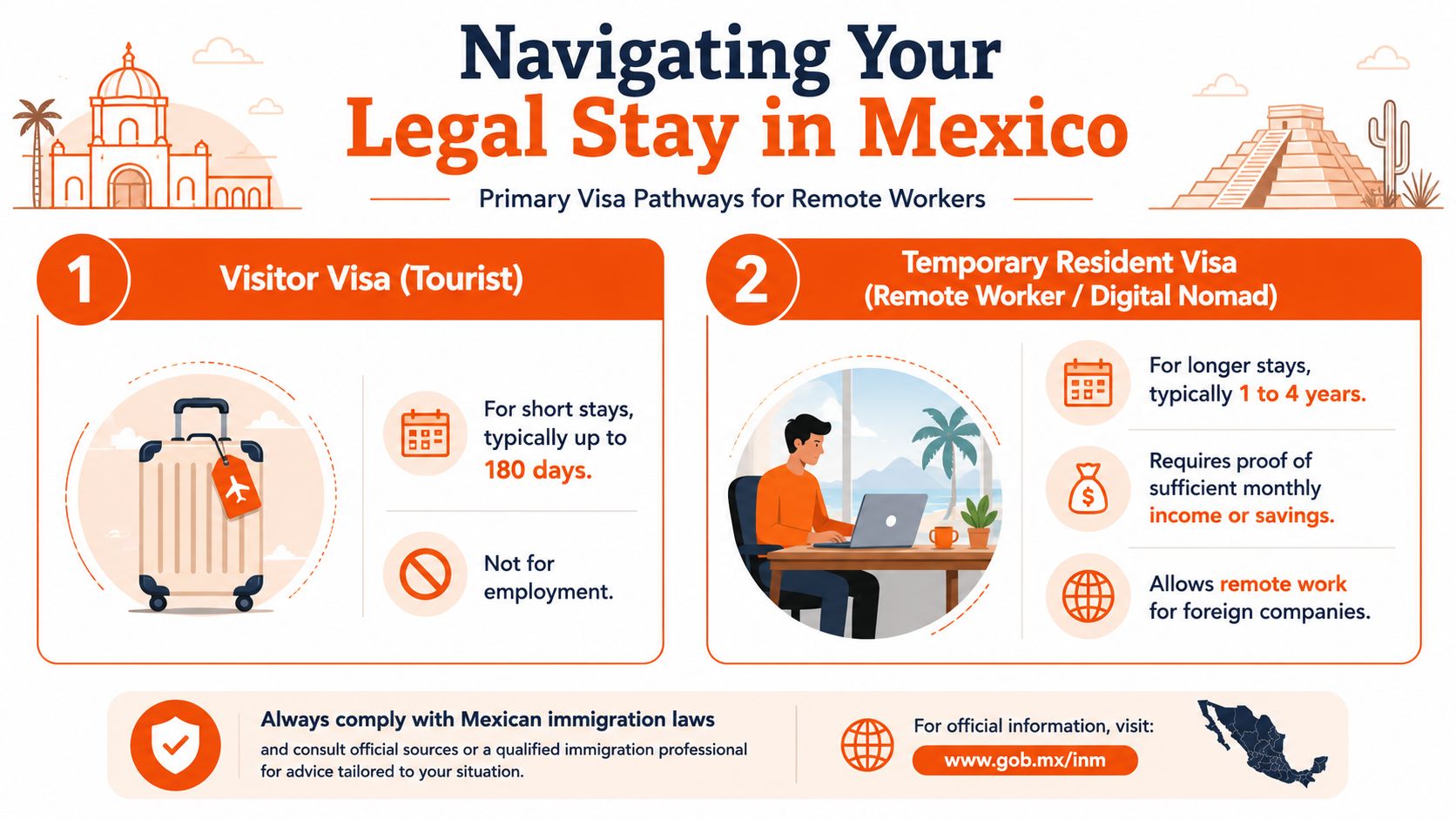
The two common pathways
Here's the simplest comparison.
| Feature | FMM ('Tourist Permit') | Temporary Resident Visa |
|---|---|---|
| Typical use | Short stay | Longer-term stay |
| Stay profile | Usually used for limited time in-country | Better fit for living in Mexico on an ongoing basis |
| Work for Mexican entity | Not the right vehicle | Separate legal analysis still applies |
| Best for | Trial period, scouting trip, short remote stay | People building a longer-term base |
| Main limitation | Fragile for long-term planning | Requires advance paperwork and consular process |
The FMM, often called the tourist permit in everyday conversation, is the route many people use when they first arrive. It's the low-friction entry point. That doesn't make it a long-term strategy.
The Temporary Resident Visa is usually the more serious option for someone who wants stability. It's commonly handled through a Mexican consulate outside Mexico, and applicants are usually expected to show economic solvency through income or savings. The exact documentary requirements can vary by consulate, so you need to check the post where you plan to apply, not rely on forum guesses.
The line most people miss
The key legal issue isn't just whether you entered Mexico properly. It's whether your stay and work arrangement create local obligations.
According to L&E Global's Mexico remote work FAQ, a foreign national working in Mexico generally needs work authorization if staying more than 180 days, and longer stays can trigger Mexican social security and employment-law coverage. The same guidance notes that some foreign-company arrangements may avoid Mexican payroll and social-security obligations only where there is no Mexican employment relationship and no agency or permanent-establishment risk.
That's where many remote workers get blindsided. They assume that because their employer is abroad, Mexican rules don't matter. Sometimes they don't. Sometimes they absolutely do.
Stay duration, employer structure, and where the legal employment relationship sits all matter more than the label “digital nomad.”
A sensible decision framework
Use a short test before you book anything beyond temporary housing:
- You're staying briefly: The visitor route may work for an initial trial period, but it's weak for anything that looks like relocation.
- You want a base: Temporary residency is usually the cleaner path if your goal is to live in Mexico rather than pass through it.
- You work for a Mexican company: Don't treat this like a nomad question. Treat it like local employment.
- You work for a foreign company but plan to stay longer: Get legal advice before assuming you're outside Mexican labor and social-security rules.
If you think Mexico might become a permanent home, it also helps to understand the longer arc of status planning. This Inside San Miguel permanent residency guide gives a useful on-the-ground look at how people think through the move from temporary to more settled residency.
For a broader comparison of international options before you commit, this digital nomad visa resource is useful for seeing how Mexico fits against other countries' remote-work pathways.
Managing Your Finances and Taxes
The legal right to stay in Mexico is one question. Your money setup is a different one.
Remote workers often get overconfident. They sort out flights and housing, then assume the financial side will “work itself out.” It won't. If you're living in Mexico for more than a short stretch, you need a working system for taxes, transfers, healthcare, and day-to-day payments.
Tax residency is where casual planning fails
Many remote workers use a rough rule of thumb tied to spending more than part of the year in one country. In practice, tax residency analysis can get technical fast. It may involve your time in Mexico, where your center of vital interests sits, the structure of your income, and whether another country also claims taxing rights.
That means two things.
First, don't rely on social posts or chat threads for tax answers. Second, don't assume your immigration status settles your tax position. It doesn't. Someone can have a perfectly valid way to stay in Mexico and still create tax complexity if they remain too long or keep messy records.
A good accountant will usually want a clean timeline of travel, copies of immigration documents, employer or client contracts, and a map of where your income is paid and where your accounts sit. If you don't have those organized, start there.
Banking needs a two-layer system
Most remote workers do better with a mix of home-country banking and local spending access instead of trying to move everything at once.
A practical setup usually looks like this:
- Primary account abroad: Keep your salary or business income flowing into the account structure that already works.
- Transfer tool: Services like Wise are often useful for moving money with less friction than old-school bank wires.
- Local card access: Use a debit or credit card that works reliably in Mexico for rent, groceries, coworking, and transport.
- Optional Mexican bank account: Worth considering if you're staying longer and need easier local payments, but opening one can take paperwork and patience.
If your whole financial plan depends on one card, one bank, or one app, it's too fragile.
Build redundancy. Cards get blocked. Banks ask questions. Fraud alerts happen at the worst possible time.
Don't skip insurance and healthcare planning
Health coverage is one of the first things people postpone and one of the first things they regret postponing. If you're moving without employer coverage that clearly follows you abroad, review a dedicated guide to expat insurance in Mexico before you arrive. You want to know what counts as emergency cover, what counts as routine care, and what reimbursement process you're agreeing to.
Also keep your work finances clean enough to support deductions and documentation where they apply. A structured approach to expenses, records, and reimbursements matters whether you're employed or independent. If you need a starting point, this remote work tax deductions overview helps frame what remote workers should track from the start.
Best Cities for Remote Workers in 2026
Most lists about remote work in Mexico are too shallow to be useful. They rank cities by vibe, weather, and café aesthetics, then barely touch the things that decide whether your workweek functions.
That approach breaks down fast if you're taking calls every day, moving with a partner, hiring a team member locally, or planning to stay beyond a short experiment.

The smarter way to choose is to separate lifestyle fit from work reliability. Research from the Bank for International Settlements suggests the benefits of remote work in Mexico are not evenly distributed across regions. That's a useful warning. Don't assume every city that looks popular online will support sustained professional life equally well.
Mexico City for scale and professional convenience
Mexico City is still the easiest recommendation for many remote workers who need maximum flexibility. It has the deepest bench of neighborhoods, housing types, cafes, coworking spaces, private offices, transit options, and backup plans when something goes wrong.
That matters more than people admit. If your apartment internet fails in a smaller town, your whole day can go sideways. In Mexico City, you usually have alternatives within reach.
It also works well for employers visiting staff, running in-person meetups, or onboarding people without building around a resort-town ecosystem.
Guadalajara for tech-minded routines
Guadalajara fits people who want a major city with a strong professional identity but a less overwhelming daily footprint than the capital. It tends to appeal to engineers, operators, and startup people who care less about novelty and more about workable routine.
The city has enough depth to support normal life. Gyms, clinics, furnished rentals, grocery delivery, and work-friendly neighborhoods are easier to stitch together into a stable system than they are in places designed around short-term visitors.
Playa del Carmen for lifestyle first, structure second
Playa del Carmen remains attractive because it offers a softer landing for people who want beach access and a visible expat ecosystem. You can settle in quickly there. That's the upside.
The trade-off is that lifestyle-heavy markets often produce more noise. Housing quality varies widely. Some buildings look perfect online and perform badly as workspaces. You may also find that a place built for transient living doesn't always give you the quiet, privacy, and consistency that long workdays demand.
The checks that matter more than the city label
Before you commit to any city, verify the basics yourself:
- Test the apartment, not the listing: Ask for a live speed test and a video walkthrough of the actual workspace.
- Check mobile backup: A strong mobile hotspot can save a bad day.
- Look for power resilience: Ask directly about outages and whether the building has backup systems.
- Walk the routine: Grocery store, pharmacy, gym, coffee, and a quiet work backup should all be easy to reach.
- Read the rental terms carefully: Lease language, deposits, guest policies, and utility responsibility matter more than decor.
Here's a quick visual overview before you decide where to base yourself long term.
A beautiful neighborhood doesn't automatically make a productive one. The best city is the one where your work can survive an ordinary Tuesday.
For many people, the right move is to start in a major city, build legal and financial stability, then experiment with smaller or coastal locations later.
Finding Your Ideal Remote Job for Mexico
If you need a job that supports a move to Mexico, don't start with geography. Start with role design.
The strongest remote jobs for Mexico-based living share a few traits. They're run by companies that already know how to manage distributed teams. They don't treat remote work as a temporary perk. They evaluate output clearly, communicate asynchronously when needed, and don't panic if someone isn't sitting in headquarters.
Optimize for remote compatibility, not just title
A lot of candidates search by job title alone. That's too narrow.
Look at the operating model behind the title. Ask yourself:
- Does the company hire across borders?
- Are time-zone expectations realistic from Mexico?
- Does the role require constant headquarters presence?
- Is pay and benefits information transparent enough to assess the move?
That filter saves time. A role that says “remote” but really means “remote within one domestic market” won't help you much if you plan to live abroad.
What the market looks like for specialized talent
If you're in technical infrastructure, there's evidence of a selective but real market. For Infrastructure Engineer roles in Mexico, Remote Rocketship reports an average salary of MX$2,803,228 per year across 32 openings, and employers take about 45 days to close those roles, according to its Mexico infrastructure engineer listings data. That suggests two useful things at once. Strong remote technical talent is valuable, and hiring cycles can still be deliberate rather than fast.
So don't treat the search like spray-and-pray volume. Treat it like positioning.
A stronger search process
The candidates who land better remote roles usually do a few things well:
- They rewrite their resume for distributed work. They show ownership, documentation habits, async communication, and independent execution.
- They fix location ambiguity. If you're moving to Mexico, say so clearly where it helps, especially if time-zone overlap is a selling point.
- They tailor LinkedIn headlines. “Remote-ready” beats vague branding.
- They focus on job boards built for distributed hiring. Generic boards are crowded with roles that fall apart once location gets discussed.
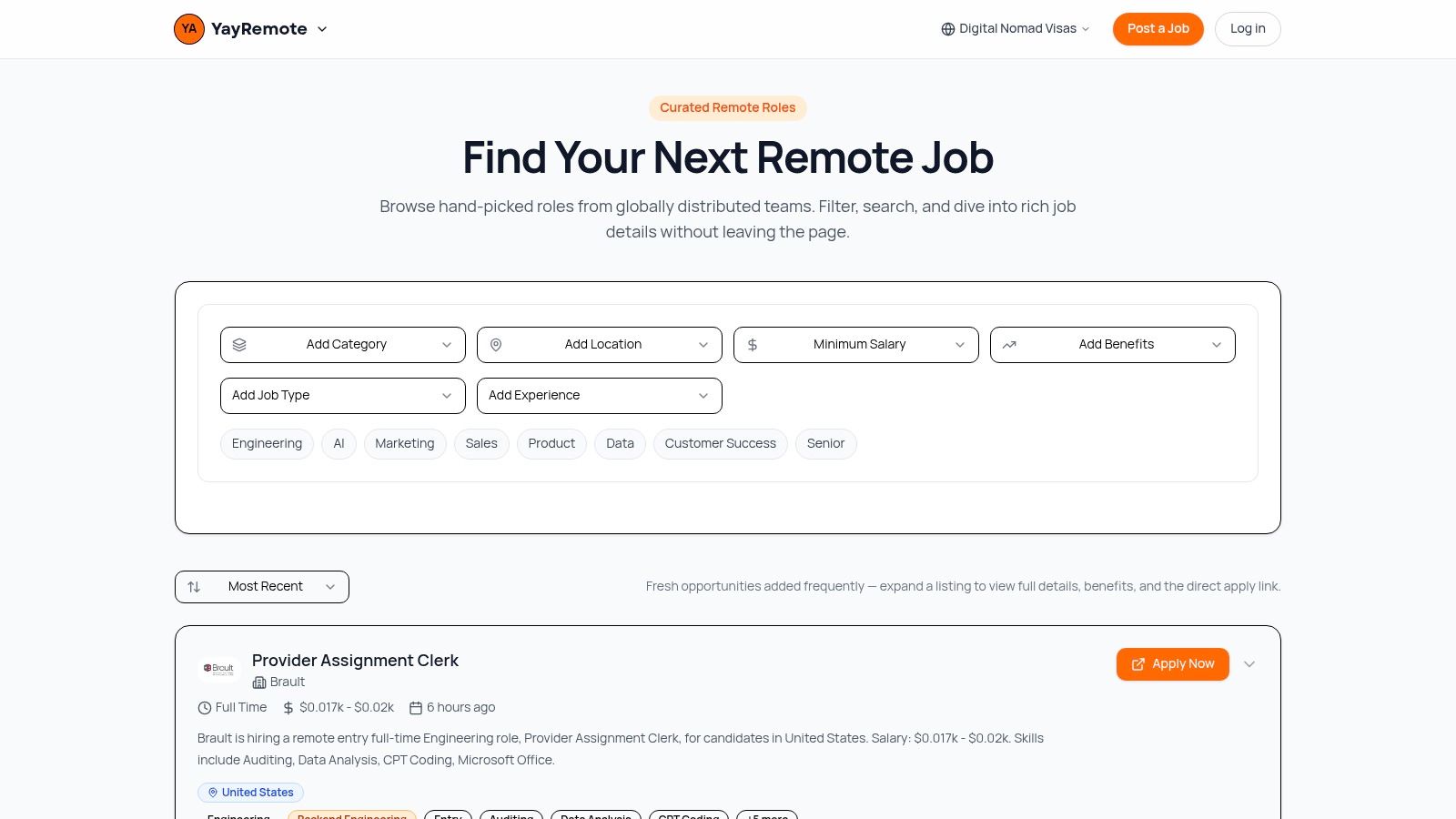
If you want a starting point for role discovery, browse remote jobs in Mexico and look closely at how listings describe geography, benefits, job type, and team expectations. The useful part isn't just the jobs themselves. It's seeing which companies already think in cross-border terms.
The best remote job for Mexico isn't the one with the nicest title. It's the one whose company model still works after you cross a border.
Employer Playbook for Hiring in Mexico
For employers, Mexico is attractive for a simple reason. It offers serious remote talent without the coordination drag that often comes with extreme time-zone spread.
The opportunity is broader than many teams realize. A Banxico working paper estimates that between 10% and 25% of Mexican jobs that existed at the start of the pandemic could be done remotely, according to the Banco de México working paper. That points to a structurally available talent pool, not a tiny niche.
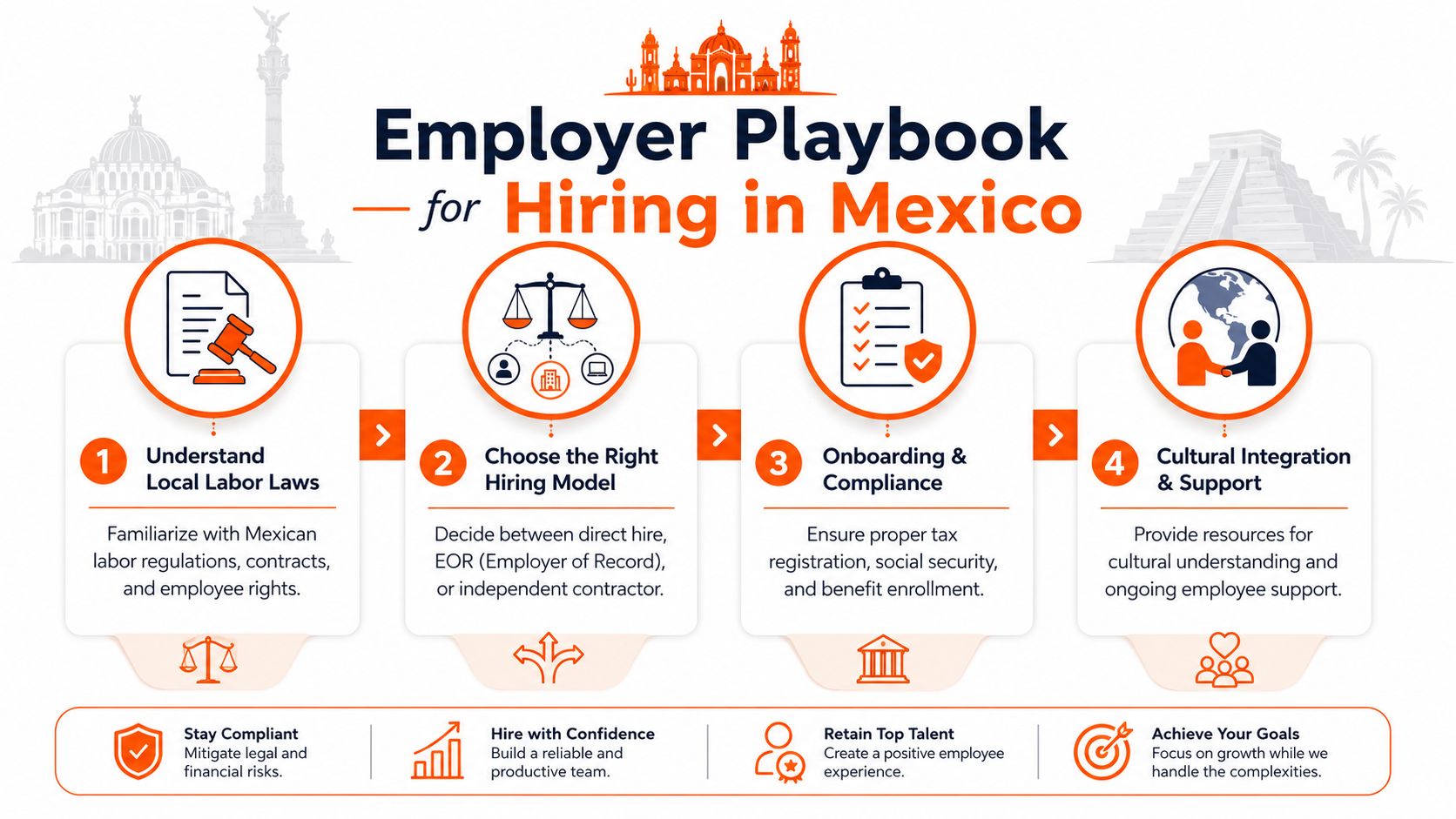
Contractor or employment model
This is the first real decision, and it should be made early.
Independent contractor arrangements can work when the role is genuinely independent, the person controls how work is done, and the relationship doesn't function like disguised employment. This model is often faster to start, but it becomes risky if day-to-day reality looks like standard employment.
Employer of Record arrangements usually make more sense when you want a stable employee relationship without opening your own Mexican entity. The EOR sits in the legal employer seat and handles local employment administration. That won't remove every business decision, but it does reduce the chance that your global hiring strategy gets ahead of your compliance capacity.
What employers should evaluate before hiring
Don't reduce the decision to cost. Evaluate operational fit.
- Role sensitivity: Core long-term roles usually deserve a more durable structure.
- Manager behavior: If managers expect tight control, fixed schedules, and integrated team participation, contractor classification may be hard to defend.
- Benefits expectations: Employees will compare offers against local norms and practical life needs.
- Data and security needs: Access-heavy roles need stronger onboarding and device protocols from day one.
How to avoid common mistakes
One mistake shows up constantly. Companies decide on a contractor model because it's easier, then manage the person exactly like an employee. That creates mismatch and risk.
Another mistake is hiring in Mexico through a foreign company while ignoring local touchpoints such as long-term presence, documentation, and labor expectations. If you're hiring seriously, treat Mexico as a real employment jurisdiction, not just a low-friction sourcing market.
Hire the way you intend to manage. If you want an employee, build an employee structure.
A simple internal checklist helps:
- Map the relationship first: Who directs the work, who sets the schedule, and how integrated is the role?
- Choose the hiring vehicle second: Contractor, EOR, or local entity should follow the facts.
- Document onboarding clearly: Equipment, confidentiality, reporting lines, and performance expectations should all be explicit.
- Plan for retention: Good Mexico-based hires have options. Sloppy administration pushes them away fast.
Companies that do this well usually move with less drama. They pick a compliant model early, communicate clearly, and avoid making local workers carry the burden of international ambiguity.
Your Mexico Relocation Action Plan
The move gets easier when you treat it like a sequence, not a leap.
A few months out
Begin with the fundamental requirements. Confirm whether your current role can legally and operationally support time in Mexico. If you need a new role, begin that search before you lock in a move.
Research immigration options based on your intended stay length, gather the financial documents you may need for residency, and shortlist cities based on work reliability rather than fantasy. At this stage, you're looking for clarity, not adrenaline.
The final stretch before departure
Book temporary housing first, not a long lease. You want a place that buys you time to inspect neighborhoods, test internet quality, and learn how the city works on the ground.
Set up your money stack, notify banks, duplicate your important documents, and line up health coverage. If you need consular appointments or application steps outside Mexico, do them early and keep digital and paper copies of everything.
Your first week in Mexico
Get a local SIM, test your apartment setup during real work hours, identify a backup café or coworking space, and learn the immediate neighborhood well enough to function without friction. That means groceries, pharmacy, transport, and one quiet place where you can take a call if your main setup fails.
Don't rush the “I live here now” part. The strongest transitions start with stable basics.
Remote work in Mexico works best when the plan is simple, legal, and resilient. Get your status right. Keep your finances organized. Choose a city that supports your actual work. If you're an employer, hire in a way that matches how you'll manage the relationship. That's what turns a tempting idea into a setup that lasts.
If you're looking for a role that can support life in Mexico, or you're hiring across borders and want a cleaner path to remote talent, YayRemote is a practical place to start. It brings together hand-picked remote roles, useful filters, and tools that make cross-border remote work easier to evaluate before you commit.