Your Guide to Work From Home Spain in 2026
Discover how to work from home Spain with our 2026 guide. We cover the digital nomad visa, finding remote jobs, taxes, and the real cost of living.
Picture this: instead of a frantic morning commute, you start your day with a quiet walk to a sun-drenched café for a café con leche. For many, the dream to work from home in Spain is no longer just a fantasy. It’s becoming a reality, thanks to new visa options, a world-famous lifestyle, and a real shift in how the country thinks about work.
Why Spain Is a Top Choice for Remote Work
For a long time, Spain was seen primarily as a tourist hotspot with a pretty traditional office culture. The idea of trading your cubicle for a beachfront apartment in Andalucía felt more like a vacation plan than a career move. But the massive global shift toward remote work changed everything, putting Spain on the map as a premier destination for digital nomads and remote professionals from all over the world.
This didn't happen overnight, of course. It was a slow burn that the pandemic fanned into a wildfire. Before 2020, working from home was a rare perk. The crisis forced a nationwide experiment in teleworking that, to the surprise of many, actually worked. That experiment laid the groundwork for permanent change.
The Pandemic's Lasting Impact
The pandemic did more than just send people home for a few months; it fundamentally changed attitudes and pushed infrastructure forward. Companies that had always insisted on having everyone in the office suddenly saw that productivity didn’t just survive outside the traditional nine-to-five—it could even thrive.
The numbers tell the story. In late 2019, only about 8.3% of the Spanish workforce worked from home. By the middle of 2020, that figure had jumped to an incredible 19.1%, representing nearly two million people. While things have settled a bit since then, the number remains far higher than it ever was before, proving that this is a lasting change.
This new reality is built on a few key pillars that make Spain so attractive for a remote career:
- An Unbeatable Quality of Life: Spain is legendary for its amazing work-life balance, sunny weather, and incredible food. It’s a place where life is meant to be enjoyed.
- Affordable Living: When you look at cities like Valencia, Málaga, or Seville, your money goes a lot further than in other Western European countries, without skimping on modern comforts.
- Government Backing: With the launch of the Spanish Digital Nomad Visa, there's now a clear, legal path for non-EU citizens to live and work here.
- Solid Infrastructure: You'll find great high-speed internet almost everywhere, even in smaller towns, plus a growing network of excellent coworking spaces.
This mix of lifestyle perks and practical support has made Spain a magnet for remote workers. It's not just about the sunshine and tapas anymore; it’s about a country that is actively creating a welcoming environment for professionals who want to work on their own terms.
While Spain is a fantastic option, it's always a good idea to see how it compares to other hotspots around the globe. You can explore our detailed comparison of the best countries for remote workers to get the full picture. In the end, Spain's unique blend of culture, cost, and connectivity makes it a very compelling choice for anyone looking to build a remote career in an inspiring setting.
Your Ticket to Working Remotely in Spain: The Digital Nomad Visa
If you've been dreaming of working from a sun-drenched Spanish terrace, the Digital Nomad Visa (DNV) is what turns that dream into a legitimate plan. Launched in January 2023, this visa was created specifically for people like us: non-EU citizens who either work for a company based outside of Spain or run their own freelance business with international clients. It’s the official, purpose-built path to living and working here legally.
Spain has always been a beautiful place to visit, but working here long-term was complicated. This visa changes everything. It’s a direct response to the global shift in how we work, acknowledging that great work doesn't require a specific office. This cultural evolution within Spain itself laid the groundwork for the visa's creation.
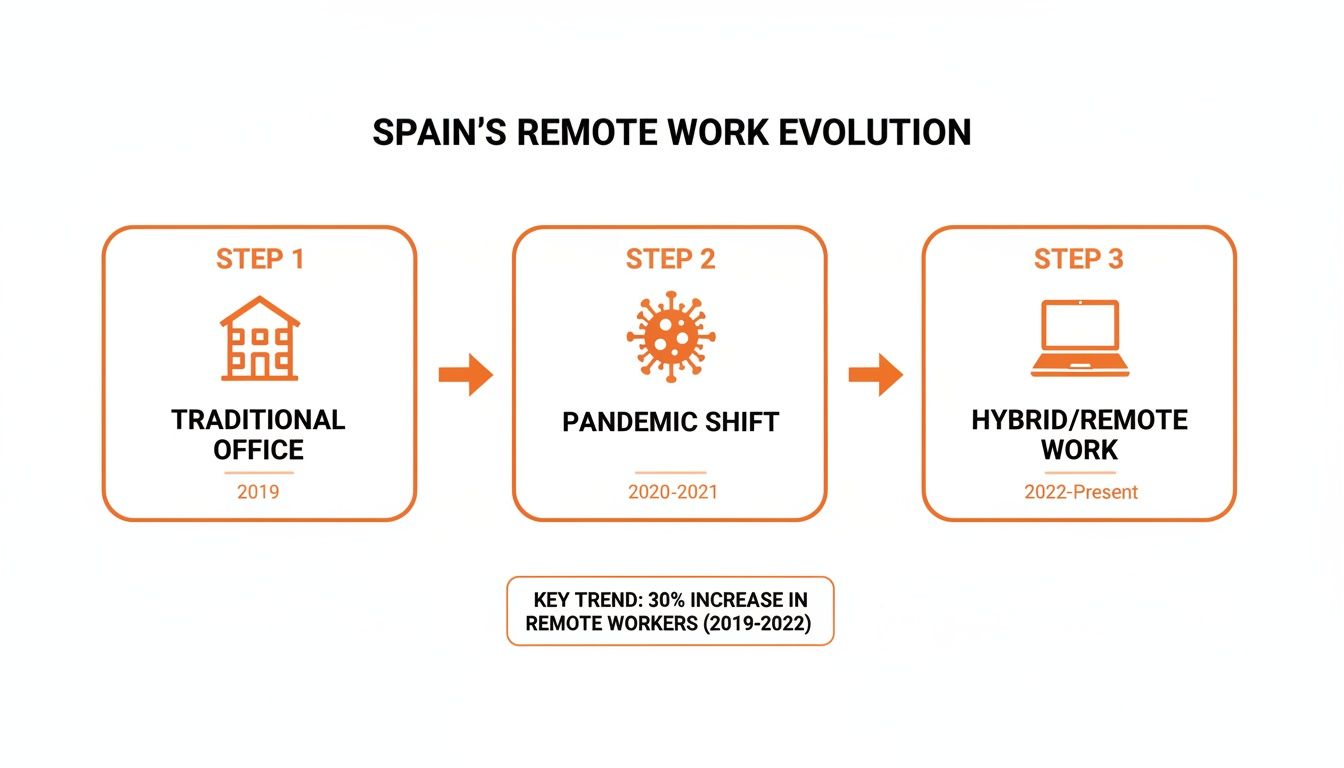
As you can see, the pandemic really pushed Spain’s traditional, office-first culture to adapt. It fast-tracked the acceptance of remote and hybrid models, creating the perfect environment for a visa that welcomes foreign remote talent.
Do You Qualify for the Visa?
So, who exactly can get this visa? The Spanish government wants to see that you're a genuine remote professional who can support yourself without taking a job from the local market. It really boils down to a few key proofs.
First, let's talk money. You have to prove a stable, sufficient income from sources outside of Spain. As of early 2024, the minimum income threshold is €2,849 per month (which works out to about €34,188 per year) for a solo applicant. This figure is pegged at 200% of Spain's national minimum wage, so it can change.
Planning on bringing family? The financial bar gets a bit higher.
- For your spouse or partner: Add an extra €916 per month.
- For each dependent child: You’ll need another €305 per month.
Next, you have to prove your work situation is stable and remote-friendly. This means showing you’ve had a working relationship with a foreign company or clients for at least one year. An employment contract works for employees, while freelancers can show ongoing contracts with clients.
The bottom line: The entire application is about demonstrating three simple things: you're a non-EU citizen, your work and income come from outside Spain, and you make enough to live on without needing local employment.
The visa's popularity speaks for itself. Since its launch, nearly 32,000 DNVs have been issued, and applications are growing by 40% year-on-year. This success is why VisaGuide's 2025 Index gave Spain a perfect 5/5 score for its digital nomad visa, cementing it as one of the best in the world.
The Application Process, Step by Step
Getting the visa involves a fair bit of paperwork, but the process is straightforward if you're organized. The great thing is you have two options: you can apply from a Spanish consulate in your home country before you leave, or you can apply from within Spain while you're here on a tourist visa.
Here’s a quick look at the main steps involved:
Get Your Documents in Order. This is where you need to be meticulous. You’ll need your passport, proof of income (bank statements, contracts), a clean criminal record check, and proof of private health insurance. A critical detail: any documents not in Spanish must be officially translated and apostilled.
Prove Your Work Relationship. You need to provide a contract from a company outside Spain that has existed for more than a year. The contract must also state that you are permitted to work remotely.
Arrange for Health Insurance. You can’t rely on public healthcare. You’ll need a private Spanish health insurance policy that offers full coverage with no co-payments for your entire stay.
Submit the Application. With your document package complete, you submit it either at the consulate or through the official online portal in Spain. The turnaround is surprisingly quick—most people get a decision in about 20-45 days.
If your application is approved, you’ll initially get a one-year visa. However, if you apply from within Spain, you receive a three-year residency card right off the bat. This can be renewed for another two years, giving you a clear five-year path toward long-term residency. To see how this stacks up against other countries, check out our guide to the best digital nomad visas available worldwide.
How to Find Remote Jobs in Spain
Alright, you've got your visa plan sorted. Now for the exciting part: landing a great remote job that lets you enjoy everything Spain has to offer. As you start looking, you’ll probably notice a strange trend in the Spanish job market—it’s a bit of a paradox, really.
Spain has shot to the top of Europe's remote work scene. A whopping 20.5% of all job listings here offer remote flexibility, blowing past numbers in the UK and even the US. But here’s the twist: only about 15.5% of the workforce in Spain actually works remotely.
So, what gives? This gap exists because most of these remote roles aren’t from Spanish companies. Instead, they’re from international firms actively recruiting people to live and work from Spain. For a digital nomad like you, this is the best possible news. It means there’s a huge, expanding market of global companies looking for talent right where you want to be.
Where to Actually Find These Jobs
Here’s the thing: you won't find these high-paying, global remote jobs on typical Spanish job portals. Those are mostly for local positions. To find the right opportunities, you need to go where remote-first companies are hiring.
This is where specialized remote job boards completely change the game. They cut through the noise of location-based ads and show you only the roles that are truly remote.
Take a look at how a dedicated platform like YayRemote lets you zero in on exactly what you need.
The real power here is in the filters. You can instantly cut out any job that doesn't meet your salary requirements, fit your preferred timezone, or offer the right benefits. It’s about focusing your energy on applications that are actually worth your time.
Smart Strategies to Get Hired
Once you have the right tools, you need the right strategy. Remote companies hire differently, and they’re looking for specific signals in your application.
1. Filter Aggressively Don’t waste a second on jobs that won't work for you. The first thing you should always do is filter by salary to make sure a role can support your desired lifestyle in Spain. Next, use timezone filters. Look for roles that are either asynchronous or overlap with European hours so you can avoid 10 PM meetings and maintain a healthy work-life balance.
2. Make Your Resume Scream "Remote-Ready" Traditional resumes won't cut it. You need to spotlight the skills that prove you can thrive without a manager hovering over your shoulder. Talk about your written communication skills, your knack for time management, and how you’ve collaborated with teams across different locations. Make sure it's in a clean, ATS-friendly format so a real human actually sees it.
3. Network Where Remote People Hang Out Get active in global remote communities. Find Slack channels, LinkedIn groups, and online forums dedicated to remote work in your industry. This is where you'll hear about jobs that never even get posted publicly and get valuable referrals. It also shows potential employers you're already plugged into the remote work culture.
The bottom line is that companies hiring remotely in Spain want to see self-starters who are ready to jump into a distributed team. Your application needs to send a clear message: "I have the skills and the mindset to succeed on my own."
Following these steps will shift your job search from a passive scroll to an active, targeted hunt. While there are many platforms out there, using one with powerful filtering is non-negotiable. If you want to broaden your search, check out our guide on the best remote job boards for a curated list of the top resources available.
5. Budgeting for Your Life in Spain
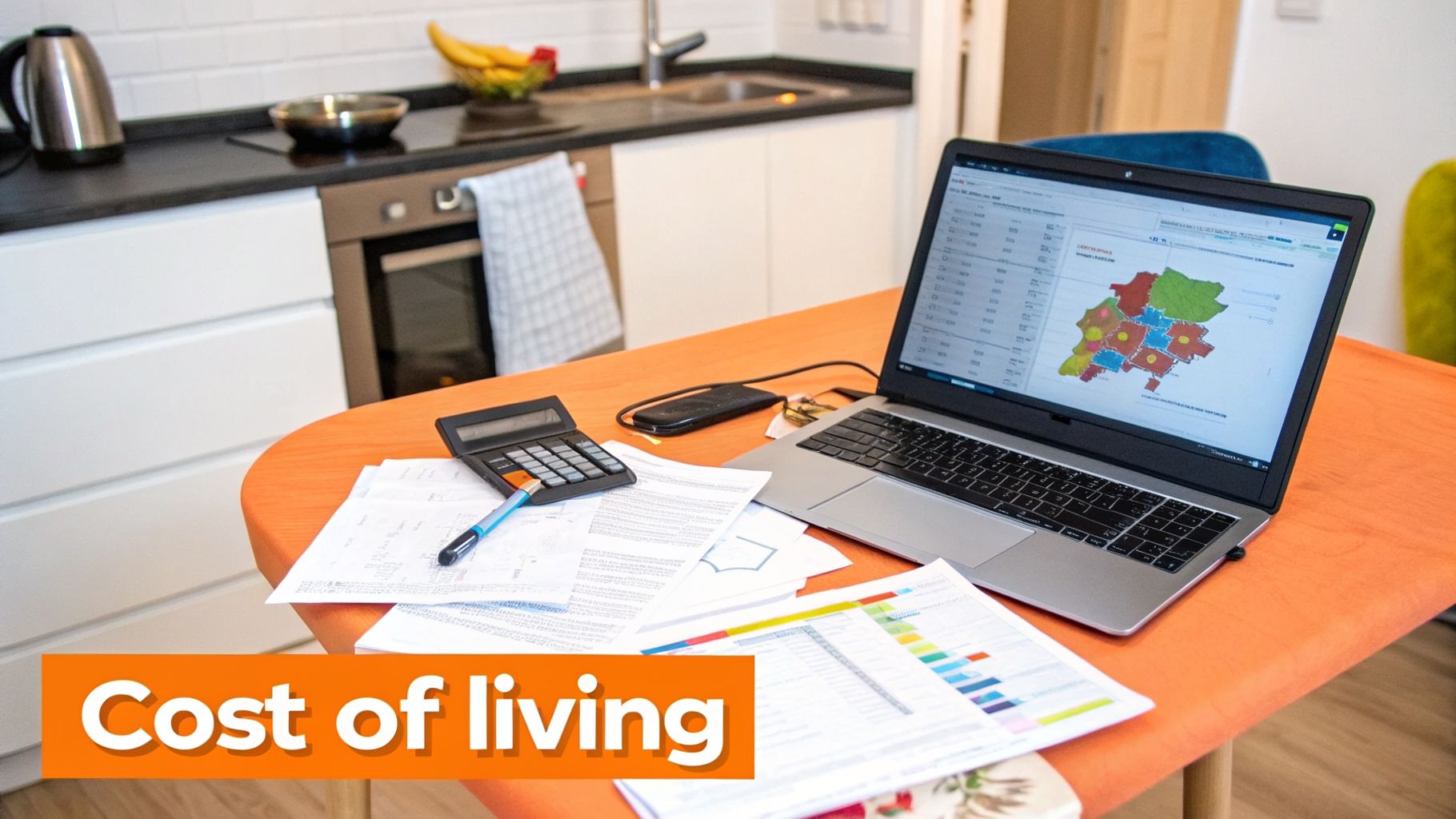
So, how much does it actually cost to live and work from home in Spain? The short answer is that it's famously affordable. But that word, “affordable,” means very different things depending on where you decide to plant your laptop. Getting your budget right isn't just a numbers game; it’s about making sure your money supports the lifestyle you’re dreaming of.
Think of it like this: your budget for a high-energy, metropolitan life in Madrid is going to look completely different from one for a laid-back, coastal life in Málaga. You wouldn't pack a winter coat for a summer trip to the Canaries, and you shouldn't apply a one-size-fits-all budget to Spain.
While the big hubs like Madrid and Barcelona are electric, they naturally come with the highest price tags. What many savvy remote workers are discovering is that Spain's sweet spot lies in its second-tier cities. They offer an incredible quality of life for a fraction of the cost.
Comparing Popular Remote Work Hubs
Let's move beyond the two giants and look at the cities that have become bona fide hotspots for the remote work community. Valencia, Málaga, and the Canary Islands each serve up a unique mix of culture, great Wi-Fi, and value for your money.
Valencia: This gem on the Mediterranean coast is a stunning blend of historic charm and futuristic design. It's incredibly bikeable, full of lush parks, and has a more relaxed vibe than Madrid or Barcelona, yet you still get all the perks of a major city. Crucially, your day-to-day costs and rent will be noticeably lower.
Málaga: As the heart of the Costa del Sol, Málaga has reinvented itself as a hub for both tech and art. You get a buzzing city life right on the beach, plus an international airport that makes weekend trips a breeze. For sun-seekers, the year-round warm climate is a massive draw.
The Canary Islands (Las Palmas & Tenerife): How does working with a view of volcanic peaks and the Atlantic sound? These islands offer a unique, subtropical European lifestyle. Outside of the main tourist traps, you’ll find some of the lowest living costs in all of Spain.
A salary earned from a company in a higher-cost country goes an incredibly long way in these Spanish cities. This financial arbitrage is one of the biggest perks of the entire remote work setup.
To put that into perspective, someone earning €60,000 a year might feel the financial squeeze in London or New York. On that very same salary in Valencia or Málaga, you could afford a great apartment, eat out several times a week, and travel regularly. It’s a game-changer for your quality of life.
Estimated Monthly Cost of Living Comparison for a Single Person
Understanding your monthly outgoings is the first step to building a realistic budget. While rent is always the biggest variable, looking at the other daily costs gives you a real feel for your spending power in different cities. This table breaks down the average monthly expenses for a remote worker across Spain's most popular cities, excluding rent, to help with your financial planning.
| City | Utilities (Electricity, Water, Internet) | Groceries | Public Transport Pass | Leisure & Dining Out | Estimated Total (Excl. Rent) |
|---|---|---|---|---|---|
| Valencia | €120 - €160 | €250 - €300 | €25 | €250 - €350 | €645 - €835 |
| Málaga | €110 - €150 | €240 - €290 | €30 | €280 - €380 | €660 - €850 |
| Las Palmas | €100 - €140 | €260 - €320 | €35 | €270 - €370 | €665 - €865 |
| Barcelona | €150 - €200 | €300 - €380 | €40 | €350 - €450 | €840 - €1,070 |
| Madrid | €160 - €210 | €320 - €400 | €55 | €400 - €500 | €935 - €1,165 |
A quick note: These are estimates from early 2024 and will obviously change based on your personal lifestyle and spending habits.
The numbers make it crystal clear. Choosing a city like Valencia or Málaga over Madrid could easily save you €300–€400 every single month on daily expenses alone. Now, factor in rent. A one-bedroom apartment in Valencia might run you €800, while a similar place in Madrid could be €1,200 or more. The savings really start to stack up, giving you the freedom to build a life in Spain that’s not just sustainable, but truly enjoyable.
Creating Your Ideal Spanish Workspace
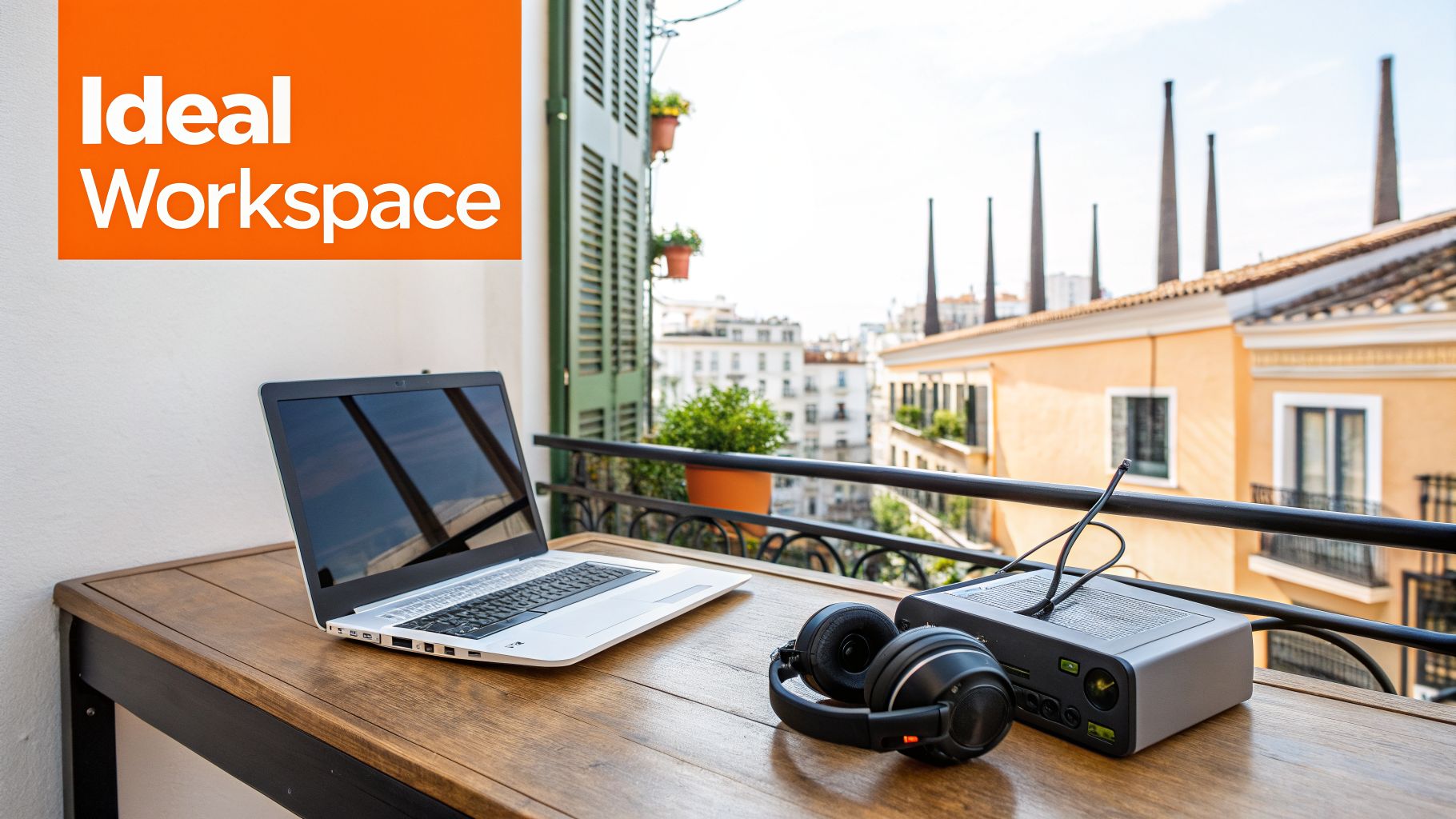
Alright, you've started tackling the visa paperwork and have your eye on a few remote jobs. Now for the fun part: figuring out where you'll actually get your work done. Whether you're picturing a home office with a sunny terrace or the buzz of a local coworking space, your setup is key to making your work from home in Spain experience a success.
Your workspace is more than just a place to plug in your laptop; it’s where your new life as a professional in Spain takes shape. The great thing is, the country is perfectly set up for remote work, offering top-notch infrastructure and a culture that makes it easy to connect.
Getting Online: Spain's Impressive Internet
Let’s get the biggest remote-work worry out of the way first: internet. You can breathe a sigh of relief, because Spain has you covered. The country has poured resources into building out one of Europe’s best high-speed fiber optic networks, which you'll hear everyone call fibra óptica.
This isn't just a big-city luxury, either. You’ll find incredibly fast and stable connections in plenty of smaller towns and coastal villages. Standard home internet plans often deliver speeds between 600 Mbps to 1 Gbps. Say goodbye to frozen video calls and frustrating lag.
Getting hooked up is straightforward. Once you have your NIE (Foreigner's Identity Number) and a Spanish bank account, you can sign up with one of the main providers:
- Movistar (Telefónica): The old state-run company, they have the most extensive coverage, reaching almost everywhere.
- Vodafone: A major competitor with great bundle deals that can include your mobile plan.
- Orange: Another big name, often with competitive prices, especially in cities.
- MásMóvil Group: This group includes budget-friendly brands like Yoigo and Pepephone, which are perfect if you're looking for great value without sacrificing speed.
Just sign up online or pop into a store, and an installer can usually get you set up within a week or two.
Finding Your Tribe in Coworking Spaces
A home office is great, but some days you just need to get out of the house. Spain’s coworking scene is booming, and it’s one of the best ways to meet people, find collaborators, and separate your work life from your home life.
These spaces are so much more than a desk for rent. The best ones are true community hubs, hosting everything from professional workshops to after-work drinks, all designed to help you build a network.
Think of a coworking space as your fast-track to feeling like a local. It’s not just about a reliable Wi-Fi signal; it’s about building a professional and social circle from day one.
You’ll find flexible plans everywhere, from daily hot desks to your own permanent spot. Many even cater to specific niches like tech or creative arts, giving you an instant group of peers. Places like Utopicus in Madrid, Aticco in Barcelona, and The Shed Co in Málaga are well-known, but nearly every city has its own hidden gems worth discovering.
What the Law Says About Your Workspace
Finally, a quick but important note on your legal standing. The rules that apply to your workspace depend entirely on how you’re employed. If you're a freelancer or contractor working for clients outside of Spain (which is typical for the Digital Nomad Visa), you're your own boss. Spanish remote work laws won't apply to you.
If, however, you’re hired as a direct employee by a company based in Spain, you fall under Spain's "Telework Law" (Ley de Trabajo a Distancia). This is a game-changer. The law requires your employer to cover the costs associated with working from home, including a portion of your internet and electricity bills, plus necessary equipment. Knowing this distinction is essential—it defines what you can and can’t expect from your employer.
Your Move to Spain Checklist
The idea of working remotely from Spain is exciting, but let's be honest—the logistics can feel like a mountain of paperwork and deadlines. This checklist is designed to change that.
Think of it as your roadmap. We’ll break down the entire process into clear, manageable steps, guiding you from the initial "what if?" stage all the way to your first day sipping a café con leche with your laptop.
6-12 Months Before Your Move
This is your dream and due diligence phase. The goal here is to confirm that this move is truly right for you and to get the big, non-negotiable pieces lined up.
- Get Clear on Your Visa: Start by digging into the requirements for Spain's Digital Nomad Visa. You need to be certain you meet the income threshold, that your work qualifies, and you have a solid grasp of every document you'll eventually need.
- Build Your Financial Cushion: Start saving seriously. A good rule of thumb is to have at least 3-6 months of living expenses tucked away. This isn't just for peace of mind; it's for the real costs of visa applications, flights, a rental deposit, and setting up your new life.
- Start Learning Spanish (¡Hola!): You don't need to be fluent, but starting now will make a world of difference. Download a language app or find an online tutor. Simple greetings and the ability to ask for basics will make your arrival and day-to-day life so much smoother.
3-6 Months Before Your Move
Okay, things are getting real. This is where you transition from planning to doing. Your focus now is on locking in your legal status and securing your income.
- Assemble Your Visa Arsenal: Begin gathering every single document for your DNV application. This is often the most time-consuming step. Order your criminal background check, find a certified service to translate and apostille your documents, and purchase the required private health insurance policy.
- Apply for the Visa: It's go-time. Submit your complete application package to the Spanish consulate in your home country. Alternatively, if your nationality allows, you can plan your trip to apply from within Spain.
- Ramp Up Your Job Search: If you don't already have a remote-friendly job, this is your prime window. Fire up platforms like YayRemote and filter for roles that not only meet your salary needs but are also explicitly open to hiring people based in Spain.
1-3 Months Before Your Move
With your visa approval in hand and a job lined up, it’s all about logistics. The finish line is in sight!
- Book That Flight: Once the visa is officially approved, you can confidently book that one-way ticket to Spain.
- Arrange Your Landing Pad: Don't pressure yourself to find a permanent home from abroad. Book an Airbnb or a short-term rental for your first month. This gives you a comfortable base to explore different neighborhoods and find a long-term apartment you love.
- Sort Out Your Banking: Give your current bank a heads-up about your move. More importantly, research and apply for a credit card with no foreign transaction fees—those little charges add up fast.
Your first month in Spain will be a whirlwind of essential errands. Having a clear list of what to tackle first will save you time and stress, letting you settle in faster.
Your First Month in Spain
Welcome to your new home! The immediate priority is getting all your official Spanish credentials in order.
- Get Your NIE/TIE: This is your absolute first priority. Book a cita previa (appointment) as soon as you arrive to get your Foreigner's Identity Number (NIE) and your residency card (TIE). Everything else hinges on this.
- Open a Spanish Bank Account: You'll need a local account for everything from paying rent and utilities to getting paid if you're an autónomo.
- Find Your Long-Term Home: Start your apartment hunt on portals like Idealista.
- Get a Spanish SIM Card: Ditch the expensive roaming charges and get a local number. It's essential for daily life and dealing with officials.
- Register on the Padrón: Head to your local town hall (ayuntamiento) to register your address. This official registration is a required step for many other administrative tasks.
Frequently Asked Questions About Remote Work in Spain
Making the move to work remotely from Spain is exciting, but it's natural to have a lot of questions running through your mind. We've been there. To help you get some clarity, we’ve put together answers to the most common things people ask about taxes, visas, finding a place to live, and daily life.
Can I Apply for the Visa While in Spain?
Yes, and this is a huge plus. One of the best features of the Spanish Digital Nomad Visa is that you can apply for it while you're already in the country on a tourist visa or another legal permit. This gives you the incredible flexibility to "try before you buy," so to speak.
You can spend some time exploring different cities, getting a feel for the local vibe, and making sure Spain is truly the right place for you. Many find this route far less stressful than applying from back home, as you're already on the ground and can manage the process firsthand.
Will I Be Taxed in Two Countries?
This is a top concern for almost everyone, but you can relax. The system is set up to prevent this. Spain has Double Taxation Agreements (DTAs) with dozens of countries, ensuring you won't pay taxes on the same income twice. Once you have the Digital Nomad Visa, you are officially a tax resident in Spain.
The real game-changer here is the special tax regime known as the "Beckham Law." If you opt-in, you'll pay a flat tax rate of just 24% on your Spanish income for up to six years. It's a massive financial benefit, but since everyone's tax situation is different, it’s always a good idea to chat with a tax advisor who specializes in Spanish law for expats.
How Hard Is It to Find an Apartment?
Finding an apartment as a foreigner can be tricky—let's be honest. Many landlords get nervous without a Spanish work contract and a local credit history. But it's absolutely doable. Armed with your Digital Nomad Visa, proof of steady income, and a good deposit, you become a much stronger applicant.
Landlords are really just looking for stability. When you can show them you have the legal right to live in Spain and a reliable income from a foreign company, most of their worries fade away.
Your best bet is to start your search on popular rental sites like Idealista and Fotocasa. And don't hesitate to work with a real estate agent. Their local knowledge and connections can be invaluable and help you find places that never even get listed online.
Do I Need to Speak Spanish?
For your actual job? Probably not. The vast majority of international companies that hire remotely operate in English. For your day-to-day life, though, learning Spanish will completely change your experience for the better.
You can definitely manage with English in the big cities and tourist spots like Málaga or Barcelona. But knowing the local language makes everything easier—from opening a bank account and dealing with bureaucracy to simply making friends with the owner of your favorite coffee shop. It’s what turns living in Spain from a temporary stay into a real home.
Ready to find a remote job that lets you live and work from Spain? YayRemote curates thousands of roles from global companies actively hiring remote talent. Start your search on YayRemote today and filter by salary, timezone, and benefits to find your perfect match.