How to Apply for International Jobs: A 2026 Guide
Learn how to apply for international jobs with our step-by-step 2026 guide. We cover finding roles, visa research, CV tailoring, and interview prep.
You've probably done some version of this already. You found a role in Berlin, Toronto, London, Singapore, or a fully remote company that says “work from anywhere,” rewrote your resume, hit apply, and heard nothing. Then you repeated the process across dozens of jobs and started wondering whether international hiring is mostly luck.
It isn't. But it does punish unfocused effort.
Learning how to apply for international jobs means treating the search like a cross-border project with three filters before you ever press submit: legal eligibility, market fit, and application localization. Most candidates reverse that order. They start with job boards, send generic applications, and only think about sponsorship or local resume rules when a recruiter asks. That's why so much effort gets wasted.
The better approach is narrower and more disciplined. You pre-qualify countries and employers. You target channels that produce responses. You adapt your CV for both screening systems and local expectations. You prepare for interviews with time zone, culture, and compensation differences in mind. If you're thinking long term about career growth for international job seekers, this matters even more. The first international move often shapes the next two.
Navigating the Global Job Market in 2026
You apply to a remote role based in Amsterdam. The title fits. The company says it hires internationally. Your experience matches the job description. Then nothing happens, because "internationally" meant only within the EU, your CV format looked off for that market, or the screening system could not tell whether you were already work-authorized.
That pattern is common in cross-border hiring. The problem is often qualification, not capability.
International hiring opened up in one sense and tightened in another. More employers now hire through employer-of-record providers, distributed teams, and remote-first structures. They can reach talent in more countries without opening a local entity. They also filter harder, earlier, and with less patience for ambiguity. If your work rights, location, notice period, or salary range are unclear, many applications stop before a recruiter reviews your background in context.
This is why a global search needs a stricter first step than a domestic one. Before you spend time tailoring a CV, check whether the role is even viable. Sponsorship policy, country restrictions, contractor-only setups, local registration rules, and language expectations eliminate a large share of roles that look attractive on first read. Candidates who skip that step can burn through 100 applications and learn very little from the silence.
I tell people to treat international applications as a qualification funnel, not a volume game. Start by ruling out dead ends. Tools that help you screen visa compatibility and application fit early can save weeks of wasted effort. If you need a more targeted system for sourcing roles after that filter, this guide on how to find international jobs that match your location and work eligibility is a good next step.
What changes in 2026
The hiring field now rewards precision.
A company may be open to overseas talent but still reject applicants who need full relocation support, who live outside approved payroll countries, or who submit a US-style resume into a market that expects a different format. "Remote" is not one category. It can mean remote within one country, remote across selected regions, remote only for existing work-right holders, or remote through an employer of record. Those are different hiring models with different odds.
That is why pre-application checks matter more than motivation. A strong candidate with the wrong legal setup is still the wrong candidate for that role. A slightly less qualified candidate who is immediately employable in the target country often moves faster.
Use a simple filter before every application:
| Check | What to confirm |
|---|---|
| Work authorization | Do you already have the right to work there, or does the employer sponsor? |
| Hiring geography | Is the role open worldwide, region-limited, or tied to one payroll country? |
| Employment model | Full-time employee, contractor, EOR hire, or relocation package? |
| CV expectations | Does the target market expect a different resume structure, language, or detail level? |
| Screening fit | Will your CV parse cleanly, and does it clearly match the role terms? |
Specialized tools are useful, not gimmicky. A visa database such as YayRemote's Visa Hub helps rule out countries and employers that were never realistic for your profile. An ATS checker helps catch formatting and keyword issues before your application disappears into a parser. Used together, they reduce pointless effort at the top of the funnel.
What works and what wastes time
Weak international searches usually fail for procedural reasons:
- Applying before checking sponsorship or location limits
- Assuming every English-language CV works across markets
- Treating remote roles as legally simple
- Spending hours on roles that were closed to your country from the start
- Leaving visa status vague and hoping a recruiter asks later
A better system is narrower and faster:
- Choose target countries based on employability, not just preference
- Check visa and hiring eligibility first
- Adapt your CV to the country and the screening system
- Prioritize employers with a clear history of cross-border hiring
- Track response patterns so you can cut low-yield channels quickly
This disciplined approach also matters for long-term positioning. Your first move affects salary trajectory, future mobility, and brand value in international markets. If you're thinking beyond a single job and planning for career growth for international job seekers, the first role should solve for access and progression, not just escape.
The global market in 2026 rewards candidates who qualify themselves before they apply. That sounds less exciting than sending applications all week. It gets better results.
Where to Find International and Remote Jobs
The best search strategy starts with channel discipline, not with a giant spreadsheet of random job boards.
A useful baseline comes from the 70–20–10 international job search method: 70% of effort on company websites and global job portals, 20% on employee referrals, and 10% on recruitment agencies. That split matches what I've seen in practice. Official company pages and targeted platforms produce cleaner information, while referrals help you bypass crowded front doors.
The market itself is expanding in specific corridors. Global recruiting trend projections indicate hiring volumes are projected to increase by 58% in the United Kingdom and the United States, 76% in India, and 62% in Southeast Asia, and the same source notes the EOR market reached USD 5.97 billion in 2026. That doesn't mean you should only apply there. It means these are sensible places to concentrate attention if your role can travel internationally.
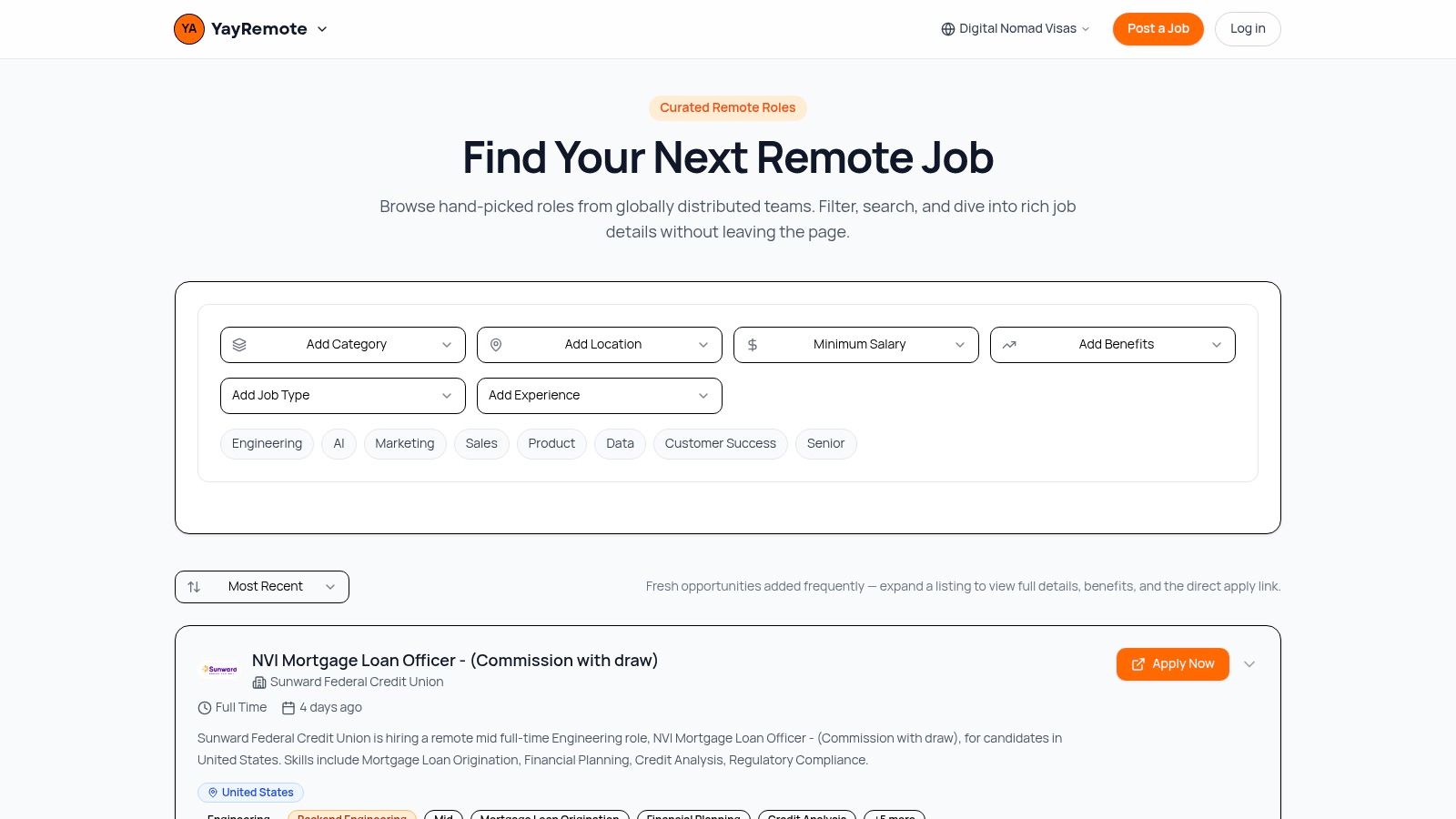
Start with companies, not just listings
Most candidates search by title alone. That's backwards.
Search by employer type first:
- Distributed companies with international teams: They already know how to hire across borders.
- Firms using EOR or contractor-friendly structures: These companies usually move faster on cross-border hiring.
- Businesses with repeated hiring in your function: One-off listings are riskier than patterns.
- Companies with location-specific remote policies stated clearly: Clarity saves time.
A good sourcing workflow looks like this:
- Pick two or three target geographies based on your skill set and language comfort.
- Build a list of companies hiring repeatedly in those markets.
- Check their careers page before applying through aggregators.
- Track whether they mention remote regions, employer of record, relocation, or sponsorship.
That's more effective than scrolling endlessly through generic results.
Use platforms with filters that match real constraints
A useful international platform should let you narrow roles by more than title and location. Salary filters, benefits, seniority, contract type, and remote policy matter because they reveal whether the role is realistically built for a cross-border hire.
When you're evaluating opportunities, don't stop at “remote.” Ask:
- Is remote global or region-limited?
- Does the listing mention country exclusions?
- Are benefits local-only?
- Does the salary appear standardized or country-adjusted?
- Is there any sign the company has hired internationally before?
For a more structured workflow, this guide on how to find international jobs is useful because it helps turn broad interest into a shortlist with filters that reflect real hiring constraints.
The strongest international candidates don't apply to the most jobs. They apply to the most plausible jobs.
Referrals still matter more than people admit
The referral portion of your search shouldn't mean cold messaging fifty strangers. It means targeted outreach to people who can answer one practical question: “Would this company realistically consider someone in my location?”
That one answer can save days.
Reach out to current employees, former employees, alumni, and people in adjacent teams. Keep the message short. Don't ask for a referral first. Ask whether the company hires internationally for your function, whether teams are location-bound, and whether sponsorship is common or rare. Those details almost never appear clearly on the listing.
Agencies come last, not because they're useless, but because they rarely solve the eligibility and localization issues for you. Use them as a supplement, not as the spine of your search.
Mastering the Pre-Application Eligibility Check
The biggest mistake in international applications is emotional momentum. A role looks perfect, so you apply first and investigate later. That's how people lose months.
This problem is common enough that Go Overseas reports 68% of international job seekers in tech and engineering abandon applications because of unclear sponsorship policies. That number tells you something important. The obstacle often isn't lack of ability. It's lack of clarity.
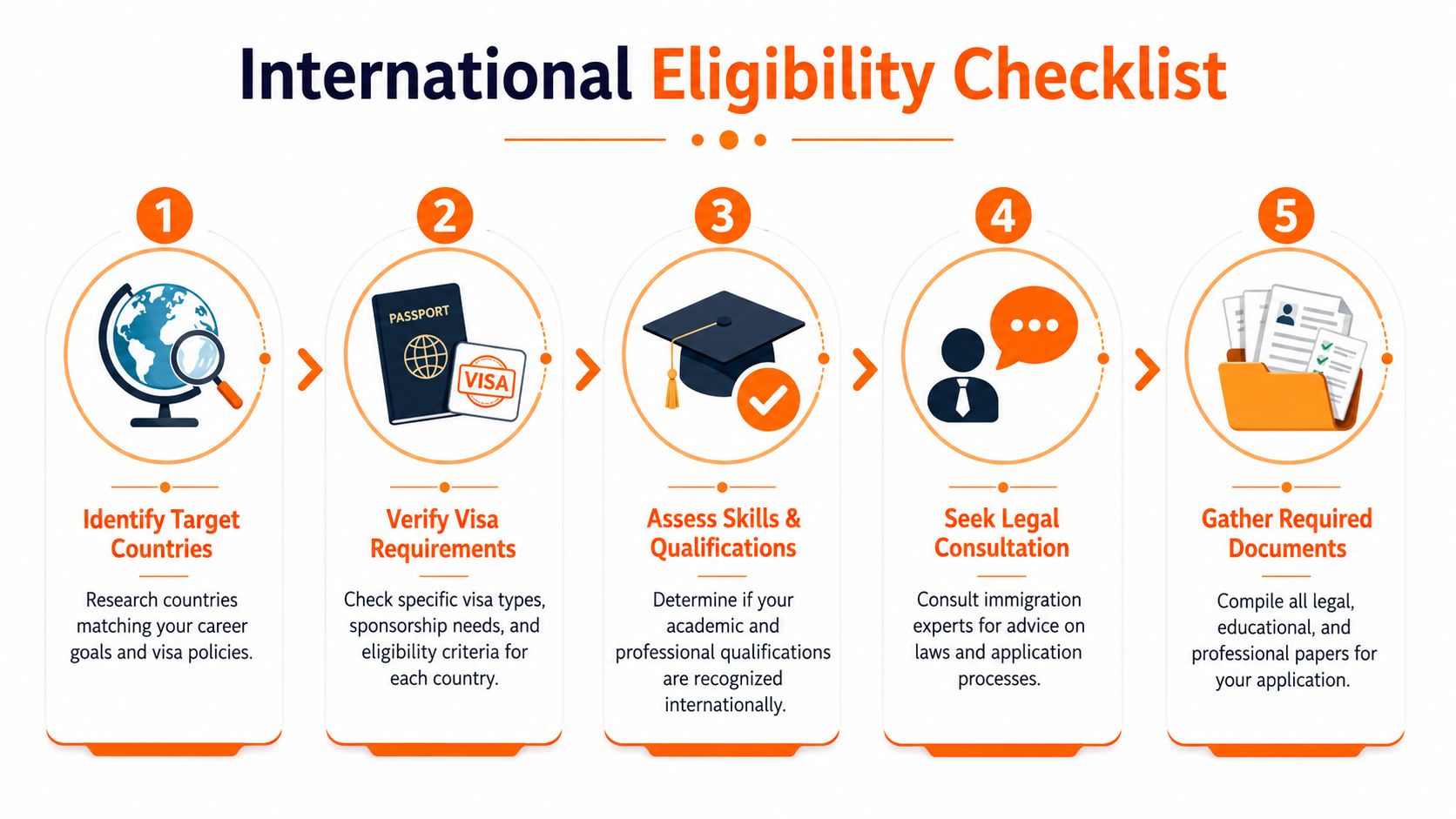
Run a five-part eligibility screen
Before you tailor a CV or draft a cover letter, answer these in order:
Can you legally work there now?
If yes, great. If not, identify whether sponsorship, a work permit, contractor structure, or digital nomad route is relevant.Does your occupation usually qualify?
Some countries and employers are more open to shortage roles than to generalist roles.Does the company hint at sponsorship?
Look for phrases like visa support, relocation, work authorization required, employer of record, global mobility, or country restrictions.Has the company hired internationally before?
Existing distributed staff is one of the strongest signs that cross-border hiring is operationally normal.Can your qualifications be understood locally?
Titles, credentials, and even degree names often need translation into local equivalents.
If you can't get a clean answer to at least the first three, pause the application.
Read the listing like a recruiter would
Many candidates skim for responsibilities and salary, then ignore the legal language at the bottom. That's often where the critical answer lives.
Watch for these signals:
| Listing language | Likely meaning |
|---|---|
| “Must have current work authorization” | They probably won't sponsor |
| “Open to candidates in X countries” | Remote, but not globally |
| “Relocation support available” | Sponsorship may be possible |
| “Employer of Record” or “EOR” | Cross-border employment is operationally feasible |
| “Contractor outside HQ region” | You may need to work self-employed or through a local structure |
None of these phrases guarantees anything. But they help you decide whether to invest.
Don't confuse remote eligibility with immigration eligibility
This catches people all the time. A company may be happy to hire you remotely from your current country while having no route to sponsor your move into their headquarters country. Those are different scenarios.
If your goal is relocation, verify the relocation path. If your goal is cross-border remote work, verify the employment path. They're not interchangeable.
For visa research, a practical starting point is this overview of digital nomad visa requirements, especially if you're comparing countries before locking in an application strategy. And once you're in a country, administrative bottlenecks can become the next problem. Anyone dealing with German residence logistics, for example, may find SettlyGo's Berlin appointment helper very useful because local bureaucracy can delay otherwise solid plans.
If the company can't explain how they'd employ you, the role isn't ready for an international hire.
What to verify before you spend real time
Use this short checklist before writing anything customized:
- Visa path: Is there an obvious sponsorship or legal work route?
- Employment model: Employee, contractor, or EOR?
- Location scope: Broadly international, or just remote inside selected countries?
- Qualification fit: Does your background map cleanly to the target market?
- Timing: Can you realistically complete paperwork within their hiring timeline?
A lot of rejection in cross-border hiring happens before the interview, but a surprising amount of wasted effort happens before the application even deserves to exist.
Crafting a World-Class Application Package
A candidate can clear the visa and eligibility check, target the right roles, and still get screened out in under a minute because the application package creates friction.
That usually happens for predictable reasons. The resume is hard for an ATS to parse, the job titles are too local to translate well, the cover letter explains motivation but not hiring practicality, or the candidate leaves work authorization vague and forces the recruiter to guess. In cross-border hiring, guesswork kills momentum.
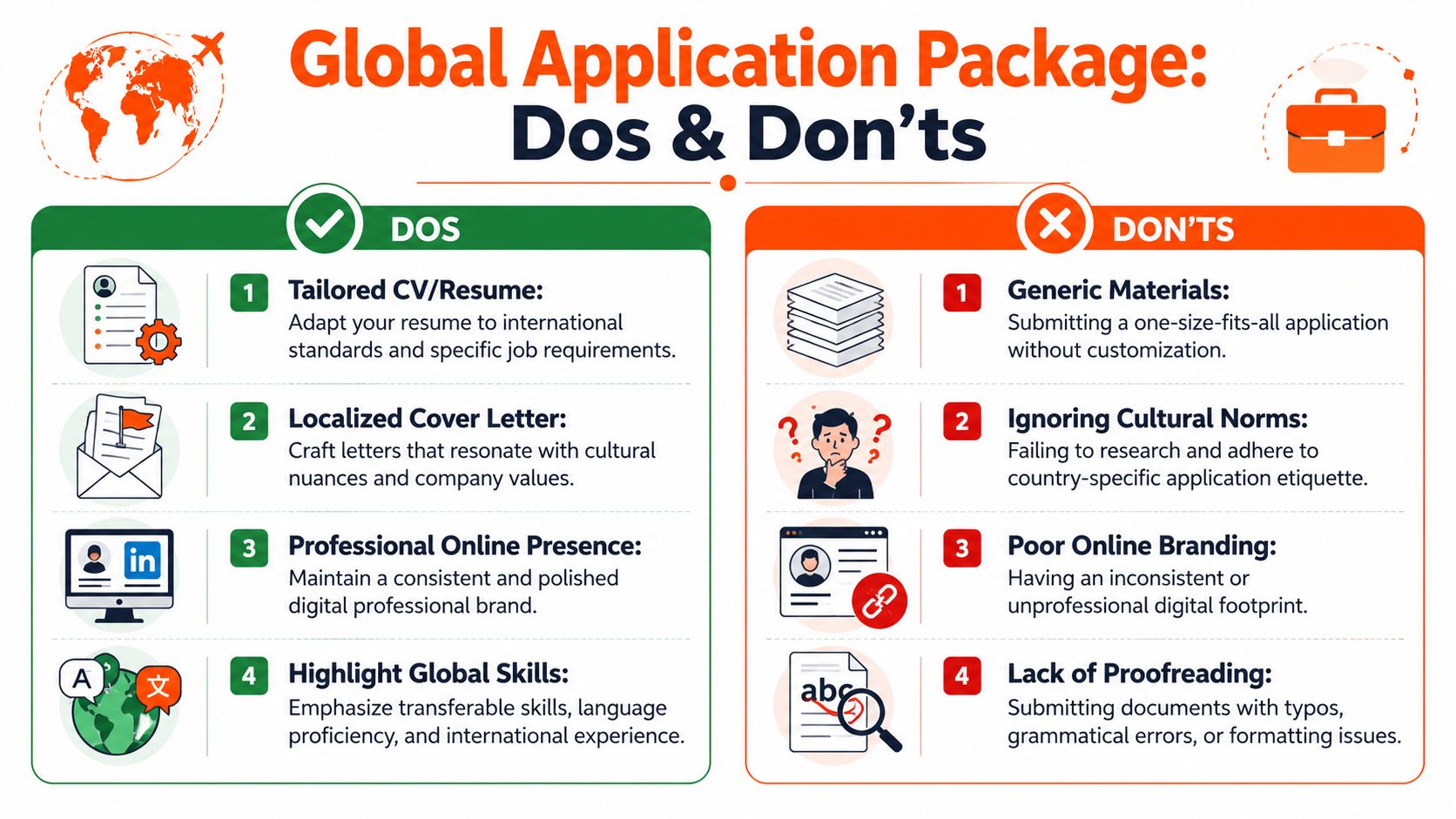
Build for readability first
An international application has to work for two audiences. Screening software needs clean structure. A recruiter needs instant clarity on level, fit, and location reality.
Use a plain format with standard headings such as Experience, Education, Skills, and Certifications. Write job titles recruiters in other markets will recognize. If your internal title was unusual, translate it into the closest standard version and keep the original in brackets if needed. Match role keywords only where they accurately describe your work. A recruiter should be able to scan your document and understand what you do, which tools you use, and whether you fit the role without decoding company-specific language.
For a practical model, YayRemote's guide on how to create an effective resume covers the formatting and wording choices that hold up better across ATS filters and international recruiters. If you have access to an ATS checker, use it before you apply. It catches small problems early, especially around section labels, keyword mismatch, and formatting errors that break parsing.
Localize the document without rewriting your identity
Candidates often make one of two mistakes. They send the same CV to every country with no adjustments, or they over-adapt and end up with a document that no longer sounds like them.
A better approach is selective localization.
Use neutral English unless the role clearly calls for local spelling or another language. Replace internal shorthand with globally understood terms. Convert degree names, certifications, and seniority labels into language that travels well. Add your current location, target location if relevant, and contact details in an international format. If work authorization matters, say it plainly. "Eligible to work in the EU," "requires visa sponsorship," or "open to employer of record arrangement" is far more useful than leaving the issue buried.
Small details can change outcomes. In some countries, including a photo still feels standard. In others, it creates compliance concerns or looks out of place. The same goes for date of birth, full address, and reference formatting. Check the norm for the target market before sending a recycled master CV.
Show hiring practicality, not just professional fit
For international roles, a strong application package answers a question many candidates ignore: why is hiring you workable?
That answer can appear in your summary, your location line, and your cover letter. State your timezone overlap if the team is distributed. Mention relocation readiness only if it is real. If you have experience working across markets, languages, or reporting lines in different countries, make that visible in the bullet points, not hidden in a generic profile paragraph.
Your LinkedIn profile needs to support the same story. If your resume says "open to relocation to Germany" but your LinkedIn headline still signals local-only availability in another country, recruiters notice. I have seen solid applicants lose credibility on details that small.
Write a cover letter that removes doubt
A cover letter still earns its place when it does one job well. It explains why this hire makes sense across borders.
Keep it tight. Focus on the match between your background and the company's context. Mention the market, customer base, language environment, remote setup, or relocation plan only where it strengthens the case. Avoid autobiography. Avoid generic enthusiasm. The reader wants evidence that you understand the role and the hiring conditions around it.
A useful example of concise structure appears in RewriteBar's admin cover letter guide. Even outside admin hiring, the principle is the same. Lead with relevance, then make cross-border fit easy to see.
What a strong package usually includes
- Targeted resume: Written for the role, with recognizable titles and clear skills
- Country-aware formatting: Adjusted to local expectations without creating compliance issues
- Direct work authorization language: No ambiguity about sponsorship, relocation, or employment setup
- Aligned online presence: LinkedIn, portfolio, and CV tell the same story
- Short cover letter: Focused on role fit and international practicality
- Simple design: Easy to parse, easy to scan, easy to trust
The test is straightforward. A recruiter in another country should understand your level, your function, and your hiring reality in ten seconds. If they have to infer any of that, the package still needs work.
Navigating Interviews and Negotiating Your Offer
By the time you reach interviews, the question shifts from “Can this person do the job?” to “Can we work with this person across borders without friction?”
That means your interview performance has to communicate competence, reliability, and logistical maturity. According to this international job search guide from Reddit's IWantOut community, a successful search often takes 6–9 months, and strong preparation includes mock interviews and strategic salary negotiation.

Interview for clarity, not just charm
International interviews carry extra uncertainty for employers. They may worry about communication gaps, timezone friction, relocation timing, or whether you fully understand the role's location constraints.
Address those concerns directly.
Come prepared to explain:
- Why this market makes sense for you
- How you've worked across cultures or time zones
- What your work authorization situation is
- Whether you're seeking relocation, remote work, or either
- When you could realistically start
Mock interviews matter because they expose where your answers sound vague. If a recruiter asks, “Why are you targeting this country?” and your answer is lifestyle-heavy or generic, they'll assume your commitment to the job itself is thin.
Handle the practical side like a professional
Cross-border interviews create easy ways to look disorganized. Don't give them those reasons.
Check time zones carefully. Confirm the time in writing. Test audio, camera, lighting, and internet before the call. Have a concise summary ready for your location, notice period, and right-to-work situation. If the company uses case studies or technical screens, ask what format to expect and whether any regional context matters.
A lot of candidates underestimate how useful that preparation looks. It signals that you'll probably handle distributed work well after hiring too.
Later in the process, this video is a helpful refresher on interview presence and communication:
Negotiate the whole package
An international offer is more than base salary.
You need to understand what exactly is being offered:
| Offer element | What to clarify |
|---|---|
| Employment type | Direct employee, EOR, contractor |
| Work location | In-country, remote abroad, hybrid after relocation |
| Currency | Which currency you're paid in and whether it can change |
| Benefits | Which benefits apply in your country |
| Relocation support | Flights, temporary housing, visa paperwork, or none |
| Start date | Whether it depends on permit timing or onboarding logistics |
If you're relocating, ask how the company handles the visa process operationally. If you're staying abroad remotely, ask who manages payroll and compliance. If they can't answer clearly, slow down before accepting.
A strong offer is one you can execute, not just one that looks good on paper.
Negotiation also changes across cultures. In some markets, direct salary negotiation is expected. In others, compensation discussions are more structured and HR-led. Read the tone of the process. Stay professional, ask precise questions, and avoid treating relocation support as an awkward extra. It's part of the package if they need you to move.
Conclusion Your Global Career Awaits
A strong international job search usually looks quiet from the outside. Fewer applications. Better targets. Clearer decisions.
The candidates who make progress are usually doing one thing well. They qualify the opportunity before they spend time on it. That means checking whether the role is legally workable, whether the company hires across borders, and whether their application matches the norms of that market. Recruiters notice that discipline quickly because it lowers risk at every stage.
A lot of frustration comes from sending polished applications into roles that were never realistic. A company may like your background and still reject you because it cannot sponsor in that country, cannot employ you from your location, or needs a CV format that signals fit in a different way than your home market does. That is why pre-application checks matter so much. They save time, protect momentum, and keep rejection from turning into noise.
The same goes for your search process.
Use the 70-20-10 method as a working rule. Put most of your effort into company sites and trusted job boards where hiring terms are clearer. Use referrals to confirm whether international hiring is real, not just implied. Keep agencies in the mix, but as a smaller channel unless they specialize in cross-border hiring for your field.
Tools help, but only if they remove guesswork. A visa screening resource such as YayRemote's Visa Hub can help you rule out dead-end roles early. An ATS checker can help you catch formatting or keyword problems before your application disappears into a system. That is the practical difference between applying globally and applying blindly.
Keep this standard for every application
- Can this company legally hire me from where I am, or sponsor me where I need to be?
- Have they hired internationally before, or am I guessing from a vague remote label?
- Does my CV fit this market's expectations on format, tone, and proof of impact?
- Will a recruiter understand my value in a quick scan?
- Can I discuss visa timing, payroll setup, relocation, and work authorization without hesitation?
You will still face rejection. International hiring has more constraints, more stakeholders, and more delay points than a domestic search. But you can avoid wasting months on roles that fail basic qualification.
Global careers start with selection, not volume.
If you're ready to put this into practice, start with YayRemote. It's useful not just for finding curated remote roles, but for narrowing opportunities by real-world constraints, researching global work options, and using tools that make international applications more precise.